About Berula erecta (Huds.) Coville
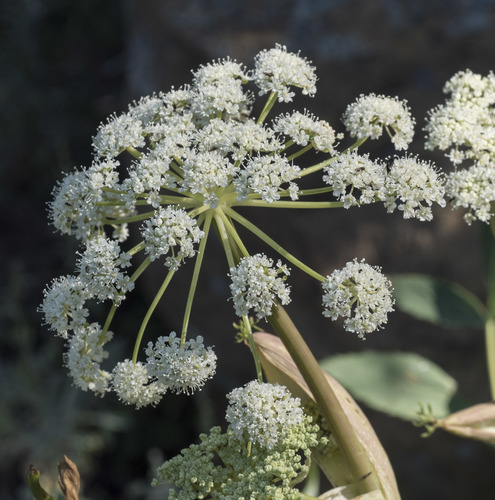
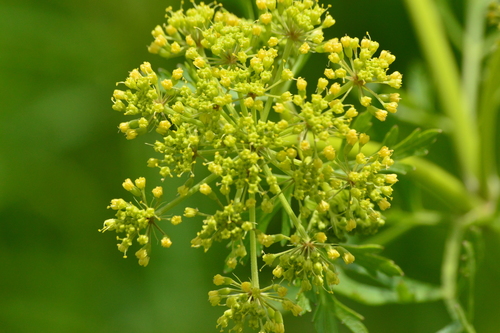
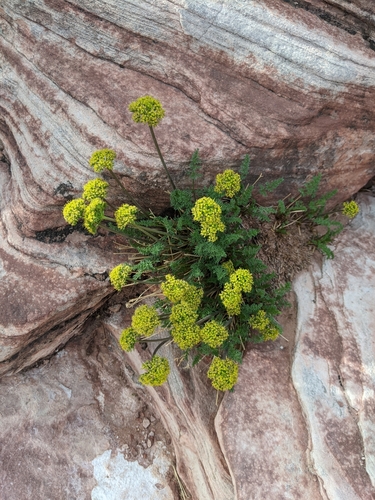
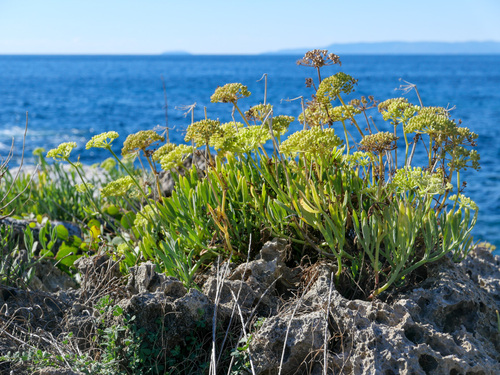
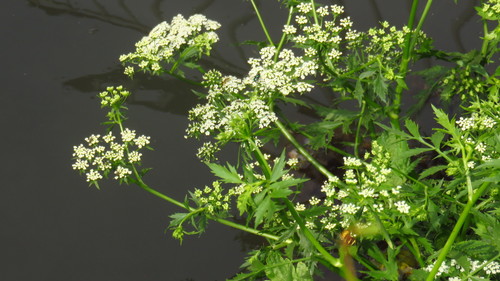
Berula erecta (Huds.) Coville grows on poorly drained neutral and acidic soils in lowlands and upland fringe, and can be found in the South West of England, especially in Devon. It typically grows in shallow aquatic environments with moderate nutrient levels. In winter, the entire stem and plant body become completely submerged. This species has been observed to survive and grow better after experiencing stressful conditions, including limiting nutrients, excess nutrients, or mechanical stress. It produces toothed leaves 1.5 to 2 inches across, with each stem bearing around twenty white flowers. The plant reaches a height of 1 to 3 feet. The stalk has a distinctive pale ring at its base, and releases a carrot or parsnip scent when crushed. It naturally occurs in these community types: emergent marsh, floodplain forest, hardwood-conifer swamp, 1st-2nd order headwater stream riffle, 1st-2nd order headwater stream pool, 1st-2nd order headwater stream run, prairie fen, rich conifer swamp, rich tamarack swamp, southern shrub-carr, and southern wet meadow. The Zuni people include Berula erecta as an ingredient in "schumaakwe cakes", and use it externally to treat rheumatism. An infusion of the whole plant is used as a wash for rashes and athlete's foot infections. Some other Native American peoples also use this plant for medicinal purposes. Berula erecta has been studied for its essential oil, which is thought to potentially have medicinal uses. The essential oil of this plant contains polyacetylenes, compounds that have a wide range of beneficial medicinal effects. One documented effect is nematodicidal activity that could be useful in agriculture, as well as having benefits for human health. Polyacetylenes also have antifungal, antibacterial, antiallergenic, and anti-inflammatory properties. However, medicinal use of pure polyacetylenes is not practical, because these compounds are chemically unstable and tend to trigger allergic reactions. For this reason, consuming smaller, less pure amounts of polyacetylenes from Berula erecta essential oil may be a viable option. After the first cut of the growing season, Berula erecta will usually regrow and flower multiple additional times in the same season.