About Bemisia tabaci (Gennadius, 1889)
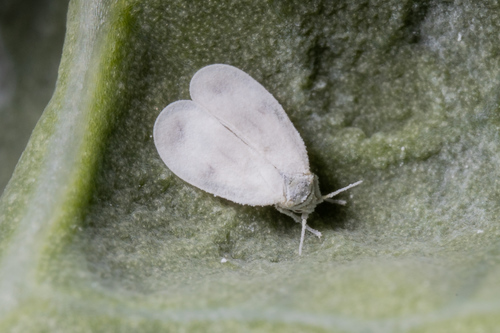
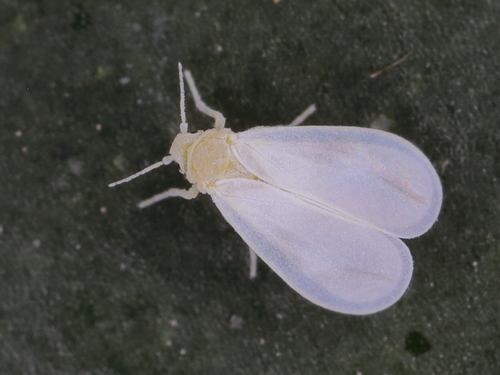
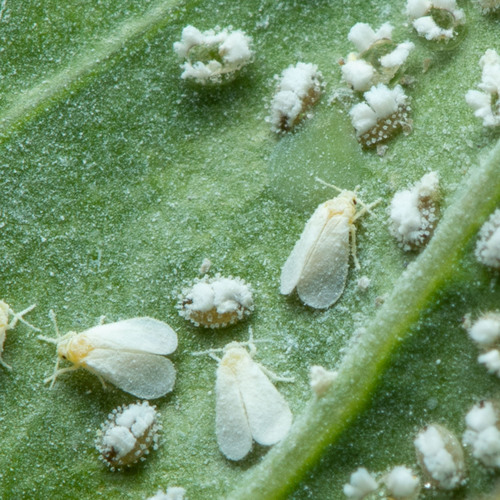
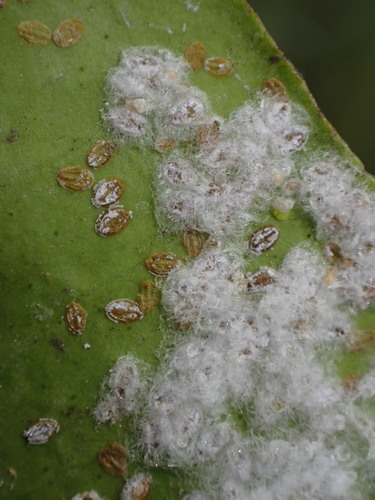
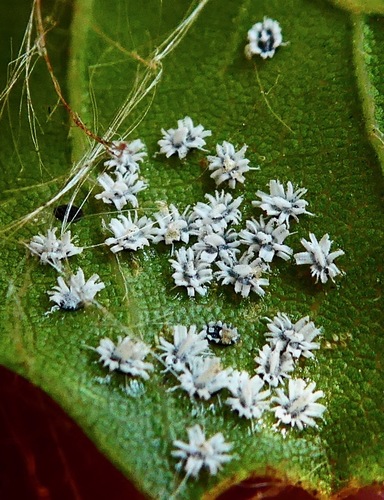
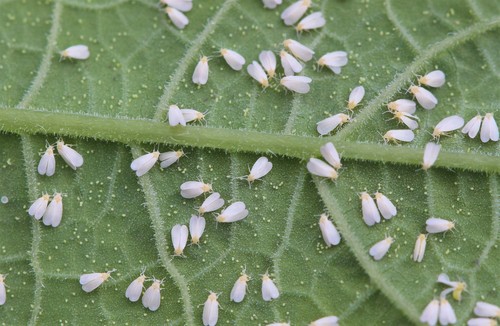
The silverleaf whitefly, scientific name Bemisia tabaci, has the common informal names sweet potato whitefly and cotton whitefly. It is one of several whitefly species that are currently important agricultural pests. A 2011 review concluded that silverleaf whitefly is actually a species complex containing at least 40 morphologically indistinguishable species. Silverleaf whitefly thrives worldwide in tropical and subtropical habitats, and occurs less commonly in temperate habitats. Cold temperatures kill both adults and nymphs of this group. It can be confused with other insects such as the common fruit fly, but close inspection shows it is slightly smaller, with a distinct wing color that helps differentiate it from other insects. While silverleaf whitefly had been known in the United States since 1896, an aggressive strain appeared in Florida poinsettia crops in the mid-1980s. For convenience, this strain was called strain B (biotype B), to distinguish it from the milder infestation of the earlier known strain A. Less than a year after its identification, strain B was found to have spread to tomatoes and other fruit and vegetable crops. Within five years, silverleaf whitefly had caused over $100 million in damage to agriculture in Texas and California. Silverleaf whitefly is an invasive agricultural pest in many locations around the world, including Florida and California. Female B. tabaci lay 50 to 400 eggs on the undersides of leaves; each egg measures between 0.10 and 0.25 millimeters. Groups of eggs measure approximately 0.2 millimeters wide and 0.1 millimeters tall. Female whiteflies are diploid and develop from fertilized eggs, while male whiteflies are haploid and develop from unfertilized eggs. Eggs are initially whitish, and turn brown as they near hatching, which occurs within 5 to 7 days. After hatching, whitefly nymphs develop through four instar stages. The first instar, commonly called a crawler, is the only mobile nymphal stage. First instar nymphs can grow to about 0.3 millimeters, are greenish and flat in body shape. The mobile first instar walks to find a suitable feeding area on the leaf with adequate nutrients, then molts into an immobile stage. The remaining three instars stay in place for 40 to 50 days, until they molt into adults. Silver shed nymphal skins, called exuvia, are left on the leaves. Immobile instars appear opaquely white. Nymphs feed by stabbing into the plant with their mouthparts and sucking up plant juices. After the fourth instar, the nymph transforms into a pupal-like stage: the eyes turn deep red, the body turns yellow, and the body structure thickens. This is not a true pupal stage like those found in Holometabola, but it serves a similar function. Adult whiteflies are approximately four times the size of the egg, with light yellow bodies and white wings; the white color comes from wax secreted across the wings and body. Adult silverleaf whiteflies can reach up to 0.9 millimeters in length. When feeding or resting, adult whiteflies fold their wings tent-like over their bodies.