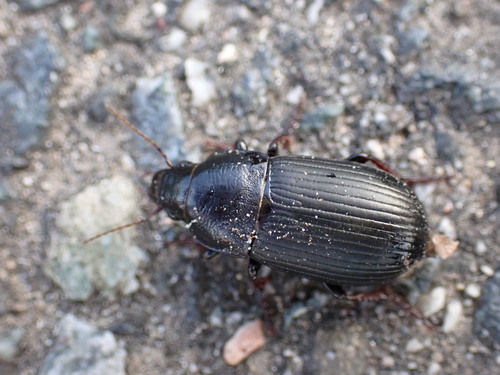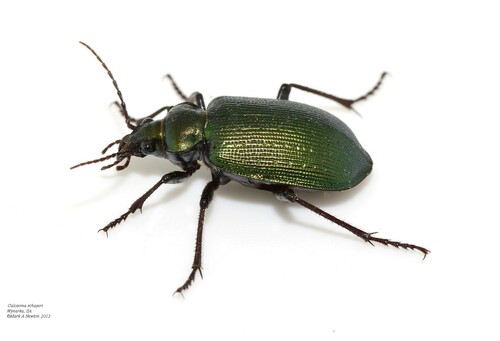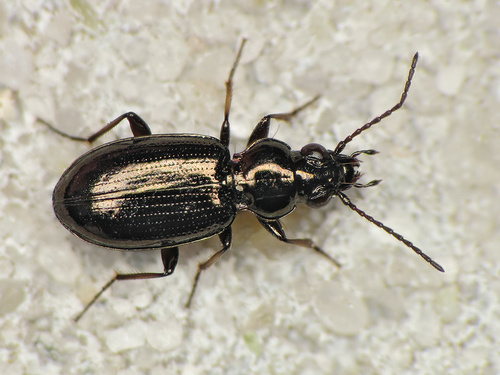
About Bembidion lampros (Herbst, 1784)
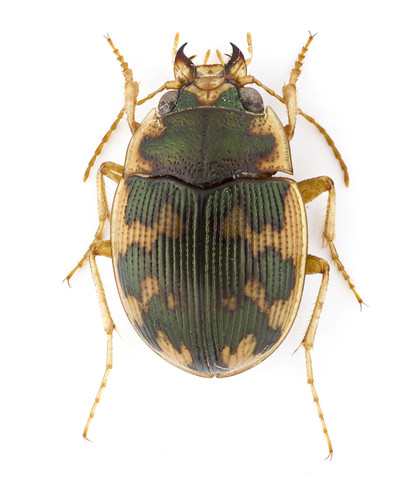
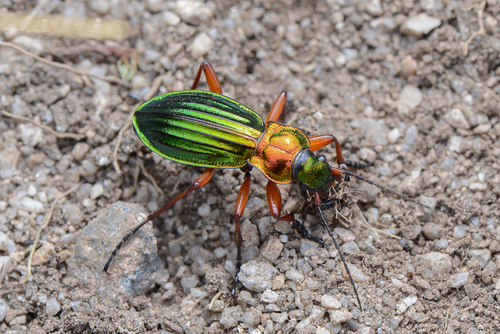
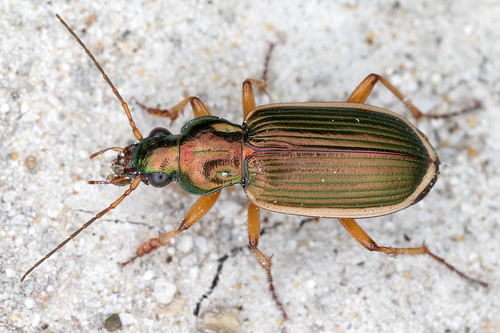
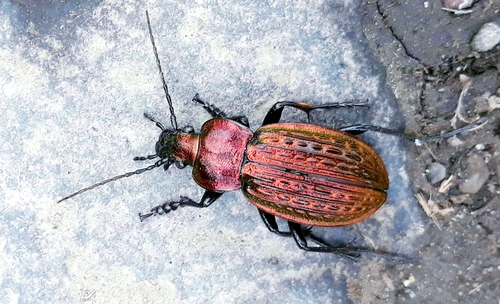
Bembidion lampros is classified in the order Coleoptera and the family Carabidae. This beetle has distinguishing morphological features: its forewings form a leathery or hard elytra, which meets in a straight line down the middle of the abdomen. In terms of habitat preference, Bembidion lampros lives on the edges of arable fields during winter, and moves into the center of fields in early spring to reproduce. One study examined the species' movement between alfalfa and maize fields under different conditions, and found that the beetles move from maize fields to alfalfa fields. This indicates a preference for low crop density, as the species prefers to live on bare ground. In maize fields, the abundance of Bembidion lampros is positively correlated with the amount of grassy strips surrounding the fields. This is widely thought to occur because these grassy boundaries provide refuge and protection from the negative effects of agricultural activities. Research has examined how population density, habitat location, and gender affect this beetle. Higher population densities correspond to higher percentages of overwinter survival, but population density does not affect beetle body condition such as weight. Instead, higher density increases survival by improving overall protection against predators. The location of overwintering also impacts survival: in experimental conditions, beetles placed in the center of a field had significantly higher survivability than beetles placed in the grassy boundary of the field. This runs contrary to expectation, since the beetle typically prefers field boundaries over field interiors, and usually overwinters in the grassy field edges before moving to the field center for spring reproduction. Gender affects overwintering outcomes for this species, but not in the expected way for survival. After overwintering, female beetles have better body condition than males. In a starvation experiment, female beetles survived an average of ten days longer than males. The better post-overwintering body condition and higher starvation survivability of female beetles is attributed to their larger size. Larger individuals are more efficient at energy usage, which explains why starved females survived longer in the experiment.