About Belostoma flumineum Say, 1832
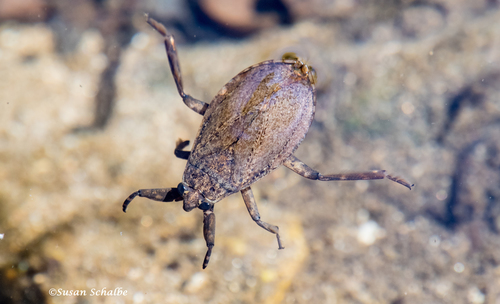
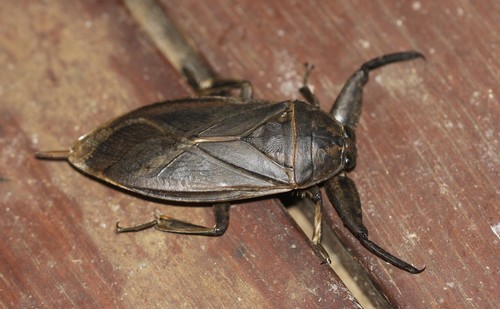
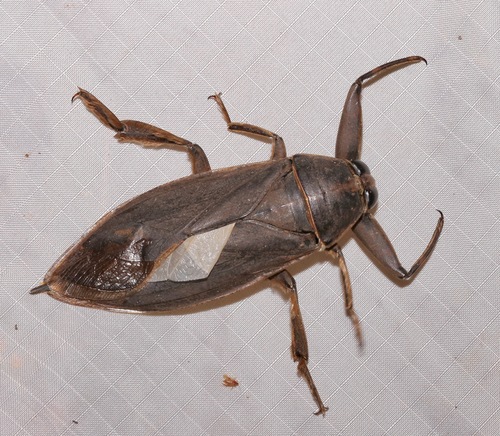
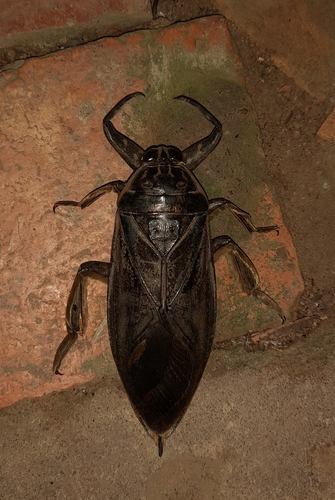
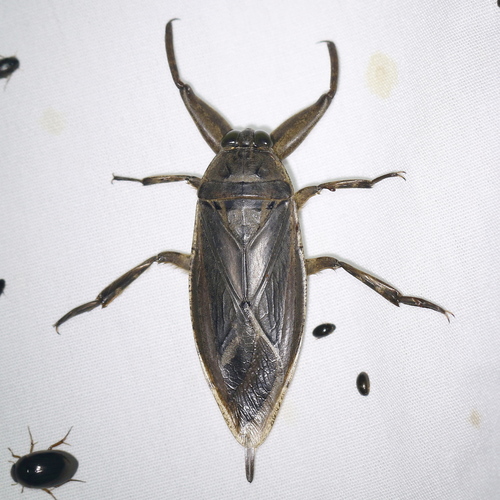
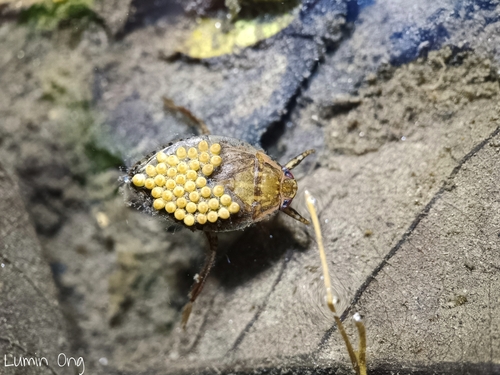
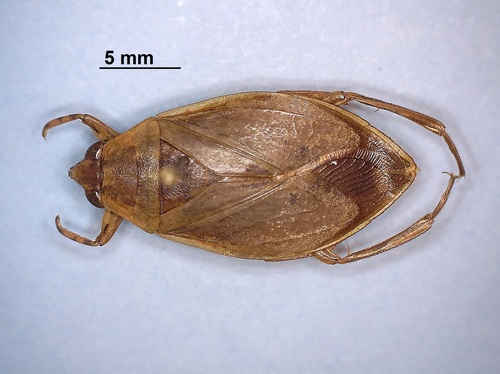
Belostoma flumineum Say, 1832 has an ovoid-elongate, dorsoventrally flattened brown body, with a total length ranging from 2 to 2.5 cm (0.79 to 0.98 inches). As insects, they have six legs: the front two are strong raptorial legs used to catch and hold prey in a vice grip, while the remaining four are slightly flattened and adapted for swimming. Their mouthparts include a stout, syringe-like rostrum (or beak), and long piercing stylets derived from ancestral mandibles and maxillae. Retractable strap-like appendages are located on the posterior end of the abdomen, which let the species snorkel while underwater. They have large eyes, but do not have ocelli, the small light-detecting sensory organs. Belostoma flumineum is commonly found in wetlands, marshes, and ponds across North America. It lives among aquatic weeds, and favors ponds with muddy bottoms, which provide good habitat for overwintering. Its common prey include backswimmers, water boatmen, dragonfly nymphs, and snails. While it does not regularly practice cannibalism, it will attack smaller individuals of its own species. Reproduction for this species occurs in two distinct phases: a fall cycle with young breeding individuals, and a spring cycle with overwintered adult breeders.