About Belenois aurota (Fabricius, 1793)
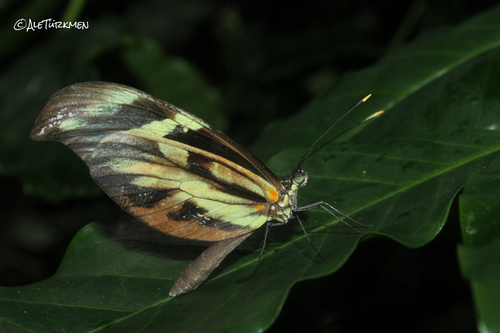
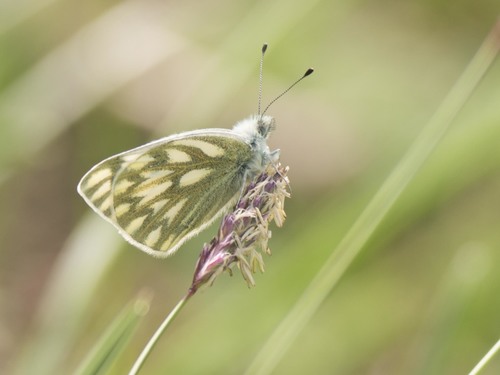
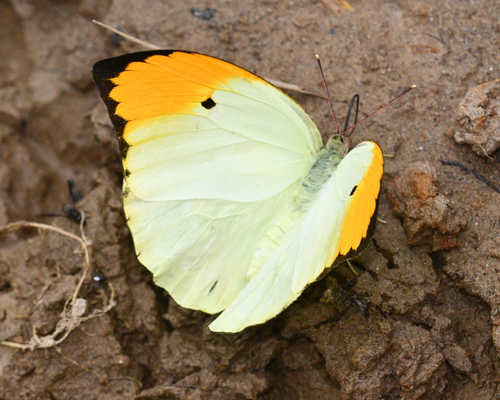
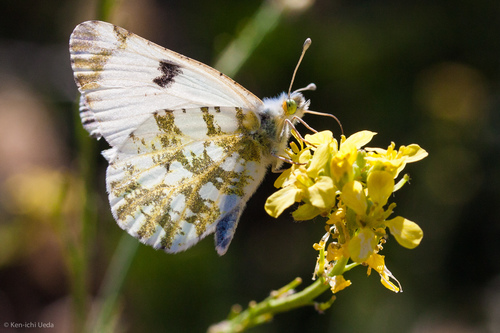
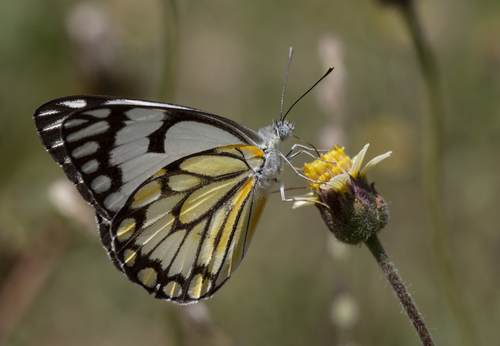
Belenois aurota (Fabricius, 1793), commonly called the pioneer, pioneer white, or caper white, is a small to medium-sized butterfly in the family Pieridae, the family that includes yellows and whites. This butterfly is found in South Asia and Africa. In Africa, it is additionally known as the brown-veined white, and it is widely recognized for large northeastward migrations across the interior of the continent during summer and autumn. Its distribution range includes Sri Lanka, the Himalayas from Kashmir to Sikkim at elevations below 1,800 m (6,000 feet), and extends through the plains to southern India. In the Nilgiris, individuals have been observed up to 2,400 m (8,000 feet), as recorded by George Hampson. To the west, its range extends through Persia and Arabia to East Africa, and the species occurs across most of Sub-Saharan Africa. For its life cycle, the larval food plants include Capparis zeylanica. In Africa, the host plants for the larvae are almost entirely from the family Capparaceae, specifically the genera Boscia, Maerua, and Capparis. Eggs are laid in batches of roughly 20, and newly hatched larvae live and feed communally.