About Beilschmiedia tawa (A.Cunn.) Kirk
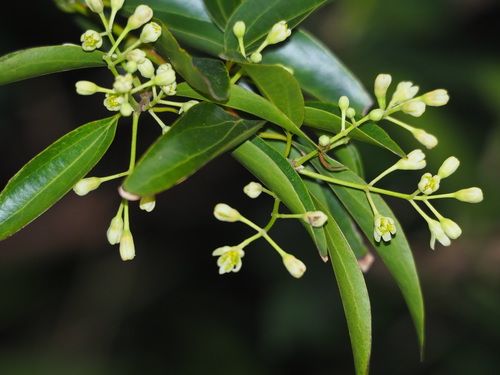
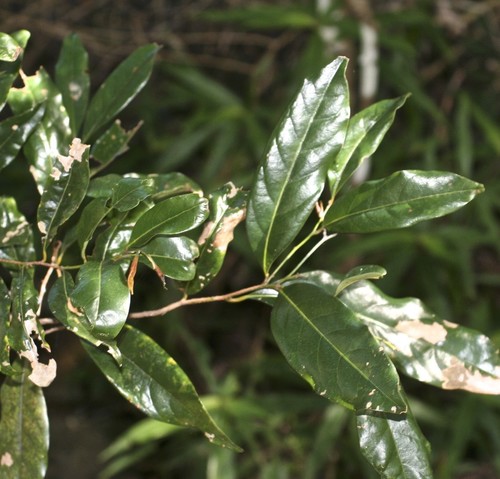
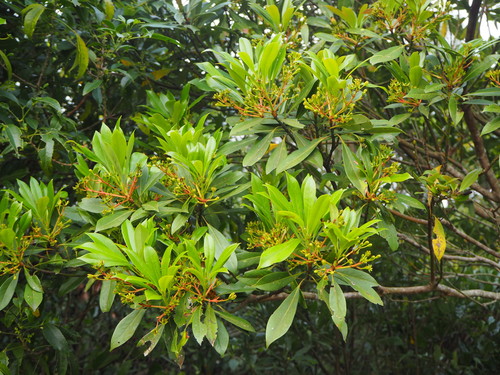
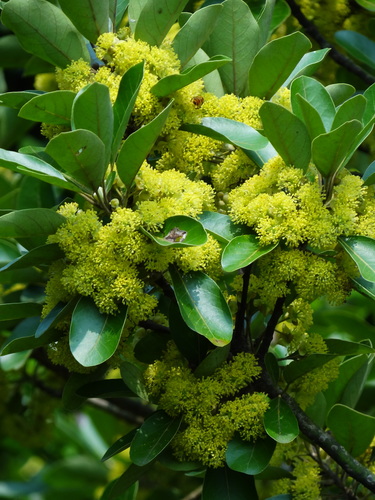
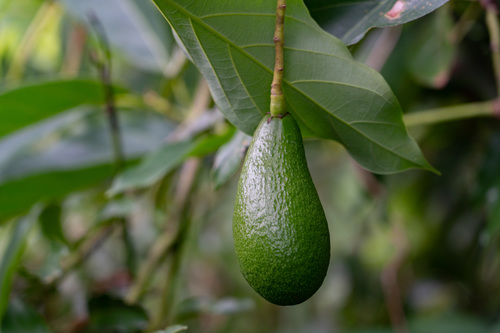
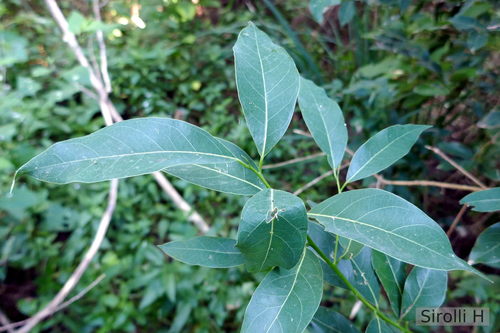
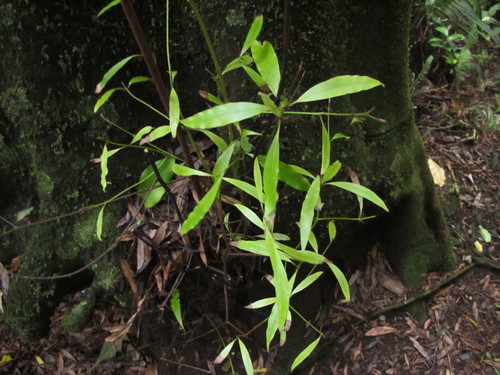
Beilschmiedia tawa, commonly called tawa, is a medium-sized evergreen tree in the Lauraceae family that is endemic to New Zealand. It reaches a maximum height of 25–35 m (82–115 ft) and can have a trunk up to 1 m (3 ft 3 in) in diameter. Flowering most often happens in January, though it can occur as early as October or as late as May. It produces an inflorescence (flower spike) that grows up to 100 mm (3.9 in) long. Its flowers are 2–4 mm (0.079–0.157 in) in diameter and pale green. Fruiting typically occurs in January, but can start as early as December or finish as late as March. The fruit is an oval-shaped drupe, usually 30 mm (1.2 in) long and 12 mm (0.47 in) wide, with a possible range of 20–38 mm (0.79–1.50 in) long and 9–18 mm (0.35–0.71 in) wide. Each fruit holds a single seed surrounded by a fleshy pericarp. The pericarp may be glaucous (covered in a pale waxy coating) or shiny, and turns dark purple when the fruit is ripe. This species has slender to moderately robust, upright branches. Its leaves are lanceolate, most often 40–80 mm (1.6–3.1 in) long (rarely 30–95 mm, 1.2–3.7 in) and 11–16 mm (0.43–0.63 in) wide (rarely 8–40 mm, 0.31–1.57 in). Leaf color ranges from yellowish to green. Leaves are glabrous (hairless) with a pale glaucous underside. Their petioles are typically 8 mm (0.31 in) long, ranging from 6–12 mm (0.24–0.47 in) in length. Beilschmiedia tawa is endemic to New Zealand, and it is most abundant in the North Island and many of the North Island’s offshore islands. It is less common in the South Island, where its population is mostly centered in the Marlborough Region, with the southernmost natural population located in the Kaikōura Ranges of northern Canterbury Region. It is one of two members of the genus Beilschmiedia native to New Zealand, alongside Beilschmiedia tarairi, commonly called taraire. It is only naturally absent from the highest regions of the Central Volcanic Plateau, montane forests, and locally unfavorable sites within the North Island’s lowland woods. It is also unusual to find it in secondary forests that formed after fire. The only gaps in its natural distribution across the country are on the Aupōuri Peninsula’s sand-dune terrain and the beaches of Kaipara and Manawatū, due to a lack of lowland native forest in these areas. The largest populations of B. tawa grow between the Mōkau and Whanganui Rivers, and in the hilly terrain of the eastern Bay of Plenty hinterland. In the South Island, B. tawa is mostly found in seaward valleys near the Marlborough Region, and it is uncommon inland. Its westernmost known natural occurrence in the South Island is in the Tākaka Valley, in the northwest of the Nelson Region. The Kaikōura Ranges in Canterbury are the southernmost natural location where this species grows. Tawa is notable because it relies entirely on kererū (New Zealand pigeon) and, where present, North Island kōkako to disperse its seeds. These are the only remaining bird species from New Zealand’s original biota large enough to eat the tree’s fruits, pass the seeds through their guts, and excrete them unharmed. Mature tawa can support large epiphyte communities in their canopies, one of the few habitats regularly used by the elusive, tree-dwelling striped skink. It is also one of three known native New Zealand plant species that hosts Coptomma variegatum, a beetle commonly called the tawa longhorn. Māori have traditional uses and cultural significance for tawa. Historically, Māori used tawa wood to craft tools including paddles, clubs, adze handles, and most notably lances for spearing kererū; some of these lances could reach up to 10 m (33 ft) in length. Both the purple flesh and the kernel of the tawa berry were used as food by Māori. The berries were steamed for two days in a hāngī (earth oven), then washed to remove the turpentine-flavored pulp. Dried kernels were stored for later use, when they would be soaked in hot water and pounded, sometimes with added flavoring. After European contact, processed stored tawa kernels were occasionally mixed with honey and mashed into cakes, and processed kernels could be stored for long periods. Predation from invasive species has made tawa less available for human use today. Large tawa trees often hold cultural and spiritual significance for Māori communities. In traditional Māori whakataukī (sayings), the tawa berry flesh (called tawa para) is used to describe cowardice, while the hard kernel (called tawa uho) is used to describe courage. The phrase ahi tawa (tawa fire) refers to the loud popping sound of tawa kernels cooking in open fire, and is used to describe noisy people or children. Early European settlers to New Zealand used tawa for timber, and an export industry developed that shipped tawa timber to Australia. Today, tawa wood can be used to make attractive, durable floorboarding. While the species is largely protected in conservation areas by strong environmental legislation, occasional licences are granted to mill timber from fallen tawa trees.