About Battus polydamas (Linnaeus, 1758)
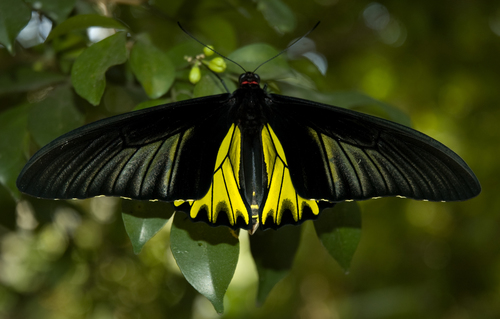
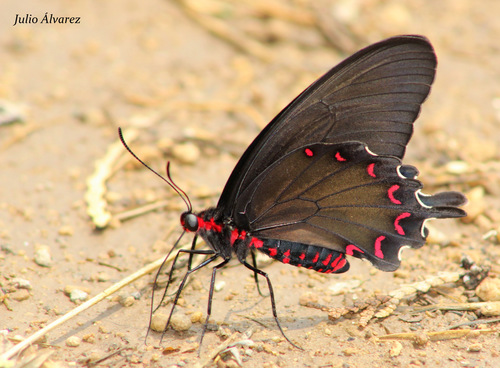
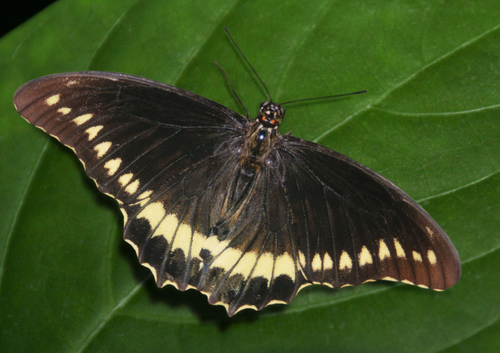
Morphology: The wingspan of an adult Battus polydamas, measured without the tail, ranges from 84 to 110 mm. The upper surfaces of the wings are black, marked with a broad submarginal band made up of large yellow spots. The undersides of the forewings follow this same pattern, while the undersides of the hindwings have a submarginal row of red crescent-shaped lunules. This butterfly produces three generations a year and flies from April to November in the northern part of its range; in the tropics, it flies year-round with multiple generations per year. Distribution and Habitat: The Polydamas swallowtail is widespread across the Neotropical realm. Its range covers Mexico, Central America, South America, the Caribbean, and the southern United States, including Texas and Florida. It also lives on many Caribbean islands, specifically Jamaica, Cuba, Puerto Rico, Haiti, and the Dominican Republic. Across this broad range, B. polydamas prefers habitats that give it access to its larval host plants, which are mostly species in the genus Aristolochia. It is most commonly found in open woodlands, along forest edges, and in abandoned fields. It can occasionally be found in gardens that contain its preferred host plants.