About Batis senegalensis (Linnaeus, 1766)
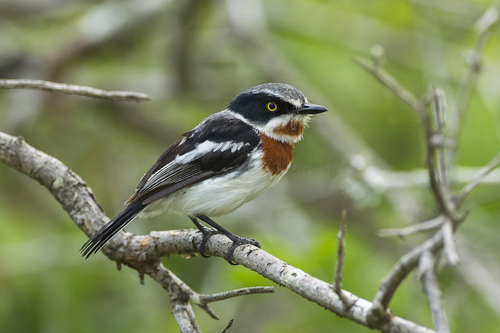
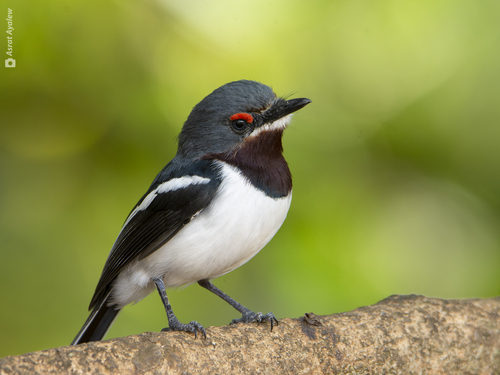
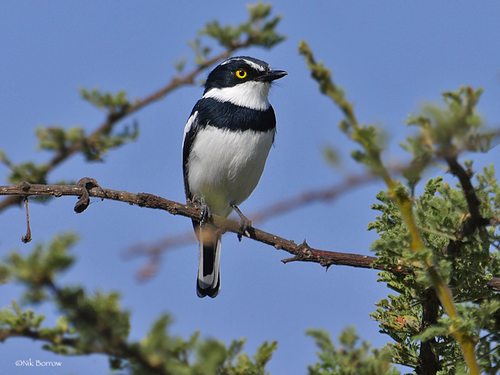
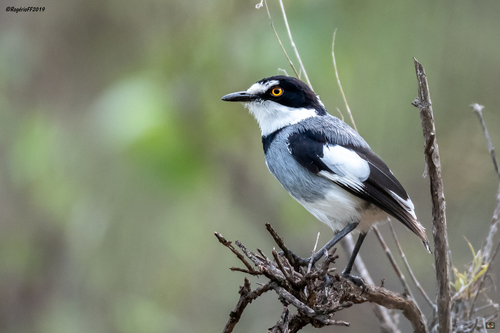
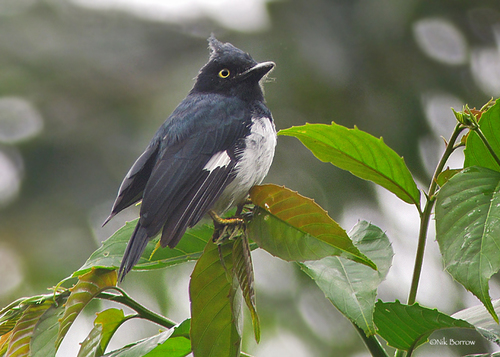
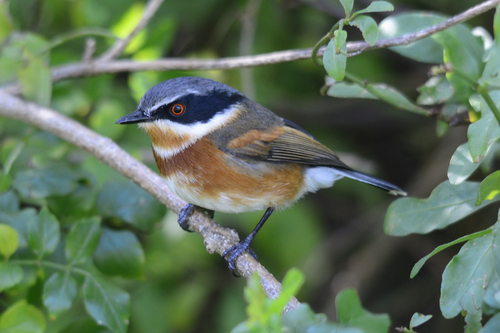
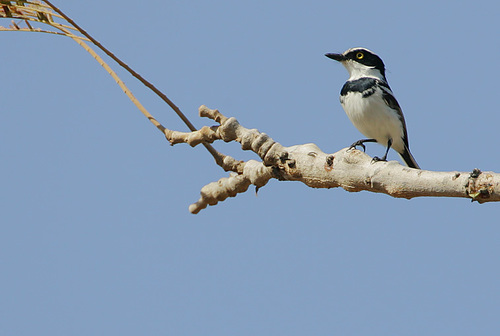
Batis senegalensis, commonly called the Senegal batis, is a small restless bird similar in appearance to a flycatcher. It displays the characteristic black, white, and grey coloration and plumage patterns typical of batises. Adult males have a dark slate grey forehead and crown, paired with a long, broad white supercilium that extends almost to the white nape patch. Their face mask is glossy bluish-black. The mantle and upper back are slate grey with a brown tinge, while the lower back and rump are mottled with grey, white, and black. The rump feathers are long, giving the rump a fluffy appearance that contrasts with the glossy blue-black uppertail coverts. The wings are brownish black with a white stripe running along their entire length, the underwing coverts are black, and the tail is black with white tips and edges on the outer tail feathers. The underparts are white, with the exception of the underwing coverts, thighs, and a broad glossy blue-black breast band. Adult females are overall paler than males: they have a dusky grey-brown forehead and crown, a buff supercilium and nape patch, a black face mask, browner wings, a russet breast band, and a rufous tinge on the chin and upper throat. Juveniles resemble duller versions of adult females. This species measures 10 cm (3.9 in) in length and weighs between 8–11.4 g (0.28–0.40 oz). The Senegal batis is distributed from southern Mauritania, Senegal, and Gambia eastward to Nigeria, as well as northern and central Cameroon, extending east to the Benoué Plain and Mandara Mountains. It inhabits low dry thorny scrub, sparsely treed grasslands, and woody savannahs, including open acacia and baobab woodlands.