About Batis capensis (Linnaeus, 1766)
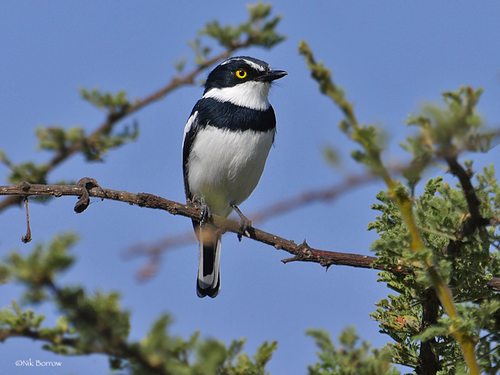
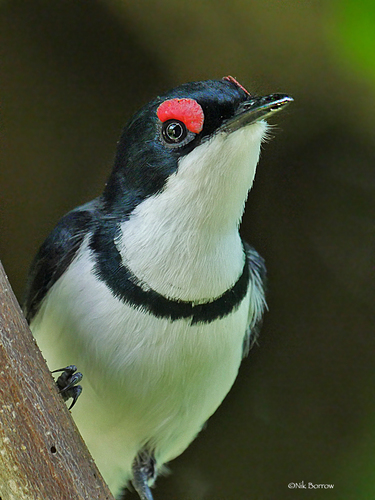
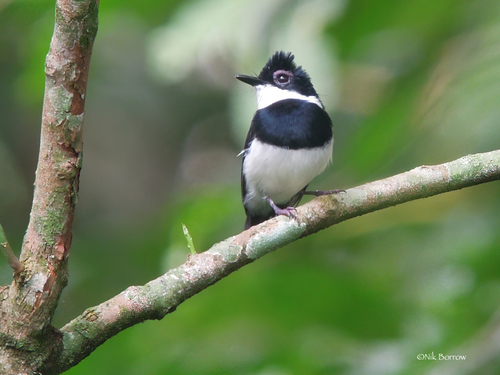
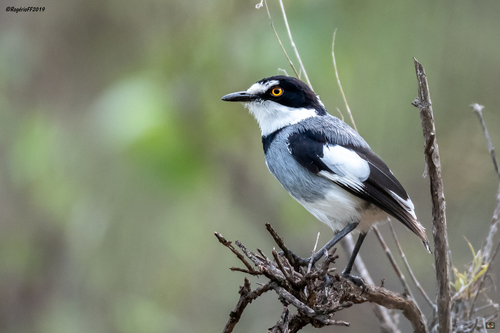
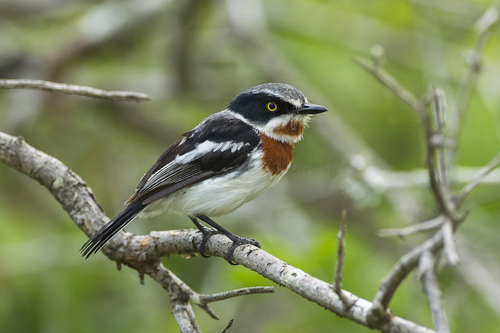
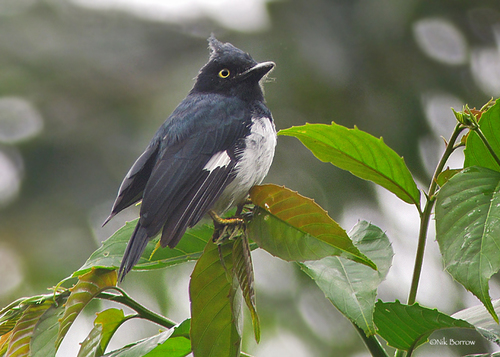
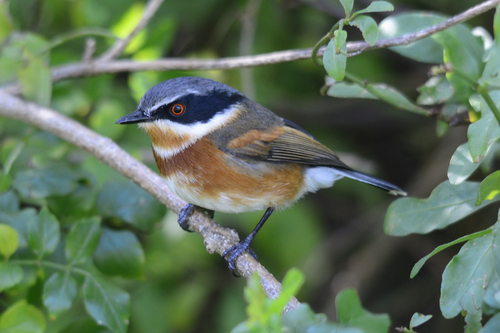
Batis capensis, commonly known as the Cape batis, has a striking, distinct plumage pattern. Adult males have a grey crown, black eye mask, white throat, brown back, black rump and tail, and rufous wings. Their underparts are white, marked by a broad black breast band and rufous flanks. Females and juveniles have different plumage: their breast band is narrower and rufous rather than black, and they have a small rufous patch on the throat. The rufous coloration on the wings and flanks sets this species apart from other Batis species found in the same region. Two Malawian subspecies, B. c. dimorpha and B. c. sola, have males with colder-toned upper part and flank plumage that lacks any rufous or olive, as well as shorter bills. These two subspecies are sometimes separated into their own species, the Malawi batis (Batis dimorpha). The population found on Mount Namuli may represent a third subspecies of this northern taxon. The typical song of Batis capensis is a triple whistle, sounding like cherra-warra-warra or foo-foo-foo. This species is resident, meaning it does not migrate, and it inhabits cool coastal forests, moist evergreen mountain forests, and wooded gorges. It is native to South Africa, Eswatini, the Matobos and Eastern Highlands of Zimbabwe, and adjacent areas of Mozambique.