About Bathyomphalus contortus (Linnaeus, 1758)
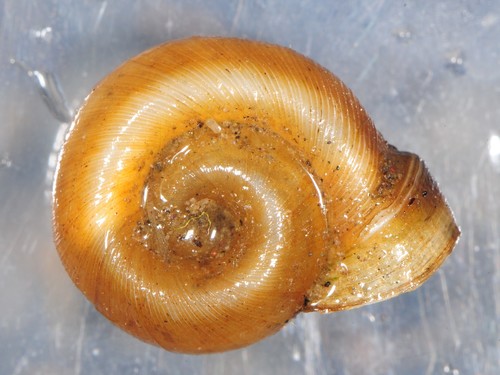
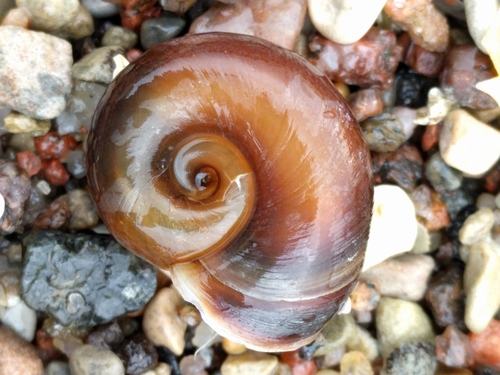
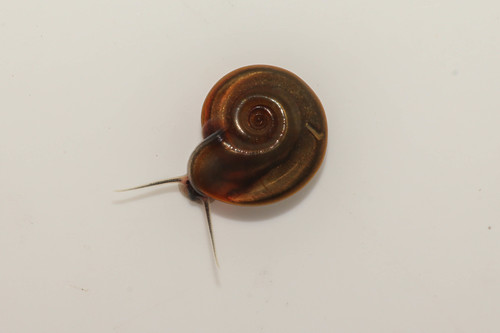
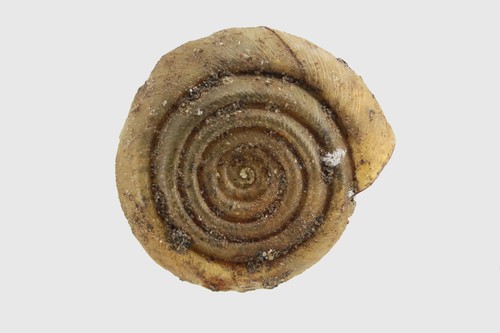
Bathyomphalus contortus (Linnaeus, 1758) has a shell that measures 1-2 mm in height and 3-6 mm in diameter, with up to 7-8 densely coiled, rounded whorls separated by a deep suture. The whorls are higher than they are wide; the lower surface of the shell is almost flat, while the upper surface has a large umbilicus that accounts for more than one-third of the shell's total diameter. The aperture is narrow. The shell is colored reddish horny brown, often covered with black or brown encrustations, and has fine surface striations. The soft body of the snail is blackish dark red, with very long tentacles and small, black eyes. This species has a Palearctic distribution, specifically within Eurasia's wide-temperate zone. It is found in Great Britain, the Czech Republic (where it is classified as least concern, LC), Germany, the Netherlands, Poland, and Slovakia. This small snail inhabits freshwater environments, with a preference for small, nutrient-poor water bodies, drains, and marshy or peaty pools. It also occurs in floodplain marshes, and very rarely lives in larger water bodies. Like Radix balthica, Bathyomphalus contortus is tolerant of acidic conditions. In Ireland, it is often the only snail species present in pools or drains located in and around raised bogs.