About Bathygobius soporator (Valenciennes, 1837)
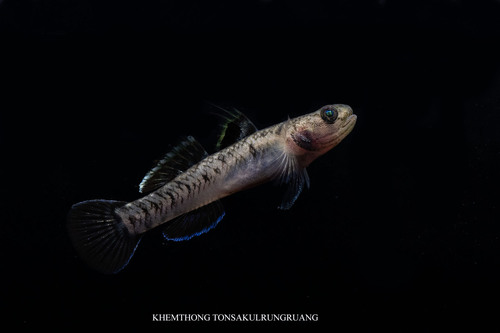
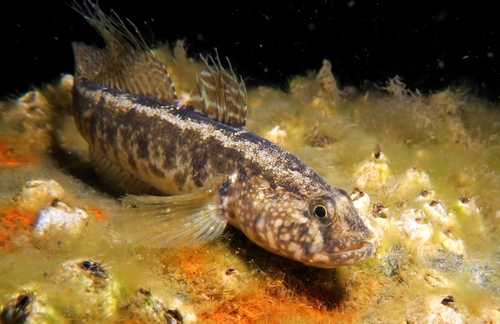
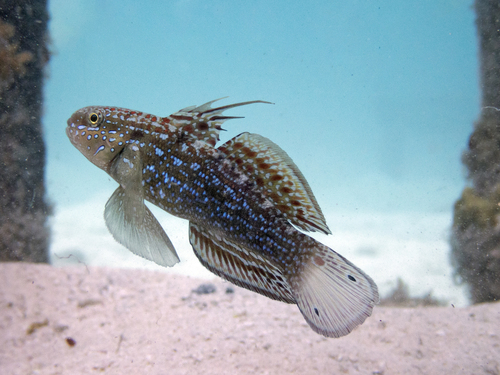
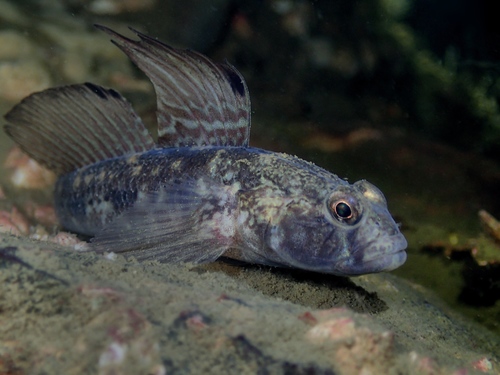
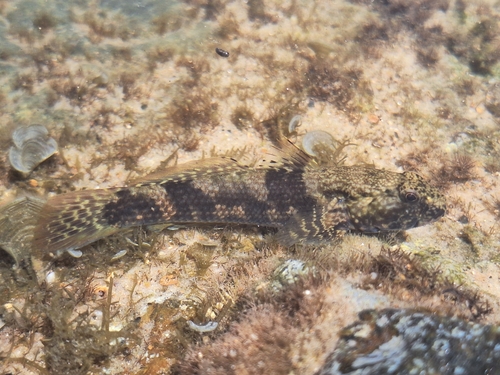
Bathygobius soporator, commonly called the frillfin goby, is typically dark-colored, with mottled patterning in black, gray, and tan. Body color can vary across different habitats. It has a thin gray-green first dorsal fin, and a trailing second dorsal fin of the same color. Its brown eyes are proportionally large, and it has large cheeks. The caudal, anal, pectoral, and pelvic fins are transparent yellow. The pelvic fins of the frillfin goby have one spine and five closely spaced rays.
Frillfin gobies are most often found in tide pools, around mangrove trees, or in sheltered seagrass beds. They can live in marine, brackish, and even freshwater environments, and tolerate a wide range of salinities. This species occurs in the Gulf of Mexico, and prefers inshore shallows, especially areas near rocks and pilings.
For reproduction, female frillfin gobies lay fertilized eggs on hard, sheltered surfaces, such as the inside of an empty conch shell. A single male can mate with multiple females, and each mated female lays her eggs in the same shared location. The male guards the egg cluster until the eggs hatch. Males of this species are often extremely territorial, and will chase away intruders. Mature young frillfin gobies grow to an average length of about 7.5 cm.