About Bassaricyon neblina Helgen, Pinto, Kays, Helgen, Tsuchiya, Quinn, Wilson & Maldonado, 2013
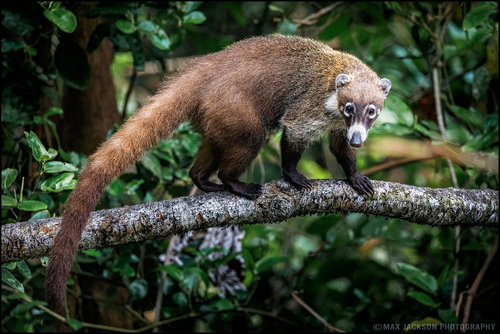
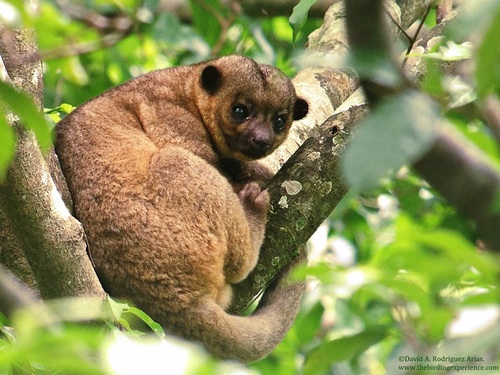
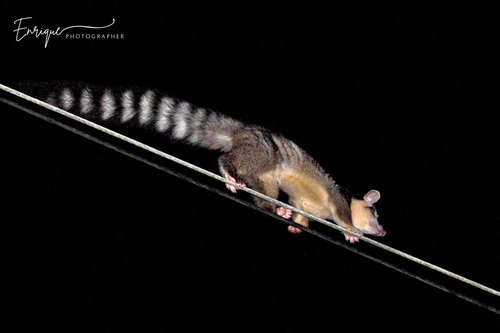
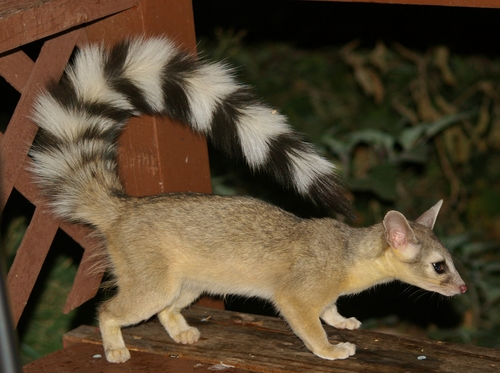
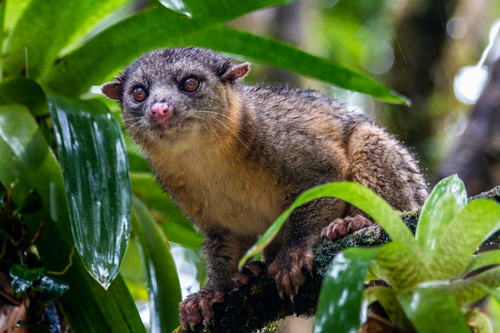
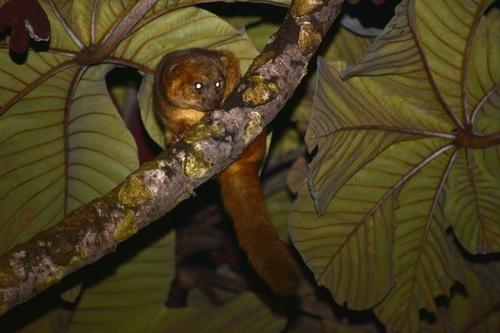
Description: The olinguito (Bassaricyon neblina) is distinct from other species in its genus, which are commonly called olingos, and also distinct from the kinkajou. While kinkajous resemble olingos, the two groups are not closely related. The olinguito has an average weight of 900 grams (2 lb), which makes it the smallest member of the procyonid family. This animal is an omnivorous frugivore; it eats mainly fruits like figs, but also consumes insects and nectar. This diet produces feces about the size of small blueberries. The olinguito is thought to be solitary, nocturnal, and moderately reclusive. It appears to be strictly arboreal, meaning it lives almost entirely in trees. It has a single pair of mammae, and probably gives birth to only one offspring at a time. Distribution and habitat: Identified specimens of this species come from Andean cloud forests that stretch from western Colombia to Ecuador, found at elevations between 1,500 and 3,000 metres (4,900 to 9,800 ft). This elevation range is the highest known range of any member of the genus Bassaricyon. Confirmation of the species' existence in the wild was announced on 15 August 2013. While the species is not considered to be immediately at risk of extinction, researchers estimate that more than 40 percent of its potential range has been lost to deforestation.