About Basiliscus vittatus Wiegmann, 1828
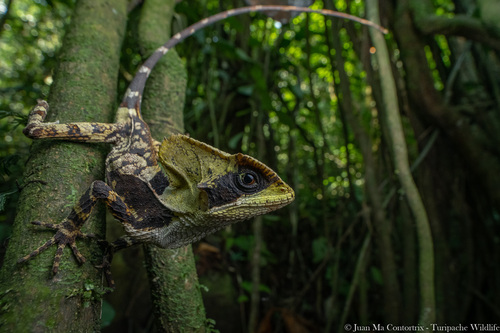
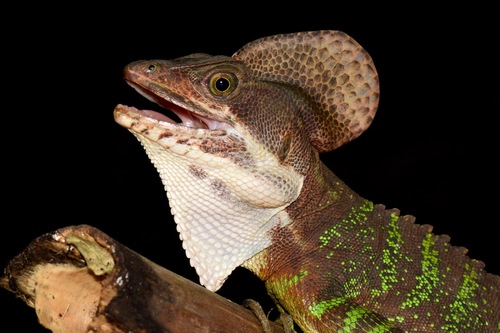
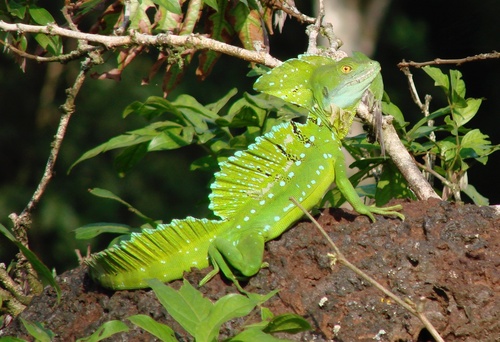
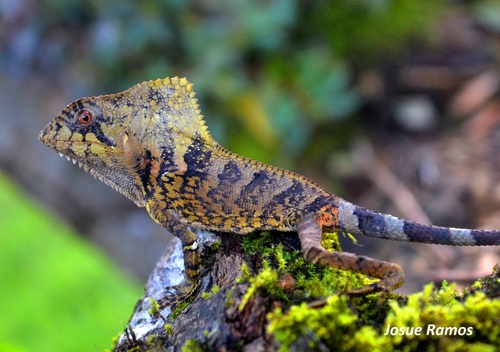
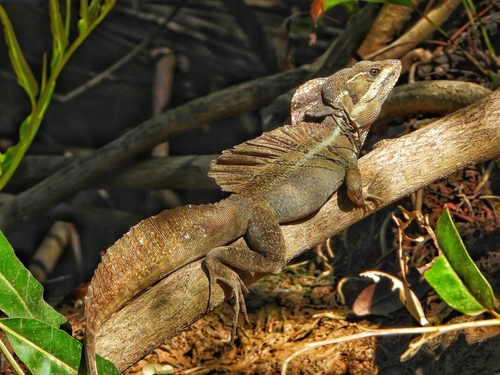
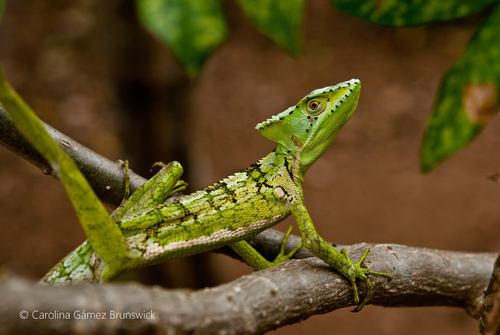
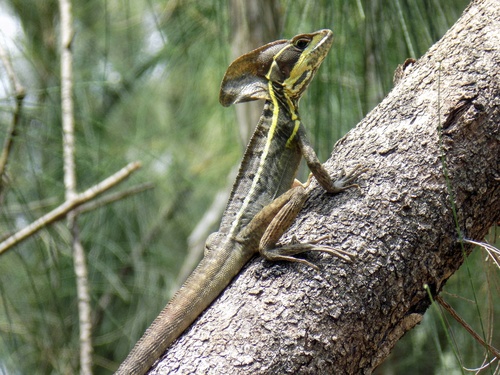
The male brown basilisk (Basiliscus vittatus Wiegmann, 1828) can reach a total length of 61 centimetres (24 inches), including the tail, while females are somewhat smaller. This species has a three-part dorsal crest that runs along the head, back, and tail. Its base color is brown or olive brown, marked with black crossbands that typically appear only on the flanks and the dorsal crest. A white stripe extends from the eyes back to the rear legs. Males have a larger crest than females. Adult brown basilisks weigh between 200 and 600 grams (0.44 to 1.32 pounds), and have long toes tipped with sharp claws. For reproduction, female brown basilisks lay clutches of around 2 to 18 eggs, and can lay eggs five to eight times each year. Eggs hatch after approximately three months, and newly hatched babies weigh around 2 grams (0.071 ounces). It is hypothesized that brown basilisks reproduce year-round, though males show a peak in spermatogenic activity during the dry season, and a peak in insemination and/or copulation at the start of the rainy season.