About Bartholomea annulata (Le Sueur, 1817)
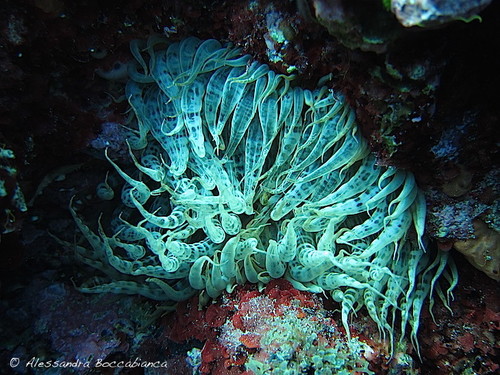
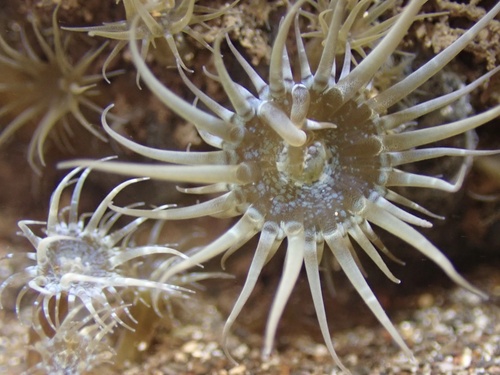
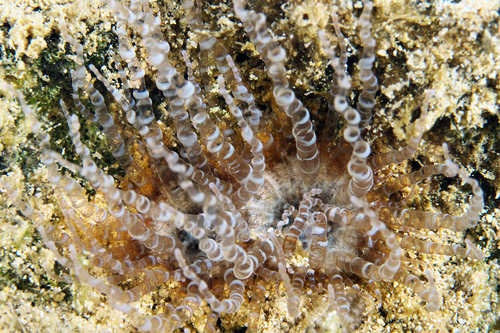
The ringed anemone, Bartholomea annulata, can reach a diameter of 30 centimetres (12 in) when fully extended. Its column is short and wide, and its oral disc, which has a central mouth, can be 12 centimetres (4.7 in) across. It has around two hundred long, translucent tentacles marked with whorls and spirals formed by groups of cnidocytes. Its overall body colour is typically grey or brown, and the areas holding cnidocytes are cream-coloured. This anemone hosts symbiotic zooxanthellae, single-celled algae that live inside its tissues. During daylight hours, these algae use sunlight energy to produce carbohydrates via photosynthesis. The sea anemone gains nutritional benefit from this arrangement, while the algae get a safe place to live with low risk of predation. The ringed anemone is a common species native to the Caribbean and Gulf of Mexico. Its range extends from Bermuda, Florida, and Texas south to the northern coast of South America. It occurs on reefs and soft substrates including coral rubble and sand, at depths down to approximately 40 metres (130 ft). It usually lives inside a hole or crevice, or under a rock, and will retract out of sight when disturbed. It has also been recorded living in the empty shell of the queen conch Lobatus gigas. Known predators of the ringed anemone include starfish, nudibranchs, and sea spiders such as Pigrogromitus timsanus. When infested by this sea spider, the anemone retracts its tentacles, produces large amounts of mucus, and cannot attach to the substrate, and infestation often results in the anemone's death. The sea spider remains unaffected by the anemone's stinging cnidocytes. The ringed anemone associates with several other invertebrates, including the opossum shrimp Heteromysis actiniae and multiple species of cleaner shrimp. These cleaner shrimp include Ancylomenes pedersoni and the spotted cleaner shrimp Periclimenes yucatanicus, which live near the anemone or among its tentacles. The shrimp lash their white antennae to attract fish, relying on the anemone to protect them from predators while they work. They then remove and eat external parasites from the host fish.