About Barisia imbricata (Wiegmann, 1828)
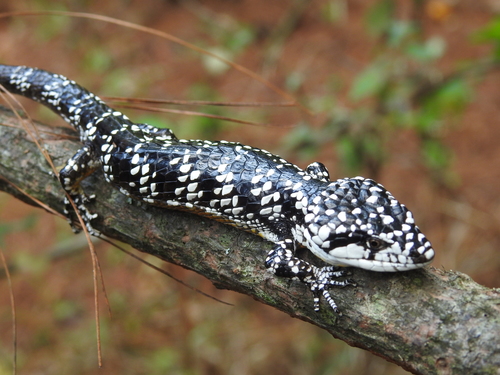
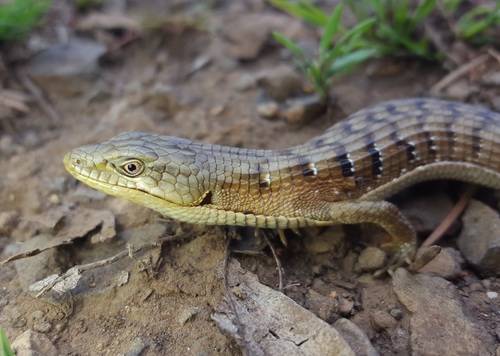
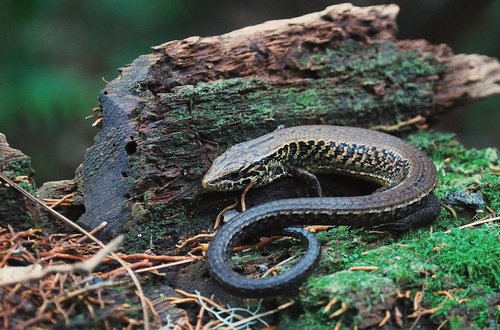
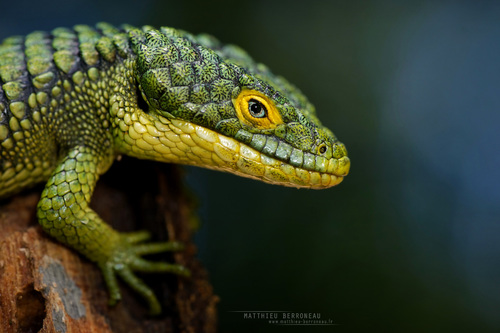
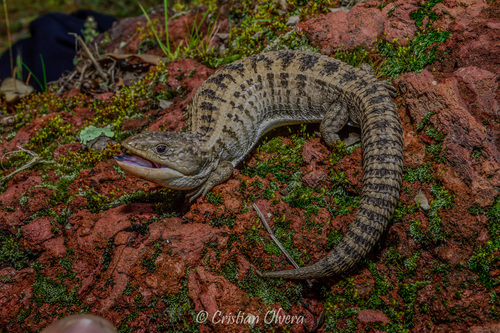
Barisia imbricata, commonly known as the imbricate alligator lizard and the transvolcanic alligator lizard, is called el escorpión de transvolcánico in Mexican Spanish. It is a medium-sized lizard species belonging to the family Anguidae, and it is endemic to Mexico. This species can be found in the Mexican states of Aguascalientes, Chihuahua, Guanajuato, Guerrero, Hidalgo, Jalisco, México, Michoacán, Morelos, Nayarit, Oaxaca, Puebla, Veracruz, and Zacatecas. Its preferred natural habitats are forest and grassland, located at altitudes between 1,200 m and 3,000 m (3,900 ft to 9,800 ft). Reproduction in B. imbricata has been described as both viviparous and ovoviviparous, and litter sizes can reach up to 11 newborns. Females follow a summer/autumn activity pattern: follicular growth begins in spring (June), and ovulation occurs in autumn (late August to September). In the Río Frío area of Mexico State, Mexico, ovarian activity is positively correlated with precipitation, but shows no correlation with temperature changes or photoperiod (day length). Males experience testicular recrudescence in spring (April to May), reach peak testicular activity in summer (June to August), and undergo regression starting in September. In the Río Frío area of Mexico State, Mexico, testicular recrudescence is correlated with both the photoperiod at 19 N latitude and the local precipitation cycle. No sexual dimorphism in size has been observed, and males and females have a similar mean snout-vent length (SVL).