About Barbus barbus (Linnaeus, 1758)
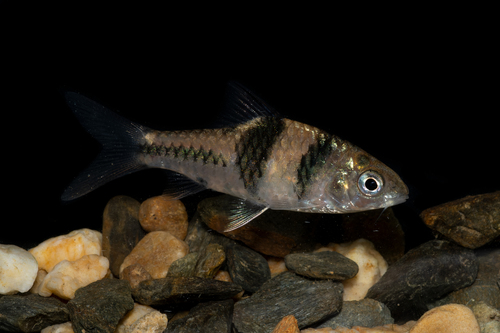
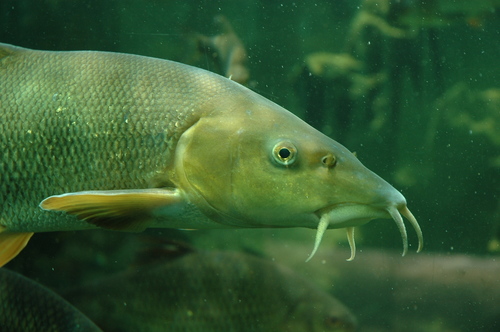
Common barbel, with the scientific name Barbus barbus (Linnaeus, 1758), is a species of freshwater fish in the Cyprinidae family. It is the type species of the genus Barbus, and it shares the common name "barbel" with many other members of this genus. In Great Britain, this fish is usually just called the barbel; similar local names are used across Europe, such as barbeau in France and flodbarb in Sweden. Its common name comes from the four whisker-like structures that sit at the corners of its mouth, which the fish uses to find food. Barbus barbus is native across northern and eastern Europe. Its native range extends north and east from the Pyrenees and Alps to Lithuania, Russia, and the northern Black Sea basin. This adaptable fish transplants easily between waterways, and has become established as an introduced species in several countries including Scotland, Morocco, and Italy. While barbel are native to east-flowing rivers in England, they have been historically translocated to west-flowing rivers like the River Severn. This species favours habitats called barbel zones, which are fast-flowing rivers with gravel or stone bottoms. It also regularly occurs in slower rivers, and has been successfully stocked in still waters. Barbel are very abundant in some rivers, and are often seen in large shoals on rivers such as the Wye. Izaak Walton recorded that historically, there were so many barbel in the Danube that people could catch eight or ten loads of them by hand at a time. Adult Barbus barbus can grow up to 1.2 m (4 ft) long and weigh up to 12 kg (26 lb), though most adults are smaller, typically 50–100 cm long and 1–3 kg in weight. Adult barbel can live for over 20 years. Their sloping foreheads, flattened undersides, slender bodies, and horizontally oriented pectoral fins are all adaptations for life in swift, deep rivers, helping them stay close to the riverbed even in very strong currents. Juvenile barbel are usually grey and mottled. Adults are typically dark brown, bronze, or grey with a pale underside, and have distinctively reddish or orange-tinged fins. The lobes of the tail are asymmetrical: the lower lobe is rounded and slightly shorter than the pointed upper lobe. Barbel are active fish that often travel long distances in relatively short time periods. Individual barbel can move between 16 and 68 km in a year, with an average daily movement of 26 to 139 m. Adults most commonly feed at night, but they may feed during the daytime in the safety of deeper water, or close to bankside cover and underwater obstructions. Their underslung mouths are especially well adapted for feeding on benthic (bottom-dwelling) organisms, including crustaceans, insect larvae, and mollusks, which they root out from the gravel and stones of the riverbed. Barbel diets change as the fish develop from fry to juveniles, then to adults. Diatoms growing on rocks, and larvae of non-biting midges (Chironomidae), are particularly important food sources for young barbel. An old text notes "The Barbel is a swete fysshe, but it is a quasy meete and perilous for mannys body". Multiple authors have recorded that barbel roe is highly toxic when eaten by humans, including Dame Juliana Berners and Charles David Badham. Badham describes an experience related by Italian physician Antonio Gazius: Gazius took two boluses of barbel roe, and reported that he felt no ill effects at first, but several hours later began to feel unwell. His stomach swelled, and could not be reduced by anise or carminatives, leaving him in great distress and depression. He developed a pallid countenance like someone who has fainted, followed by deadly coldness, then violent cholera and vomiting that lasted until the roe passed, after which he recovered. The use of barbel roe as a poison is referenced in Nostradamus's Les Prophéties, century VII, 24. Despite the risks associated with eating barbel roe, several notable cookery authors have included barbel recipes in their books. For example, Mrs Beeton notes that barbel are in season during the winter months, and suggests simmering them with port and herbs. Barbel is also featured in Frederick Bishop's The Illustrated London Cookery Book.