About Barbula unguiculata Hedw.
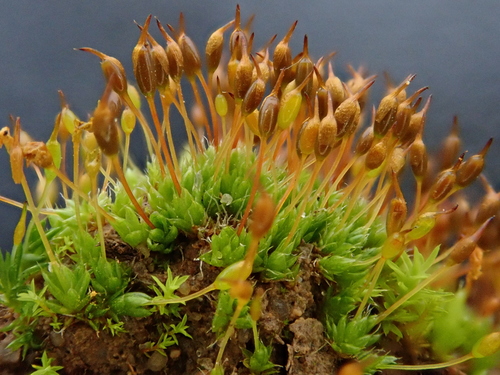
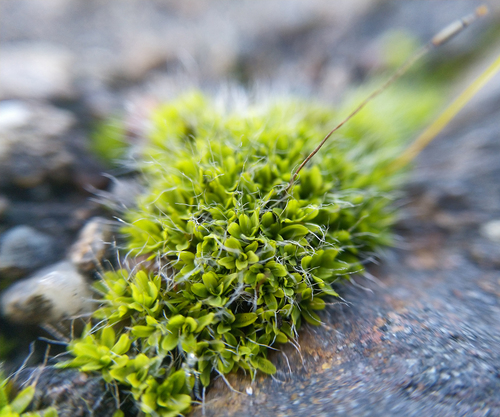
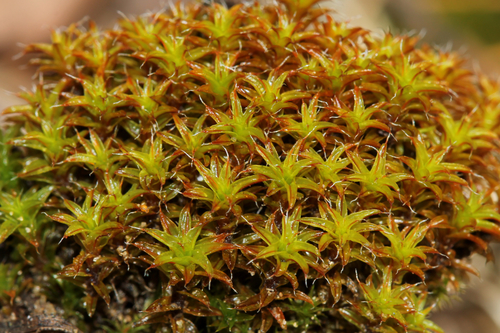
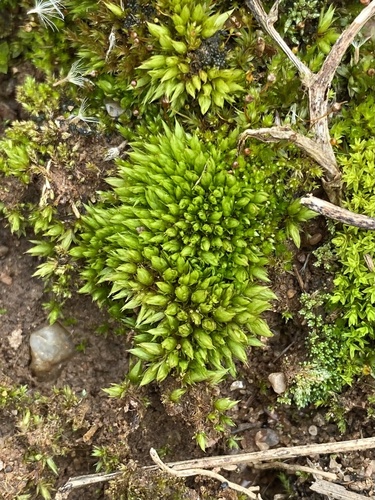
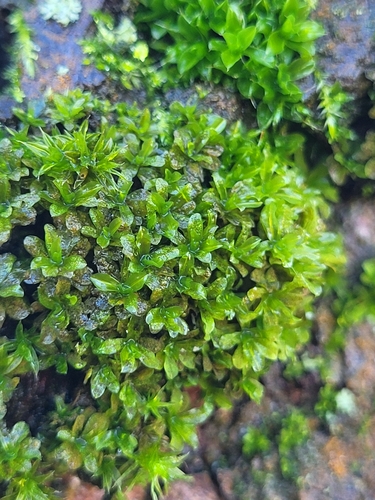
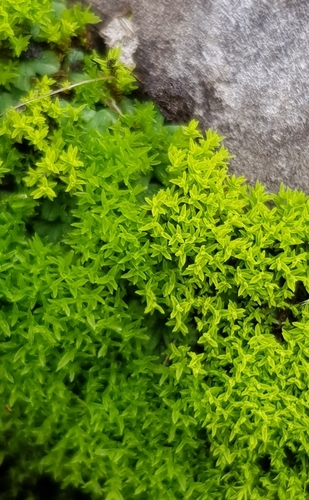
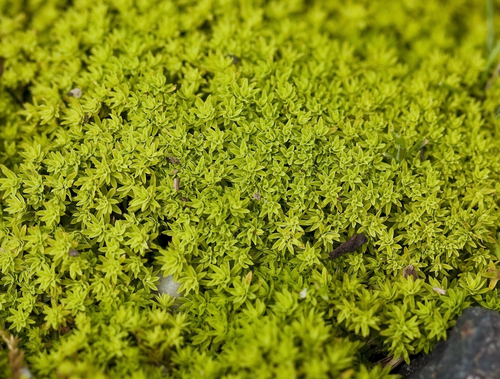
Barbula unguiculata Hedw., commonly known as Bird's-claw Beard-moss, is a moss species in the family Pottiaceae. It usually has a distinctive bright yellow-green color that is uncommon among similar acrocarps, with only Trichostomum species sharing this hue. Its leaf cells are densely papillose, which gives the leaves an opaque appearance. When conditions are dry, its leaves often twist or curl around the stem; when moist, the leaves spread outward. Most of each leaf is parallel-sided along its length. The stems of this moss typically grow to around 1 to 2 millimetres (0.039 to 0.079 in) long, while its leaves are generally between 1 and 2.5 millimetres (0.039 and 0.098 in) in length. Its seta measures 1 to 2.5 centimetres (0.39 to 0.98 in), and its spores are 8 to 11 µm. Capsules mature in winter and early spring, and occasionally in summer or fall. Barbula unguiculata most often colonizes open, exposed, and disturbed sites, growing on substrates including soil, sand, gravel, sandstone, granite, limestone, walls, roadcuts, paths, lawns, ditches, boulders, and cliff crevices, at elevations ranging from 50 to 2700 m. It occurs frequently on eutrophic grounds like sidewalks and arable fields. This species is capable of growing using artificial light in areas that have no natural light, such as Niagara Cave and Crystal Cave in Wisconsin. It is common in eastern North America, Asia, Europe, and other parts of the North and South Temperate zones, and is rare in the tropics.