About Barbodes binotatus (Valenciennes, 1842)
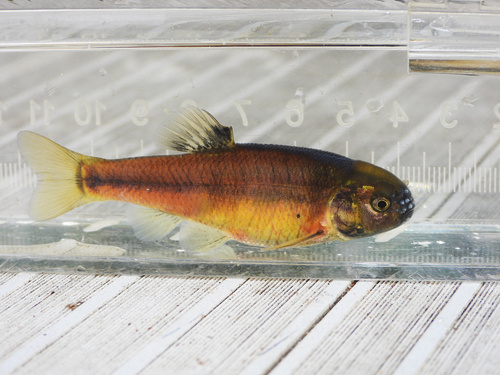
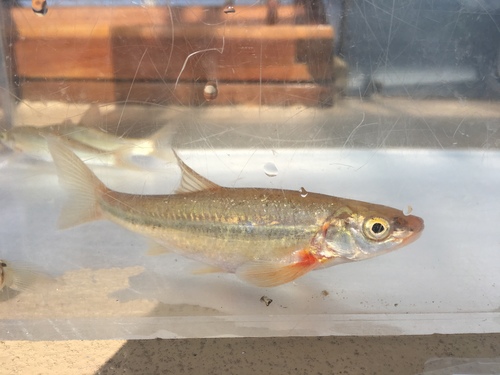
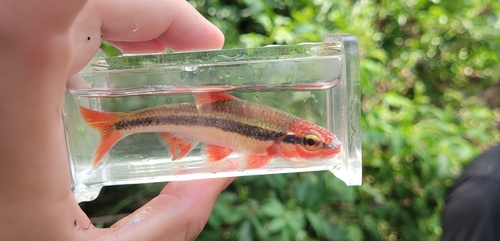
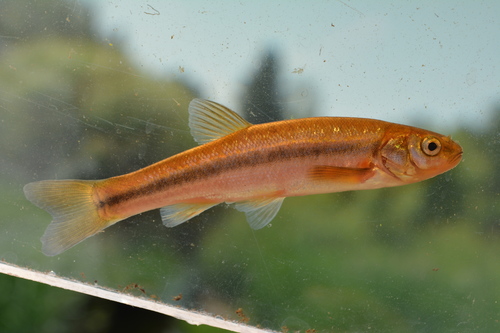
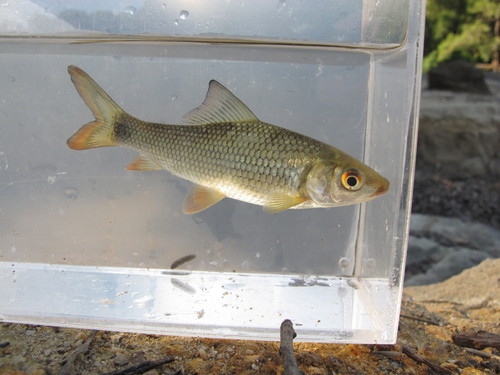
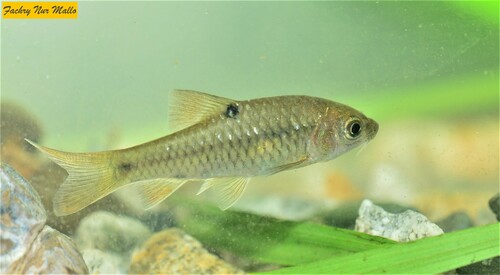
When alive, Barbodes binotatus has body color that ranges from silvery gray to greenish gray, with a darker upper dorsal side and paler, nearly white throat and belly. It has a distinct bar on its shoulder located behind the gill operculum. In large individuals, most body markings like spots or bands may be absent, with only the spot at the base of the caudal fin remaining. It has a round, broad-tipped snout that is equal to or slightly larger than the eye. This fish can reach a maximum length of 7.75 inches, which is 19.7 centimeters. This species was originally thought to have a much broader native distribution across Southeast Asia, but it is now confirmed that B. binotatus sensu stricto is restricted to the island of Java in Indonesia. All records of B. binotatus sensu lato from other parts of Southeast Asia represent either mistaken identifications of similar species or undescribed taxa that are superficially similar to B. binotatus. Its native habitat occurs from around sea level up to more than 2,000 meters above sea level. It is commonly found below waterfalls in isolated mountain streams, and on small islands that host very few other freshwater fish species. It also lives in medium to large rivers and stagnant water bodies. It is typically found in the middle to bottom depths of relatively shallow waters, where it feeds on zooplankton, insect larvae, and some vascular plants. It inhabits tropical climates, and prefers water with a pH of 6.0–6.5, water hardness of 12.0 dGH, and a temperature range of 75–79 °F (24–26 °C). This species is an open-water, substrate egg-spawner, and adult barbs spawn around dawn.