About Baracus vittatus hampsoni Elwes & Edwards, 1897
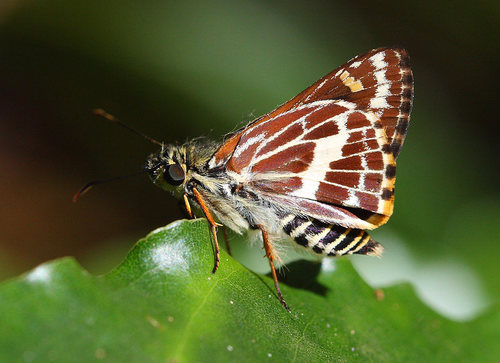
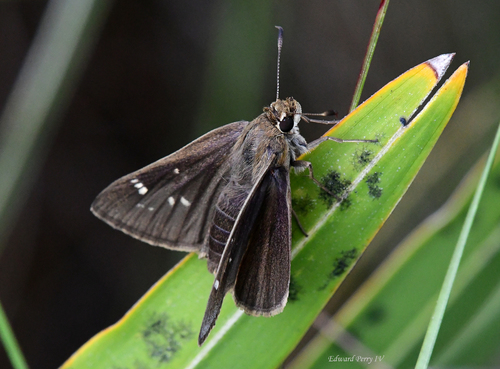
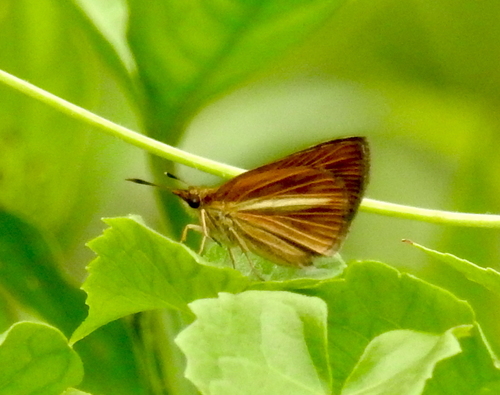
Scientific name: Baracus vittatus hampsoni Elwes & Edwards, 1897. Edward Yerbury Watson first described this butterfly in 1891, with the following details. For both males and females, the upperside is dark olive-brown. Males have an olive-grey lower basal and discal area on both wings, plus a small olive-grey subapical spot of the same color on the forewing. Females have a small olive-grey subapical spot and a slender, spot-forming macular discal streak on the forewing; on the hindwing, the lower basal and discal olive-grey area is less distinct. The underside is ferruginous, with veins narrowly lined with a paler shade of ferruginous. The forewing has a dusky brown basal area. The hindwing has a longitudinal medial yellow fascia running from the base of the cell, and a shorter, less distinct yellow discal streak positioned between the veins. The body, palpi, and legs are olive-brown, and are paler on the underside.