About Bandicota indica (Bechstein, 1800)
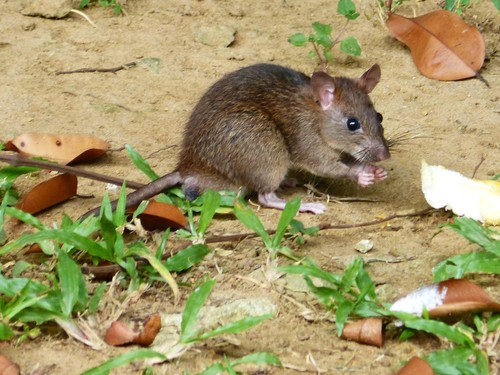
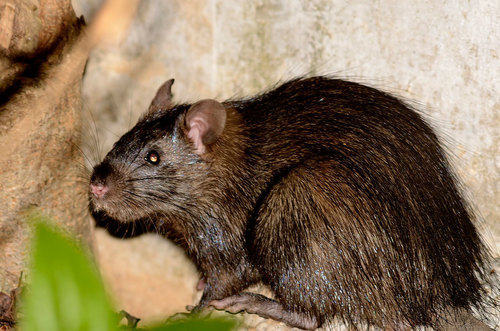
The greater bandicoot rat, scientifically named Bandicota indica (Bechstein, 1800), has dark gray-brown fur on its upper body covered with a large number of long black hairs. Its sides are gray with just a few long black hairs, and its ventral surfaces are covered in short, light gray fur. This species has a dark, hairless, scaly tail, and dark feet with light-colored claws. Young greater bandicoot rats are much lighter in color than adults. In Sinhala, this rat is called maha uru-meeya (මහ ඌරු මීයා), and in Malayalam it is called panni-eli (പന്നിയെലി) or thorappan (തോരപ്പൻ). Both Sinhala and Malayalam names translate directly to "pig-rat". It is one of several animals referred to as chuchundra in the Nepali language. Regarding reproduction, a female greater bandicoot rat produces between 8 and 10 litters over the course of her life. Each litter contains 8 to 14 rat pups, which are born blind and hairless. Young rats reach sexual maturity approximately 50 to 60 days after birth, and adult individuals have a lifespan of around one year.