About Balanus glandula Darwin, 1854
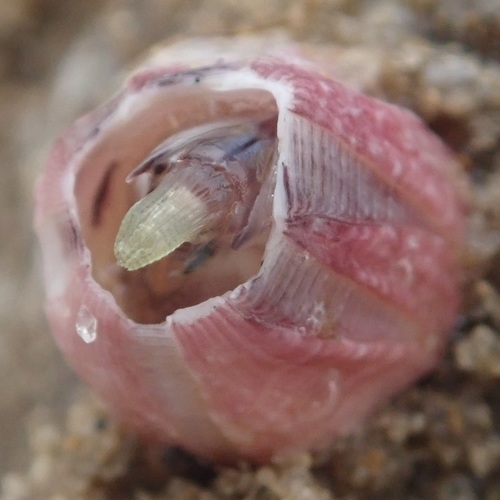
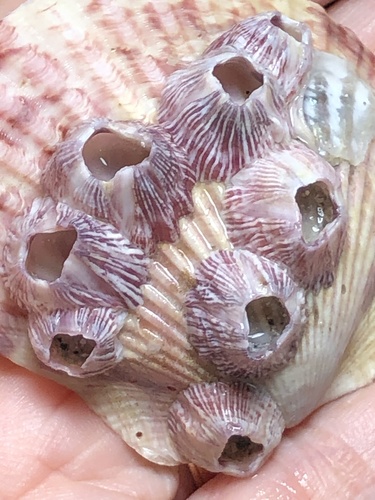
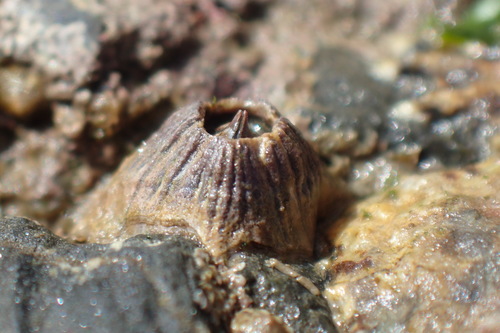
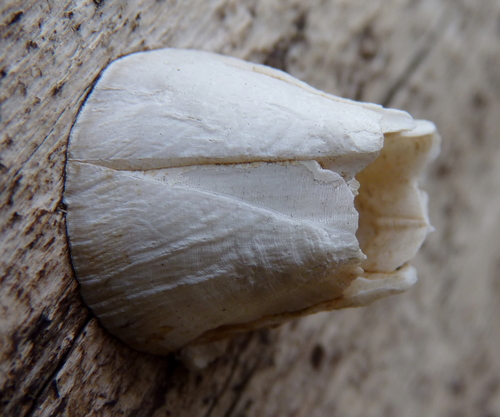
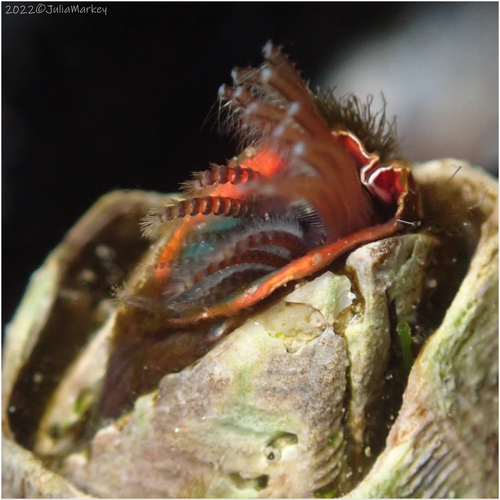
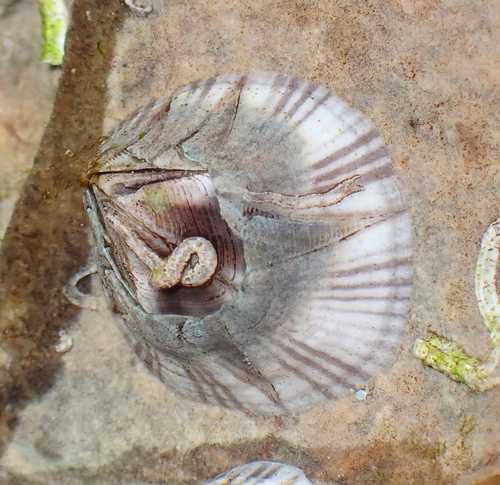
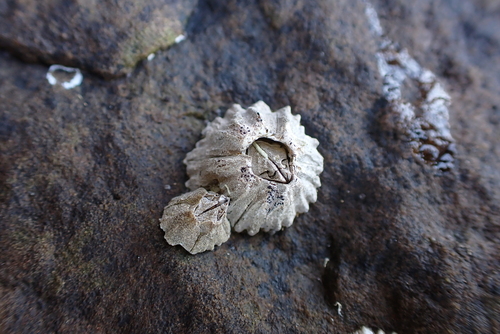
Balanus glandula, commonly called the North American acorn barnacle or common acorn barnacle, is one of the most common barnacle species on the Pacific coast of North America. Its native distribution ranges from the U.S. state of Alaska to Bahía de San Quintín near San Quintín, Baja California. It is most often found in the upper intertidal zone, attached to mussels, rocks, and pier pilings. This species can obtain oxygen from both water and air. It is a moderate-sized acorn barnacle, reaching a maximum diameter of 22 mm (0.9 in). Its shell is made of overlapping plates, has a calcareous base, and is shaped more like a cylinder than a cone. Its white operculum has thickly ridged walls. Balanus glandula can live up to ten years. In recent years, it has been studied intensely as a model species for research that connects physical oceanography with population genetics or phylogeography surveys. This species was introduced to the coasts of Argentina in the 1960s, where it has become an invasive species that displaces native barnacles and mussels.