About Balanus crenatus Bruguière, 1789
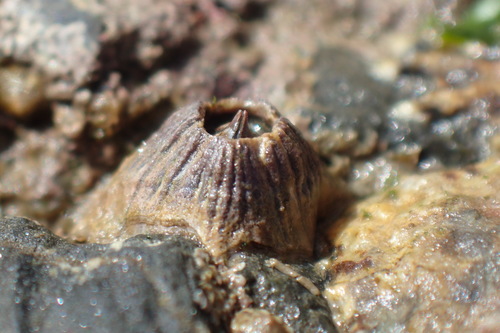
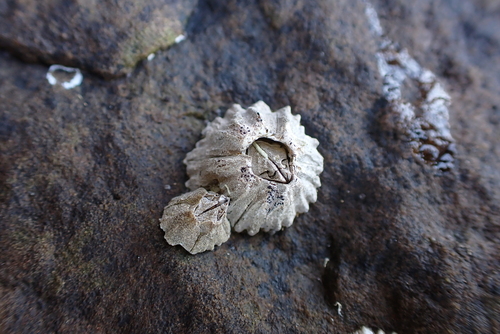
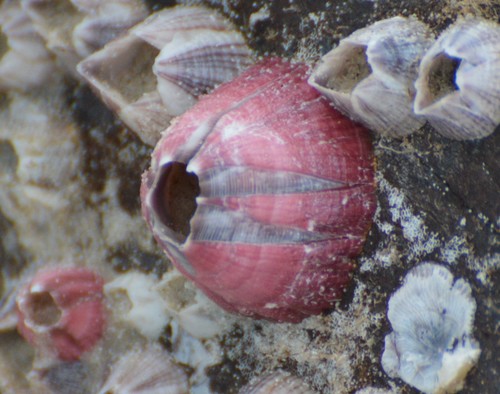
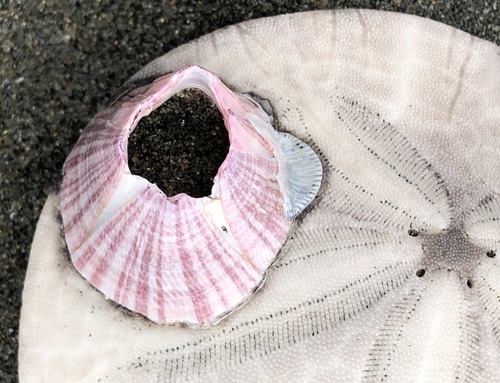
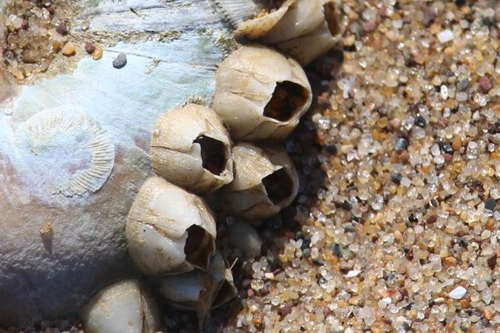
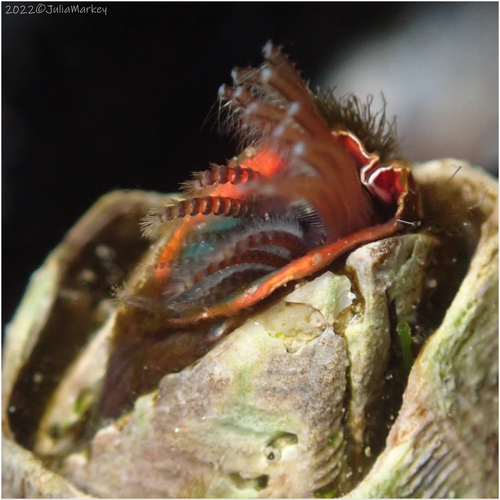
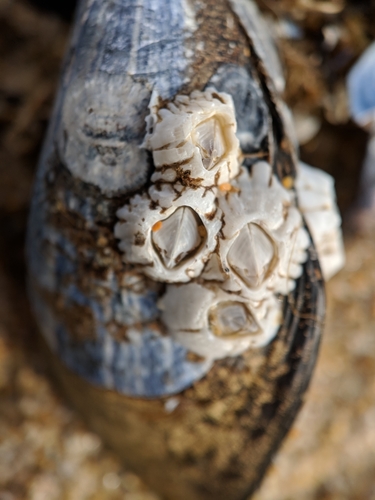
The shell of Balanus crenatus is composed of six calcareous plates, and can grow up to 25 millimetres (0.98 in) across. The upper edge of the plates is toothed, and the shell is often tilted to one side. Its opercular aperture is diamond-shaped, and is protected by two additional plates that can slide across the opening when the animal is not feeding. This is a boreal species that occurs in the intertidal and sublittoral zones of the North Pacific and the North Atlantic. It shares a similar distribution with Balanus balanus, a species it is often associated with. While B. crenatus occurs mainly in the sublittoral zone, it can sometimes be found under stones or overhangs on the lower shore. It colonises pebbles, bedrock, shells, and artificial structures. It lives in both calm and exposed waters, can tolerate low salinity levels, and occurs at depths of up to 60 metres (200 ft). It appears to favour habitats with strong currents, and may become distorted to fit available space when it grows in overcrowded conditions. It is often found growing alongside another barnacle species, Balanus balanus. The main predator of Balanus crenatus is the juvenile common starfish (Asterias rubens). Medium-sized barnacles face the greatest risk of predation: small specimens are ignored by the predator, while large specimens appear able to withstand attacks. However, in some years, B. crenatus populations are decimated by this predator.