About Balantiopteryx plicata Peters, 1867
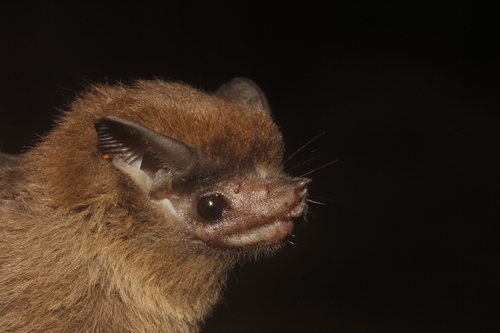
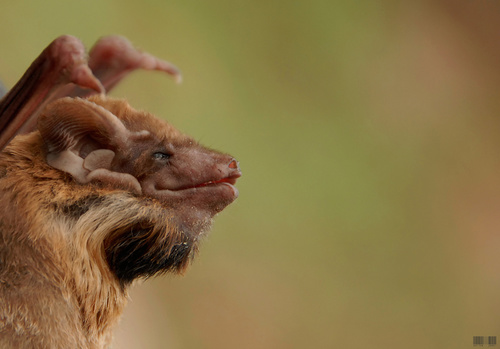
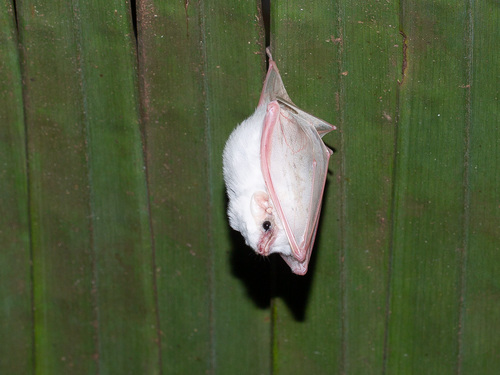
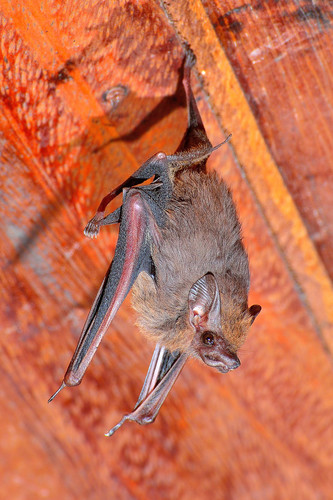
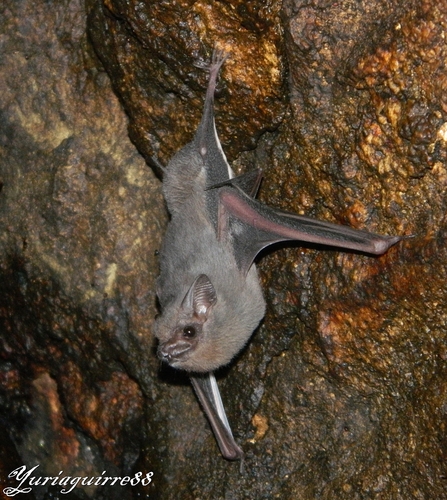
The gray sac-winged bat (Balantiopteryx plicata) is a bat species belonging to Emballonuridae, the family of sac-winged bats that currently contains 51 total species. This species is found from Baja California Sur and Sonora in Mexico south through Guatemala, El Salvador, Honduras, Nicaragua, and Costa Rica to northern Colombia, occurring at elevations up to 1,500 metres (4,900 ft).
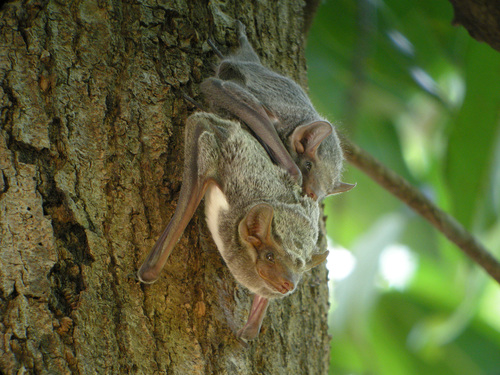
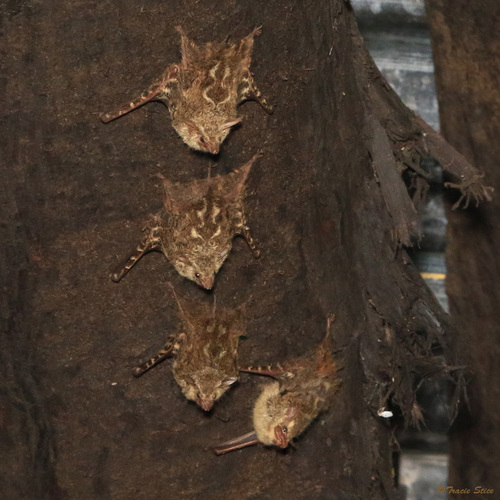
This bat prefers to roost near cave mouths, in barns, and in other human-built structures, typically choosing open, well-lit areas. It is a highly social species that usually lives in groups of fifty or more individuals; colonies have been reported to hold as many as 10,000 bats. Within most colonies, approximately 25% of individuals are female and 75% are male, but this sex ratio varies by season. Males are more likely to remain in the main colony at the start of the dry season, around mating time, than during the rainy season; most females stay in a single roost year-round, while males move to other roosts outside the mating season. This species favors dry or arid climates over wet climates, so it is more commonly found in evergreen forests than in swamps. Roost sites for this bat require at least 25% humidity, and roosts with multiple exits are preferred. When roosting, individual bats stay roughly twenty centimeters apart (unless young bats are present), and all roosting bats face the same direction. This species is not territorial, and it will share roosts with other bat species.
The gray sac-winged bat is insectivorous, and acts as an opportunistic forager that feeds on whatever insects are available in its area during a given season. Unlike some other bat species, its population does not fluctuate seasonally even when certain food sources become highly abundant. It can forage either alone or in groups. Both roosting sites and foraging sites change frequently. This bat forages over open areas that are usually several kilometers away from its roost. Because it forms large colonies, it requires a larger hunting range to meet its food needs. When mother bats leave to hunt, their young stay behind and cling to the wall of the colony's cave or roost structure. Bats begin hunting shortly before sunset, and fly at relatively slow speeds: measured average flight speed is approximately 9.76 km/h for males and 9.14 km/h for females.
Female gray sac-winged bats use both ovaries for reproduction, and give birth to a single pup per breeding cycle. This species breeds once per year; females are monoestrous, producing only one offspring annually, and all females in a population give birth at around the same time each year. During mating season, bats form mating swarms, flying around objects, and males perform courtship displays in mid-air. It is thought that scent sacs on males release pheromone fragrances during these flight displays. Females reach sexual maturity at one year of age. The gestation period is four and a half months, and newborn pups weigh approximately 2 grams. The mother carries her young bat for one week after birth. Pups are able to fly at two weeks old, and are fully weaned at nine weeks old. Females do not abort fetuses when food is scarce, and time birth to occur when weather conditions and food availability are optimal for their offspring. Data on adult female survival rates supports the observation that the survival of offspring takes priority over the survival of the adult female; the lowest recorded annual survival rate for adult females was 54%. The timing of mating and birth differs across the species' range. In Central America, mating occurs from late January to mid-February. Pregnant females can be found in May in El Salvador, and from May to July in Mexico, depending on the region. Birth occurs at the end of June in Costa Rica, and from late June to early July in Mexico.