About Baiomys taylori (Thomas, 1887)
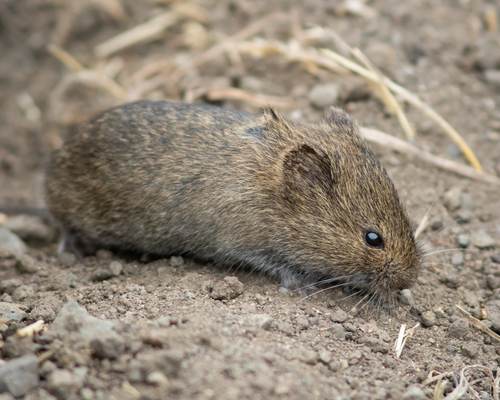
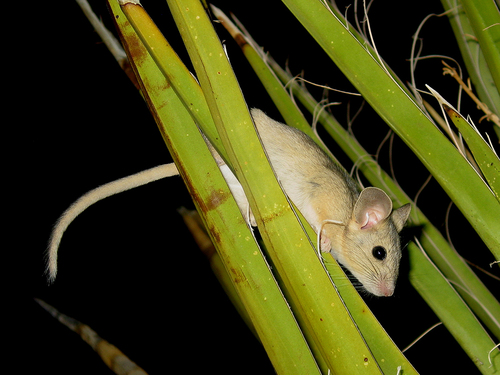
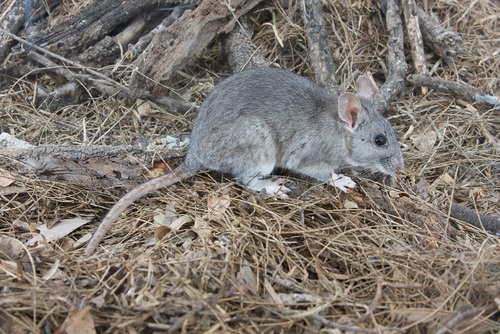
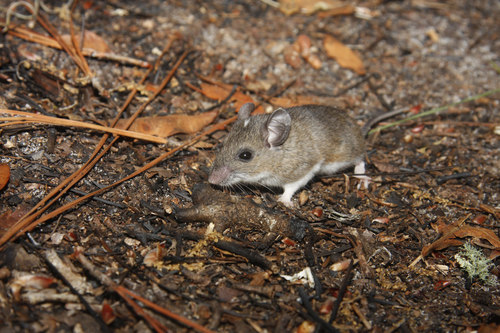
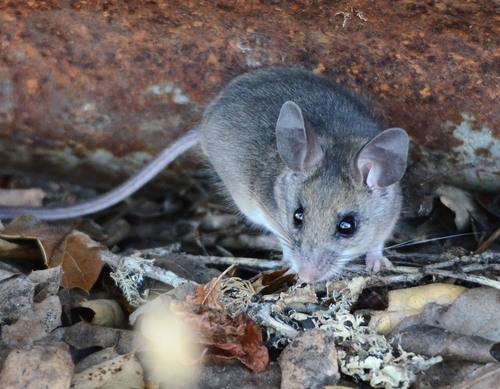
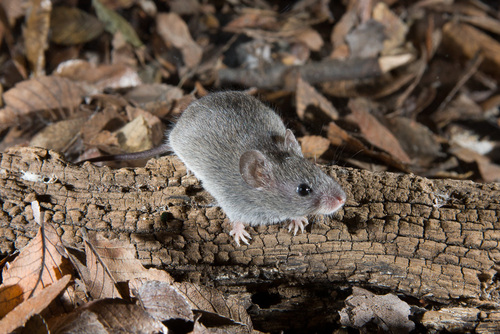
This species has the scientific name Baiomys taylori (Thomas, 1887). Adult males average approximately 7.5 grams (0.26 oz), while adult females can weigh up to 9.4 grams (0.33 oz). Across all subspecies, the average adult body length is 64.1 millimetres (2.52 in), and average tail length is 42 millimetres (1.7 in). Following Bergmann's rule, populations in the north and at high altitudes are larger than populations in the south and at low altitudes. B. t. allex, the southernmost subspecies, is the smallest, with an average total body length including the tail of 100 millimetres (3.9 in). The largest subspecies are B. t. analogus and B. t. fuliginatus, which have average total body lengths of 109 millimetres (4.3 in) and 105.5 millimetres (4.15 in), respectively. The fur of this species ranges from light brown to reddish brown to almost black. Their undersides range from white to grayish. Darker individuals generally come from high-humidity, high-altitude habitats, while paler individuals come from low-humidity, low-altitude habitats. B. t. analogus, B. t. fuliginatus, and eastern B. t. taylori are darker; B. t. canutus, B. t. allex, and southern and eastern B. t. taylori are pale; and B. t. ater and B. t. paulus are reddish brown to match the soil of their habitats. Juveniles have distinctly gray fur before they shed into their adult coloration. Both albinism and melanism have been recorded in this species. This pygmy mouse produces litters of 1 to 5 pups, with an average litter size of 3. Gestation for pregnant females lasts less than 20 days. Unlike many other rodents, male father pygmy mice care for offspring, grooming and huddling over the young. Both males and females provide care for the young. This species breeds year-round, but breeding activity is reduced in winter and early spring. Nests are typically built underneath logs or cacti. They are ball-shaped, and constructed from cactus fibers, corn silk, and grasses. A 1976 study found that B. t. ater raised by the house mouse Mus musculus had a greater tendency to have positive interactions with their foster species, and reacted more negatively to open spaces. This indicates that the behavior of this species is influenced to some degree by learned behavior during youth. Mus musculus raised by B. taylori foster parents were not significantly behaviorally impacted. These mice are primarily granivorous, feeding mainly on small seeds. They also consume green vegetation and insects when these resources are available. In dry habitats, the primary source of food and water is the fruit and stems of Opuntia cacti. In captivity, they have been observed feeding on insects, the terrestrial snail Helicina orbiculata, and the snake species Rena dulcis and Tropidoclonion lineatum, even when vegetative matter is offered. They are more common in fall and winter, and less common during summer. The average lifespan in the wild is 5 months, but this likely varies across the species' range. In captivity, they can live up to 3 years, but typically survive only slightly longer than 5 months. This species occupies a wide range of habitats, but prefers grasslands or shrubby deserts. It is most strongly associated with grasslands that contain Opuntia cacti. It forms small tunnel-like runways through dense grass cover. Where the range of this species overlaps with Baiomys brunneus and Baiomys musculus, those two species prefer highland habitats, and B. taylori is more successful at overlapping altitudes. Known parasites of the northern pygmy mouse include the intestinal nematode Pterygodermatites baiomydis. It also acts as a host for the flea Jellisonia ironsi, the mite Radfordia hamiltoni, and a type of Brucella bacteria; it cannot carry Brucella abortus.