About Bactrocera oleae (Rossi, 1790)
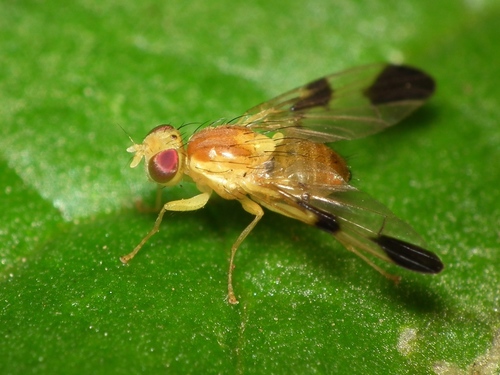
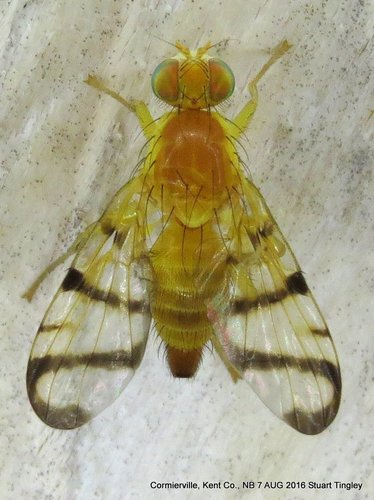
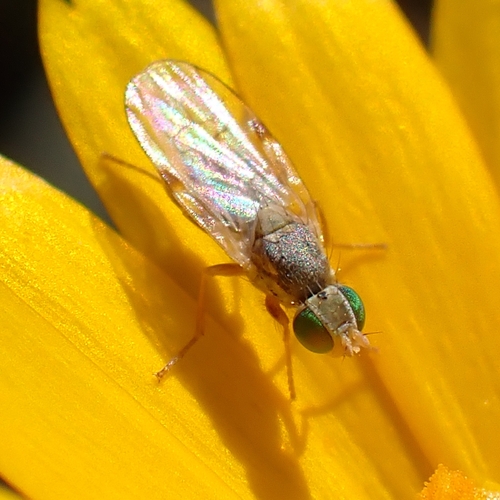
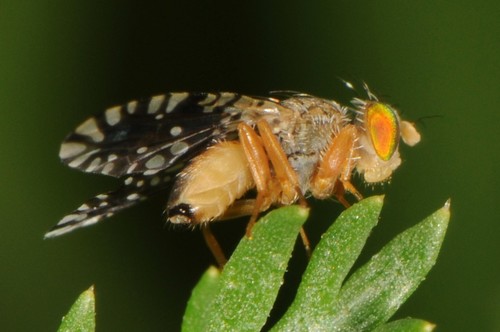
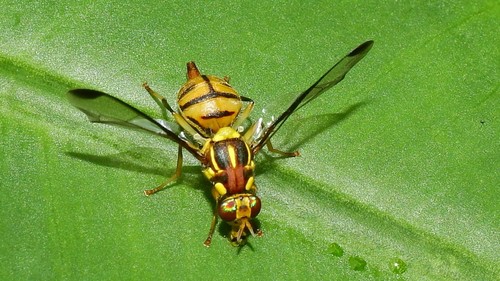
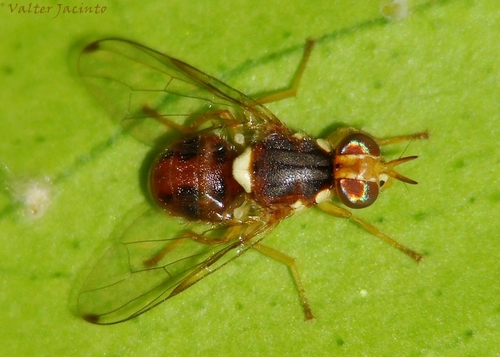
Bactrocera oleae (Rossi, 1790) has distinct morphological traits across its life stages. Eggs are 0.7–1.2 mm long, elongated, slightly flattened along the lower side, and bear a small, white, fine-textured nodule that facilitates embryo respiration. The larva is worm-shaped (vermiform), with a narrow conical-cylindrical anterior end. It develops through three distinct larval instars: first, second, and third. Mature third-instar larvae reach 6–7 mm in length, are white-yellowish, elongated, and slightly subconical in shape. The anterior sensory structures are bipolar, and the posterior conical sensory organ has eight sensilla. The larval cephalopharyngeal skeleton has very short dorsal and ventral apodemes, a triangular hypostomal sclerite, lacks a subhypostomal sclerite, and has hooked jaws. The oral lobes have 10–12 indents, with a sensory plate on each side that matches the structure seen in larvae of Ceratitis capitata. The frontal stigmas have 9–10 lobes. The three larval instars can be distinguished by differences in their cephalopharyngeal structures. Variation in the shape of the frontal stigmas allows separation of second and third instar larvae; first-instar larvae are metapneustic, bearing only one pair of posterior stigmas. Pupation occurs inside the puparium, an elliptical hard shell formed from the larva’s final exuvia. Dry puparia are 3.5–4.5 mm long, and range in colour from creamy white to yellow-brown. Puparium colour change can be used to determine pupal age. Adult Bactrocera oleae are 4–5 mm long. In Italy, they can be easily distinguished from other Tephritidae by a small dark spot at the wing apex and the length of the narrow, elongated anal cell. The adult male has a hardened structure at the apex of the anal cell that is longer than the structure found in females, and has pectoral structures on the third abdominal urite. The adult female has a yellowish head with two prominent circular spots under the antennae, positioned close to the compound eyes; the eyes themselves are bluish-green. The thorax can display scattered specks rather than the typical bands and lines. The mesonotum is bluish-gray with three blackish longitudinal lines. The humeral callus, mesopleural, metapleural, and mesoscutellar areas are ivory in colour. The wings are hyaline (clear), with brown specks on part of the apical pterostigma. The abdomen is light brown with variable patterning: most individuals have paired blackish spots on the first through fourth urotergites, which often merge to form bands. The ovipositor is clearly visible, partially invaginated into the always black seventh urite. Adult body length is 4–5 mm. In the Asian variety of this species, the entire mesonotum is yellowish with prominent, visible dark lines. This species is associated with plants of the genus Olea. It is found throughout the Mediterranean basin and in South Africa. Since the late 1990s, it has also been present in California, and may have spread across all olive cultivation areas in the Nearctic region. It is considered the most serious pest of olives in regions where it occurs, and significantly reduces both yield and production quality in most olive-growing areas. Attack damage tends to be more severe in more humid, cooler growing areas, with substantial variation in impact depending on the olive cultivar; it affects cultivars and growing regions with hot summers and lower drought stress. Females lay eggs in summer, when olives are at least 7–8 mm in diameter. They create a puncture in the olive skin using their ovipositor, and leave just one egg in the cavity below the puncture. The oviposition puncture has a characteristic triangular shape caused by an optical effect. Fresh punctures are dark green, while older punctures turn yellowish-brown as the olive’s wound heals. Egg hatching takes a variable length of time based on weather conditions, ranging from 2–3 days in summer to around 10 days in autumn. Newly hatched larvae first tunnel near the olive surface, then move deeper into the olive flesh toward the seed core, which remains completely unaffected. Two moults occur during larval development, which increase the larva’s size progressively. Before the third instar is complete, mature third-instar larvae move back toward the olive surface and prepare an exit hole for the future adult, chewing through the flesh to leave only a thin layer of olive skin intact. Infested olives develop clear visible signs of attack: the tunnelled areas turn darker, and a circular hole marking the thin residual skin is visible on the olive surface. Pupae remain dormant in the cavity below this surface, protected inside the exuvium left by the mature larva. When fully mature, the adult breaks out of the pupal exuvia, forces through the thin skin layer left by the larva, and exits the olive through the prepared exit hole. In late autumn and winter, this behaviour changes: mature larvae leave the olive entirely, drop to the ground, and pupate in the soil. Adult Bactrocera oleae are glycogen-feeding, and feed primarily on honeydew. Since their basic diet is low in protein, they are strongly attracted to materials that release volatile nitrogenous substances, such as bird droppings, to meet their additional protein requirements. This behaviour is useful for fly control and monitoring programs, which use attractants such as protein hydrolysates and ammonium salts to target the species.