About Bactericera cockerelli (Šulc, 1909)
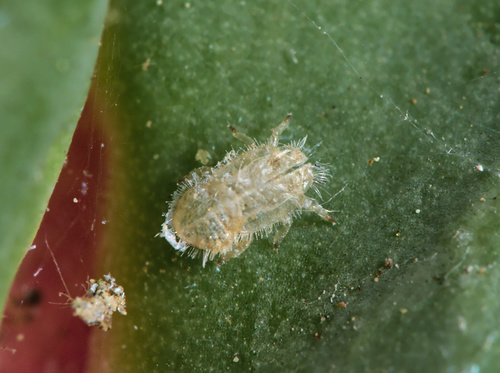
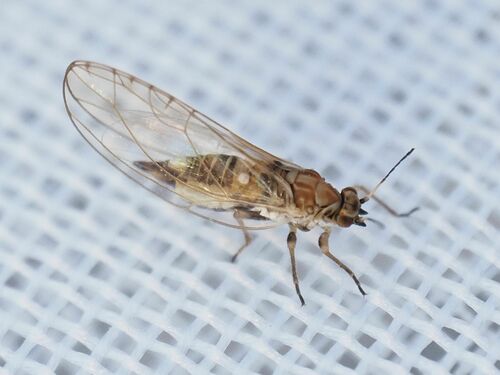
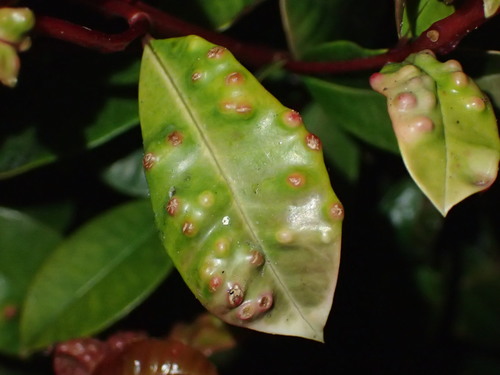
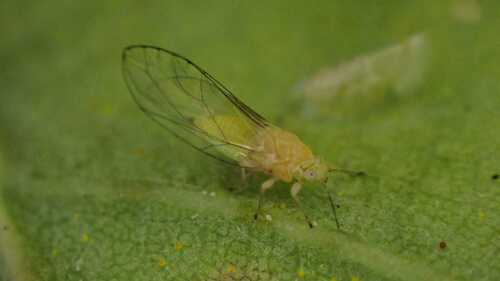
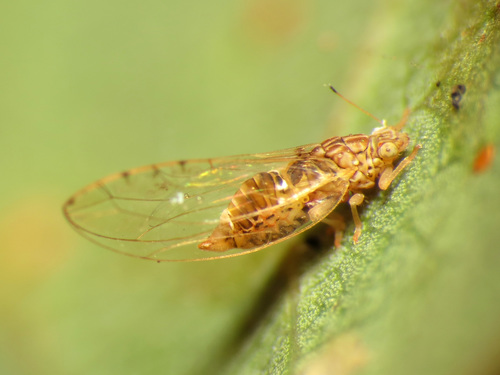
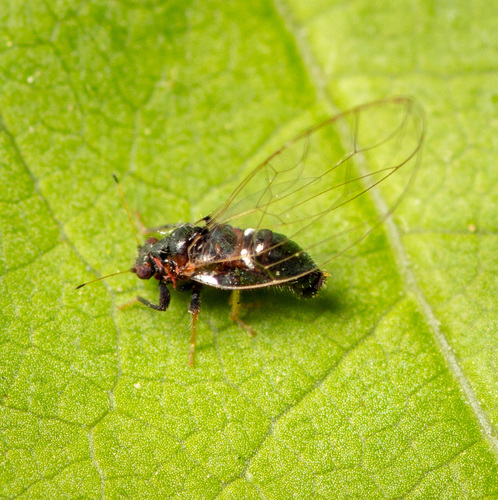
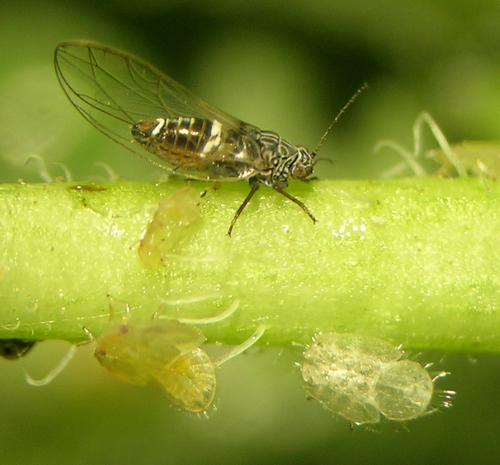
Bactericera cockerelli, commonly called the potato psyllid, is a psyllid species native to southern North America. Its distribution ranges from Central America north to the American Pacific Northwest and parts of Manitoba, Canada, and it is only found in the western part of the North American continent. As its common name implies, it is frequently found on potato and tomato crops, but it can live on more than 40 species of solanaceous plants across up to 20 genera. Its breeding hosts are primarily restricted to the Solanaceae family, which includes both important crop species and common weed species, plus a small number of Convolvulaceae species, including bindweed and sweet potato. On some host plants, especially potatoes, nymph feeding causes a condition called psyllid yellows, which is thought to be triggered by a toxin. Both nymph and adult potato psyllids can transmit the bacterium Candidatus Liberibacter. Zebra chip is a recently identified potato disease linked to potato psyllid infestation, and it is caused by gram-negative Candidatus Liberibacter species. Infected potato tubers often develop discoloration that becomes more visible after potato chips are fried. When zebra chip occurs, it causes very large losses for farmers because infected potatoes cannot be used to make chips or fries. The potato psyllid pest has caused major reductions in potato yields during periods when its population grows to high levels. The highest potato yield losses are associated with infestations that happen early in the growing season, or on potato crops that have a well-developed leaf canopy by summer. Potato psyllids are not tolerant of high heat, and researchers think they survive summer temperatures by using the shade provided by crops with enough leaf canopy during the summer. Potato psyllid nymphs are very small and hard to spot, and they feed on the undersides of leaves. Both nymphs and adult psyllids feed on plant phloem. For a long time, experts believed these psyllids migrated annually northward from southern North America, but newer evidence shows that distinct regional populations of the species exist.