About Azolla pinnata R.Br.
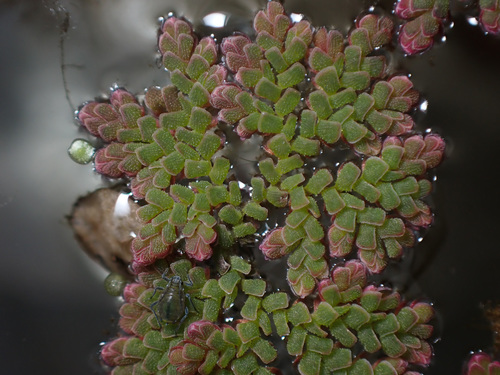
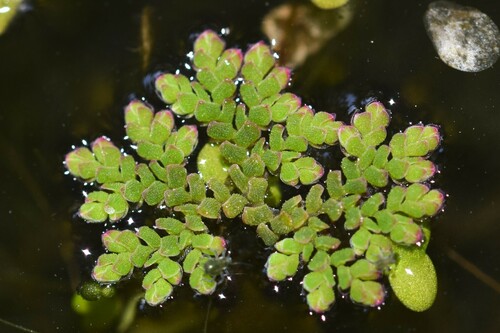
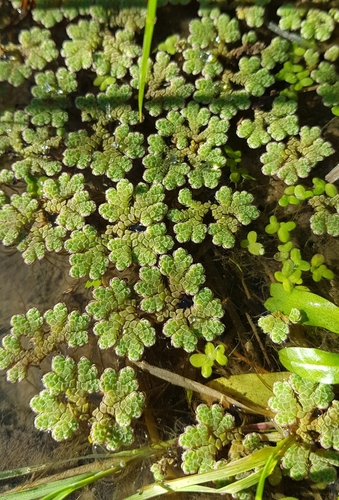
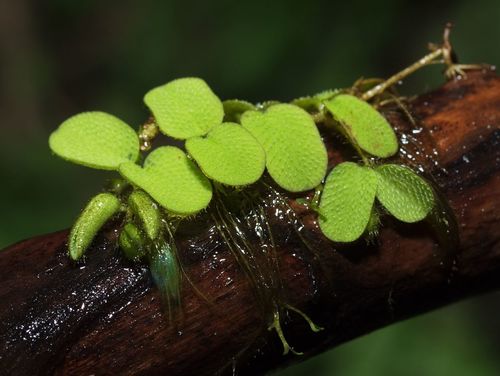
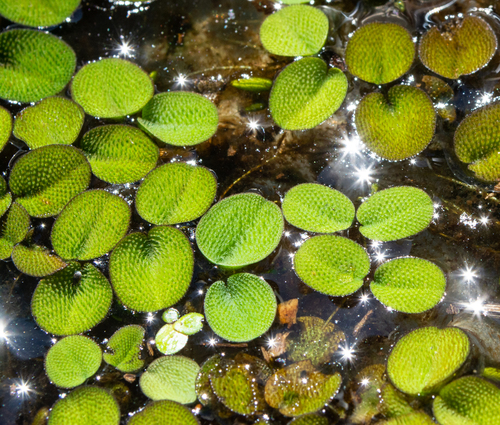
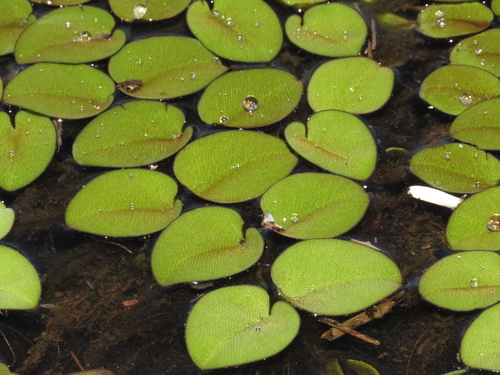
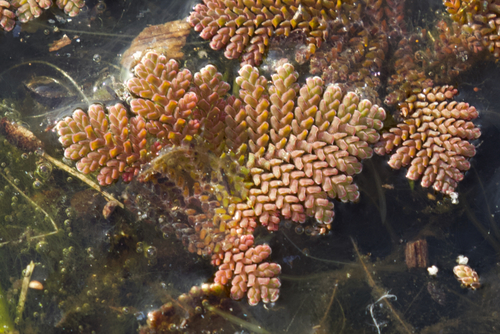
Azolla pinnata R.Br. is a species of fern with several common names: mosquitofern, feathered mosquitofern, and water velvet. It is native to most of Africa, much of Asia including Brunei Darussalam, China, India, Japan, Korea, and the Philippines, and parts of Australia. This small aquatic fern grows floating on the surface of water, and it prefers quiet, slow-moving water bodies, as swift currents and waves can break the plant apart. Under optimal growth conditions, this fern has an extremely high growth rate: at its maximum, it can double its biomass in just 1.9 days, and most strains achieve this biomass doubling within a week. The plant has a triangular floating stem that reaches up to 2.5 centimeters in length. The stem holds many overlapping rounded or angular leaves, each only 1 to 2 millimeters long. Leaves may be green, blue-green, or dark red, and are coated in tiny hairs that create a velvety appearance. These hairs also make the top surface of the leaf water-repellent, which keeps the plant afloat even if it is pushed under water. Dense populations of A. pinnata can form a thick velvety mat that covers an entire water body and crowds out other native plants. Hairlike roots extend from the plant out into the surrounding water. The leaves of A. pinnata host a symbiotic cyanobacterium, Anabaena azollae, which fixes atmospheric nitrogen that the fern can use for growth. This symbiosis allows the fern to thrive in habitats that have low nitrogen levels. A. pinnata reproduces both vegetatively and sexually; vegetative reproduction occurs when branches break off from the main stem, and sexual reproduction occurs when sporocarps on the leaves release spores. A. pinnata is an introduced invasive species in New Zealand, where it has crowded out the native relative Azolla rubra. Its dense floating mats reduce oxygen levels in water, making it a damaging pest of waterways. The weevil Stenopelmus rufinasus, used for biological control of the related fern Azolla filiculoides, has also been found to attack A. pinnata. Rice farmers sometimes cultivate this plant in their paddies, because its symbiotic cyanobacteria produces usable nitrogen that benefits rice growth. The plant can also be grown in wet soil then plowed under to produce nitrogen-rich organic fertilizer. A. pinnata can absorb a limited amount of heavy metal pollution, such as lead, from contaminated water. The plant is 25 to 30 percent protein, and can be used as an additive in chicken feed.