About Azolla cristata Kaulf.
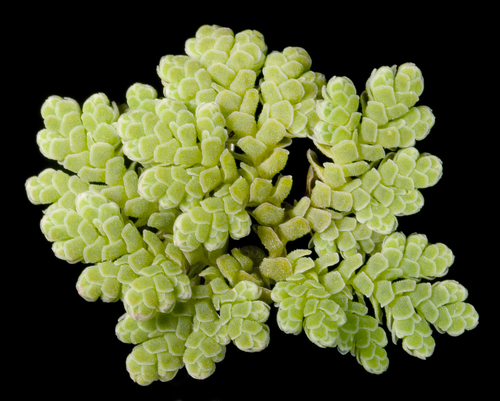
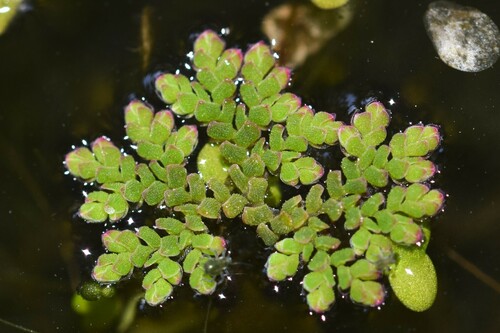
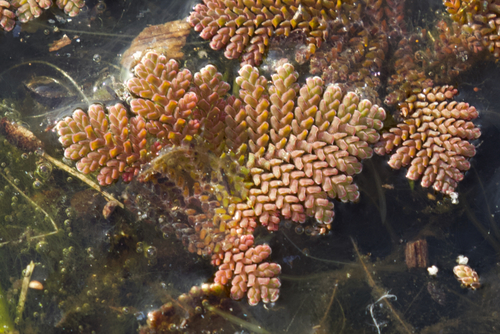
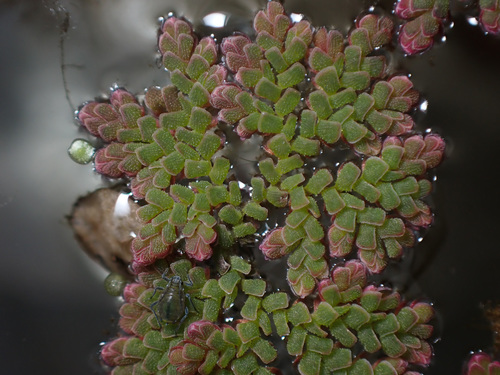
Azolla cristata Kaulf. can be distinguished from the related species Azolla filiculoides by examining the trichomes—small water-resistant bumps found on the upper surfaces of its leaves. In A. filiculoides, these trichomes are unicellular, while in A. cristata they are septate, meaning two-celled. A. cristata has commercial cultivation importance across southern and eastern Asia as a biofertilizer. It is valued for its natural nitrogen-fixing ability, which benefits crops like rice when grown beneath them and reduces the need for artificial fertilizers. Its thick mats of fronds, which can grow up to 4 centimeters thick, also suppress the growth of weeds. Harvested fronds of A. cristata are also used as feed for fish and poultry. It is also commonly grown as a floating aquatic plant in both coldwater and tropical aquariums, as well as in outdoor ponds, and is propagated through division.