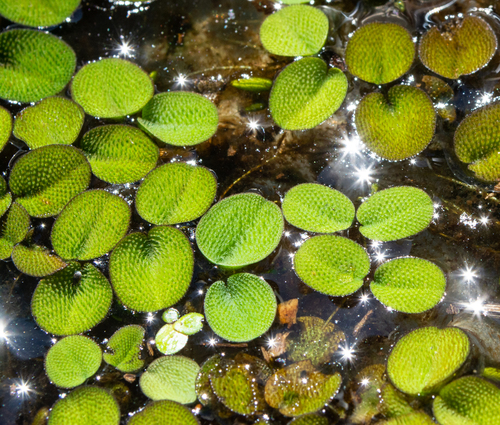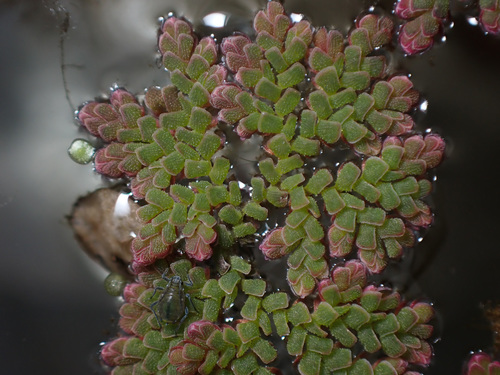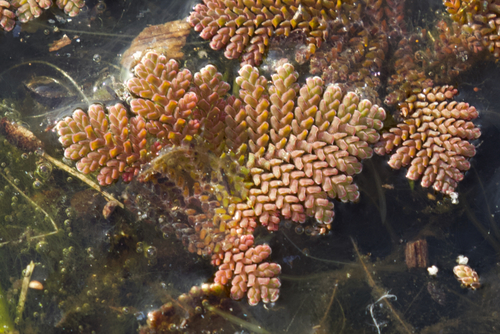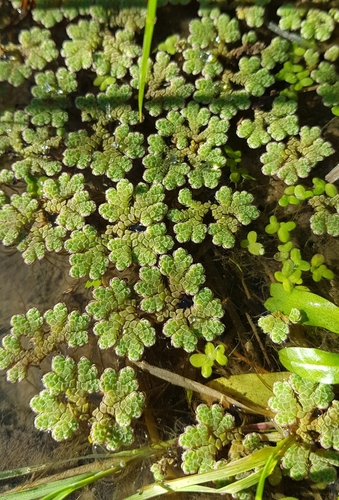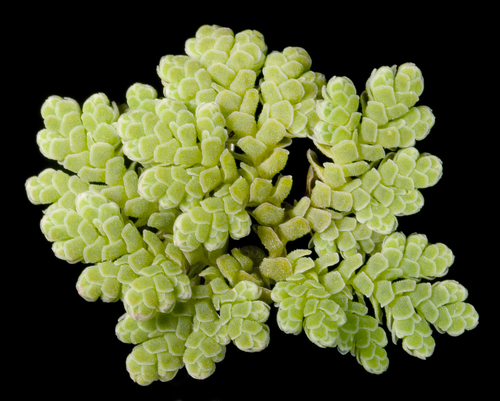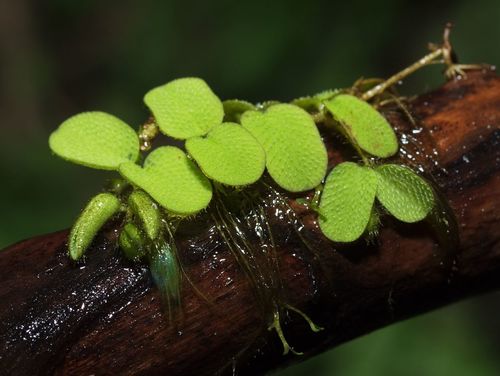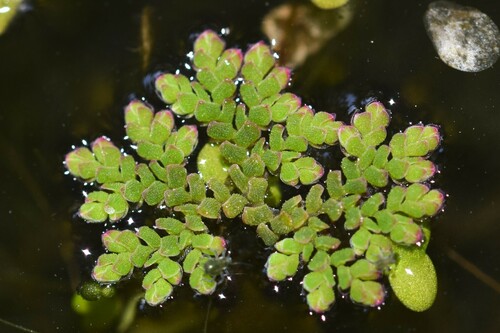
About Azolla caroliniana Willd.
To distinguish Azolla caroliniana Willd. from Azolla filiculoides, you need to examine the trichomes (small bumps that create water resistance) on the upper surfaces of the leaves. For context, these trichomes are unicellular in A. filiculoides but septate (two-celled) in A. cristata. A. cristata holds commercial importance when cultivated in southern and eastern Asia as a biofertilizer. It is valued for its nitrogen-fixing ability, which benefits crops like rice when grown under rice, and reduces the need for artificial fertilizer. Its thick mat of fronds, which can grow up to 4 cm thick, also suppresses weed growth. Harvested A. cristata fronds are used as food for fish and poultry. This species is also commonly used as a floating plant in both coldwater and tropical aquaria, as well as in outdoor ponds, and it is propagated through division.