About Austrovenus stutchburyi (W.Wood, 1828)
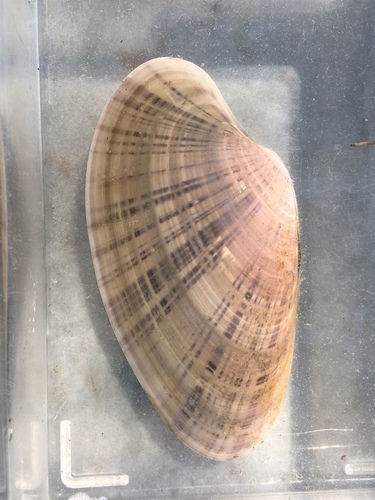
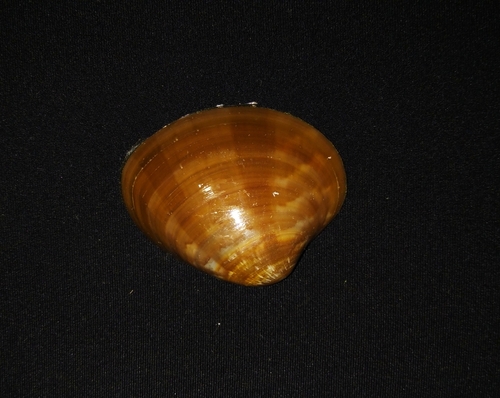
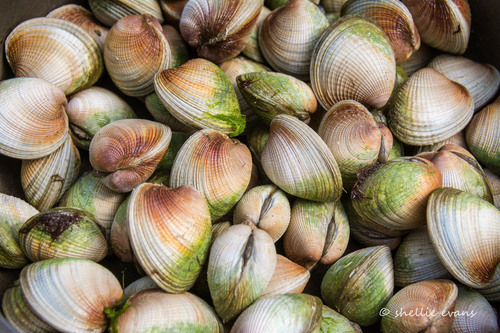
Austrovenus stutchburyi, commonly called cockles, have soft bodies protected by sturdy shells against predation, desiccation, and wave movement. Predators struggle to pierce the shells of adult cockles. Seabirds can access the soft body by dropping cockles from height to smash their shells, but fish such as flounder cannot break through the shells. Younger cockles are more vulnerable to predation because their shells are not as hard as those of adults. For cockles that live in the intertidal zone, the adductor muscles pull the shell tightly closed to protect against desiccation. A small amount of water stored inside the shell keeps the cockle's body moist. Strong wave action can dislodge cockles, and their shells prevent body damage while the dislodged cockles drift through the water. These cockles live in harbours and estuaries in New Zealand, ranging from the subtidal zone to the intertidal zone. When in the intertidal zone, they live between the low-tide mark and the mid-tide mark. They cannot survive above the mid-tide mark because they would face too much prolonged exposure. Cockles prefer habitats of soft mud and fine sand, but extremely fine sand can suffocate them. For this reason, they mainly live in areas with larger grain sizes. Cockles bury themselves 2 to 3 centimetres under the sand.