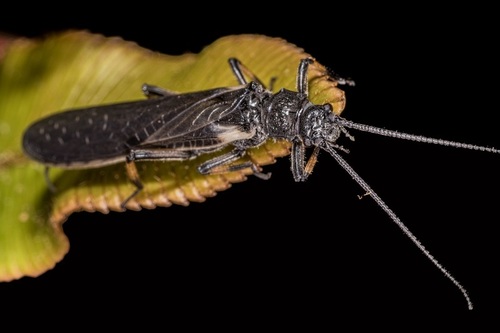
About Austroperla cyrene (Newman, 1845)
Austroperla cyrene, commonly known as the black stonefly, is a species of austroperlid stonefly that is endemic to New Zealand. It is the only species placed in the genus Austroperla. This species is classed as a 'shredder', and it lives and feeds on decomposing wood and leaves in streams across New Zealand. It is especially common in forested streams, but is relatively rare or entirely absent from streams in deforested areas. Both nymphs and adult A. cyrene contain hydrogen cyanide, making the species toxic to predators. To signal its toxicity to potential predators, adult A. cyrene have distinct aposematic (warning) colouration: bright yellow and white markings set against a black background. This characteristic warning colouration is mimicked by dark-colored (melanic) specimens of two non-toxic stonefly species, Zelandoperla fenestrata and Taraperla pseudocyrene. One fossilised Austroperla specimen has been found in early Miocene sediments at Foulden Maar in Central Otago. A phylogenetic study of Southern Hemisphere stoneflies supports an ancient evolutionary history for this New Zealand lineage, estimating that Austroperla diverged from Australian and Chilean austroperlids approximately 37 million years ago.

