About Austromyrtus dulcis (C.T.White) L.S.Sm.
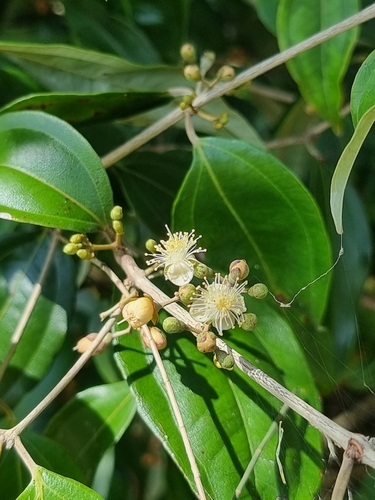
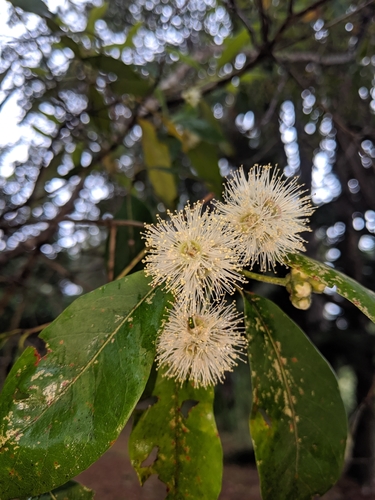
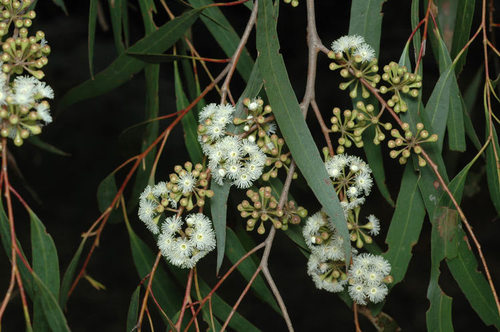
Austromyrtus dulcis (C.T.White) L.S.Sm. is a small spreading shrub that grows 1 to 2 m (3 ft 3 in to 6 ft 7 in) tall. Its leaves are 1–3 cm long and 0.5 cm wide, arranged oppositely, shaped lanceolate to elliptical. They are glossy on the upper surface and covered in silky hairs underneath. This species produces small white flowers 7 to 10 mm long, each with five petals and a large number of sepals. After flowering, it bears dotted mauve sweet edible berries that ripen in summer and autumn. Each berry contains three to nine pale brown seeds. This species is native to New South Wales and Queensland in Australia, where it occurs from Grafton to Fraser Island. It is a common understorey plant in heathland and woodlands, growing on sandy soils, and is occasionally found on rainforest margins. The berries of Austromyrtus dulcis are a popular traditional Australian bushfood, eaten by both Indigenous Australians and non-Indigenous people. The melt-in-the-mouth berries are sweet and aromatic, with a pleasant peppery or gingery flavour. Although the berries are recognized to have good flavour qualities, they have not been commercialized due to harvesting and handling challenges. This species, also commonly called midgim, is popular in amenity horticulture as an adaptable shrub suitable for a variety of growing situations, tolerating a range of soils and climatic conditions. It can grow densely across large areas, forming extensive stretches of scrub. One can travel through acres of this scrub, with its white, sweet-tasting berries, until stopped by a lagoon or salt water. On Fraser Island, it is the most sought-after berry or fruit; children collect it by the tin-full, and even elders join in eating it with gusto.