About Austromegabalanus psittacus (Molina, 1788)
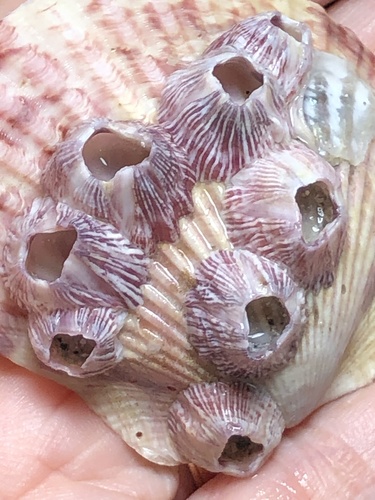
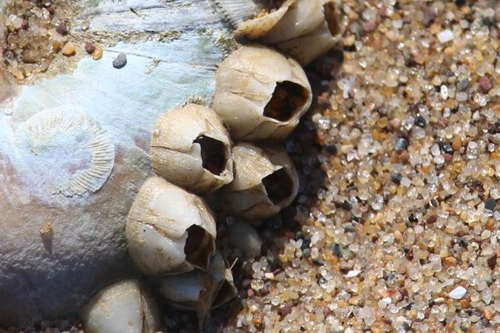
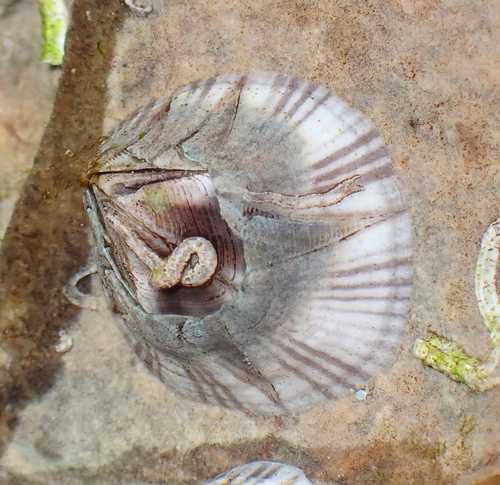
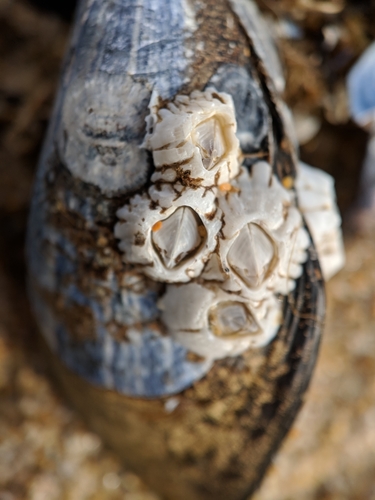
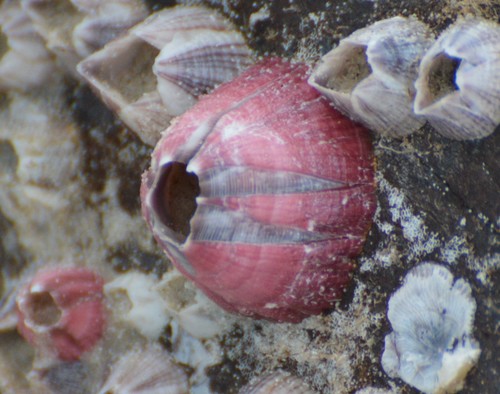
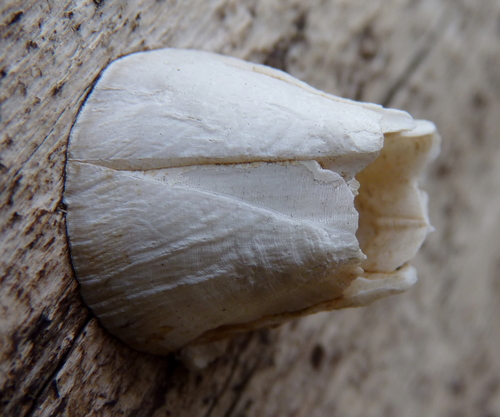
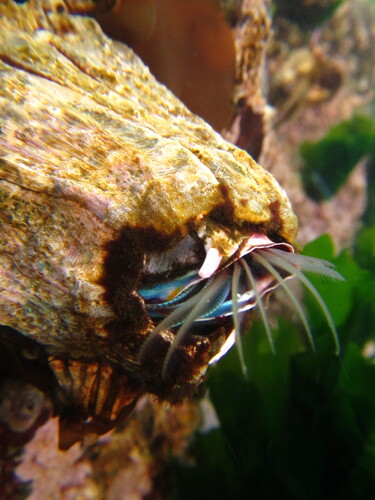
Austromegabalanus psittacus (Molina, 1788) is a large sessile barnacle that grows in groups on hard substrates. It has a tall cone-shaped carapace made up of twelve large plates, which are composed of cemented-together calcite microcrystals. Its basal disc is firmly cemented to a hard surface. This species grows up to 30 centimetres (12 in) in height. It has an opening at the top covered by a hinged operculum; the species’ thoracic limbs, called "cirri", protrude through this opening. Its overall colour is dull white, marked with purple and brown patches. Austromegabalanus psittacus is a coastal species found in the intertidal and littoral zone of southern Peru, the full length of Chile (including the offshore Juan Fernández Islands), and southern Argentina. It has been recorded at depths ranging from 0–35 m (0–115 ft), but occurs most commonly at depths of 2–20 m (7–66 ft). It is most abundant in Chile’s Los Lagos region, where it is harvested for human consumption, primarily in the towns of Calbuco, Carelmapu and Puerto Montt. This barnacle is an established part of Chilean cuisine, with its meat considered a delicacy. It is one of the ingredients in the traditional Chilean dish curanto. Traditionally, curanto is prepared with a variety of seafood ingredients cooked in a large pit preheated with red-hot stones, while modern cooking methods conventionally use a large heated pot. Commercial populations of Austromegabalanus psittacus have declined due to overfishing, leading to reduced quantities available for harvest. There are current plans to cultivate this species along the coast of Chile, and potential opportunities to export it to Japan. In addition to human consumption, two marine species prey on this barnacle: the sea star Heliaster helianthus and the clingfish Sicyases sanguineus. Sicyases sanguineus can only prey on small individual barnacles, leaving large Austromegabalanus psittacus apparently safe from this predator.