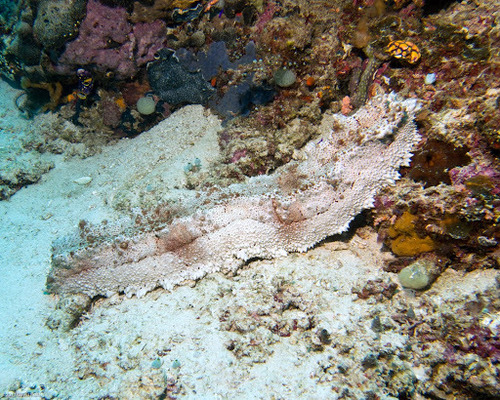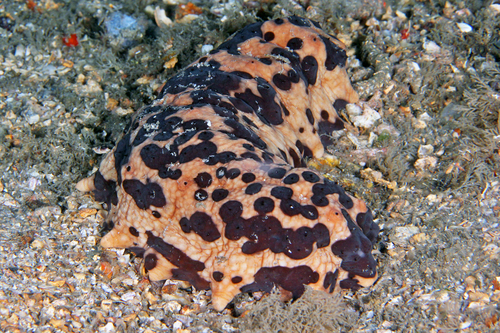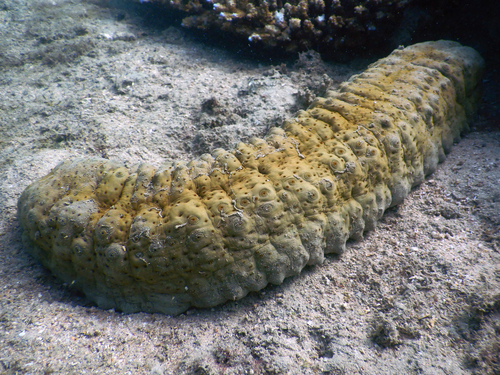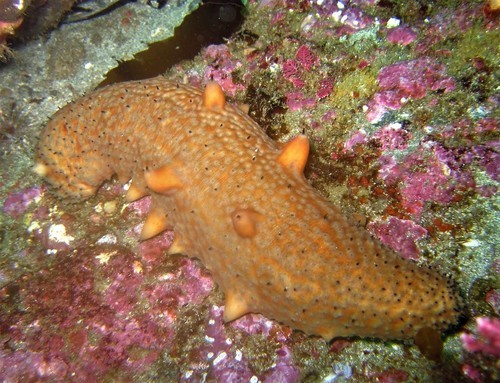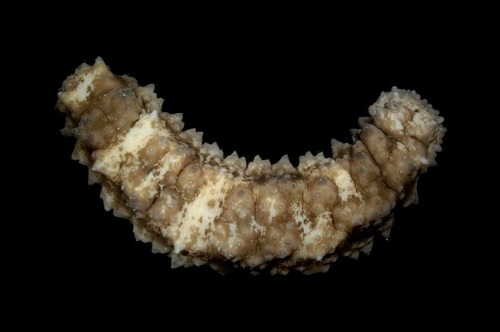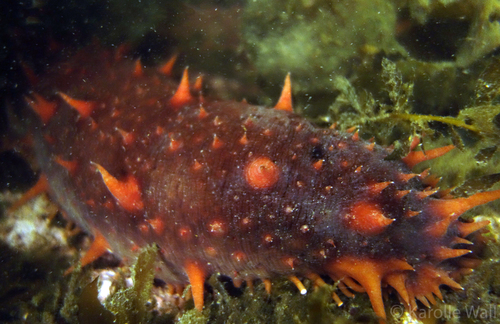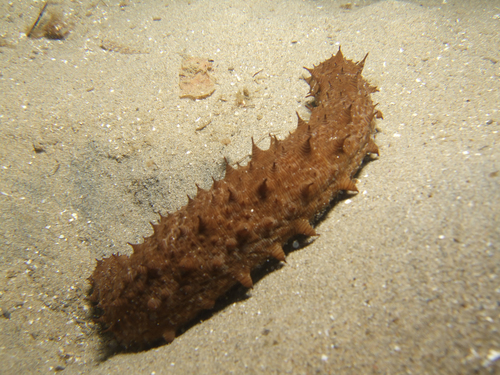
About Australostichopus mollis (Hutton, 1872)
The genus Australostichopus belongs to the sea cucumber family Stichopodidae. It is a monotypic genus, meaning it contains only one single species: Australostichopus mollis, which is commonly called the brown sea cucumber or Australasian sea cucumber. This species has drawn interest for its fishery potential in the Southern Hemisphere, as well as for its ability to reduce waste generated by aquaculture. Even though A. mollis plays an ecological role and is abundant in New Zealand coastal waters, limited existing knowledge about the biology and ecology of this species has prevented the development of a stable fishery industry for it. Notably, A. mollis holds promising commercial potential for the important Asian market. Recently, researchers have evaluated its potential as a functional food, which has highlighted its nutritious components.
In terms of distribution, A. mollis is found along the entire coastline of New Zealand, where it sometimes co-occurs with reef structures. It can also be found along the Australian coast from New South Wales to south-western Australia. This species mainly inhabits the littoral zone at low tide level on sandy substrates, and also lives in mud in sheltered, protected areas. Its vertical range extends from shallow coastal waters down to approximately 200 metres in depth.
A. mollis reproduces sexually, and most individuals have separate sexes, though some hermaphroditic individuals have been recorded. The overall population sex ratio is 1:1. Its reproductive season runs from October to February, and spawning periodicity is regulated by lunar cycles, with spawning typically occurring after a full moon. During the reproductive period, morphological changes occur: females experience changes in gonad colour and oocyte counts, while males see an increase in the amount of spermatozoa in specific areas observed in wet mounts of mashed gonad tissue. Males also see an increase in spermatozoa in the lumen of histological sections. Research indicates that spawning may happen multiple times within a single reproductive season.