About Auricularia cornea Ehrenb.
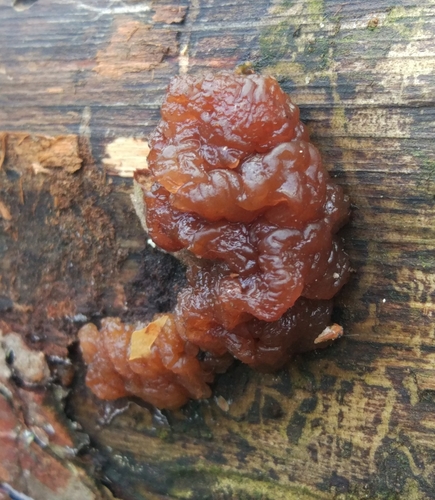
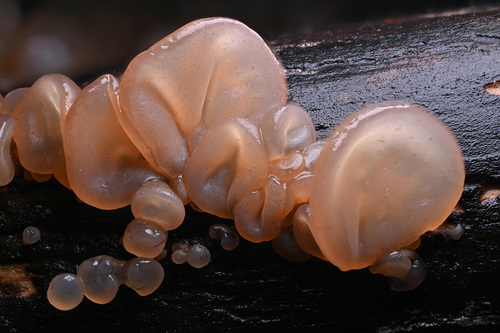
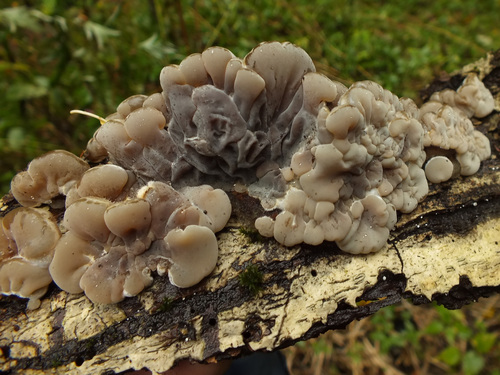
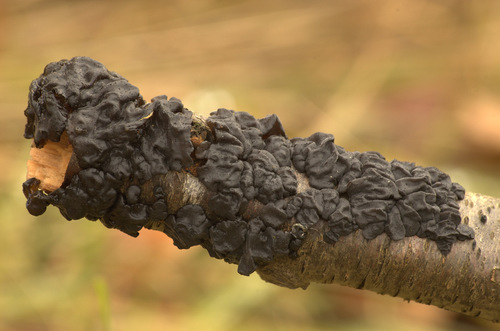
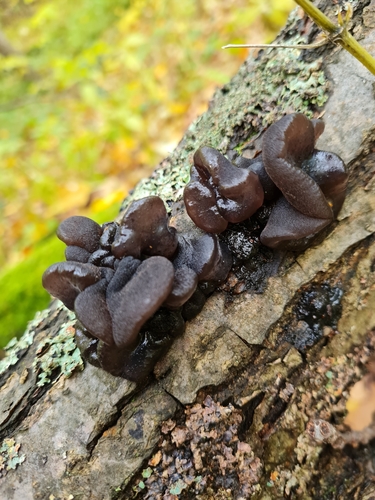
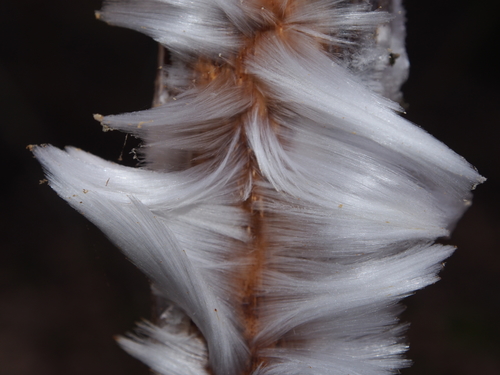
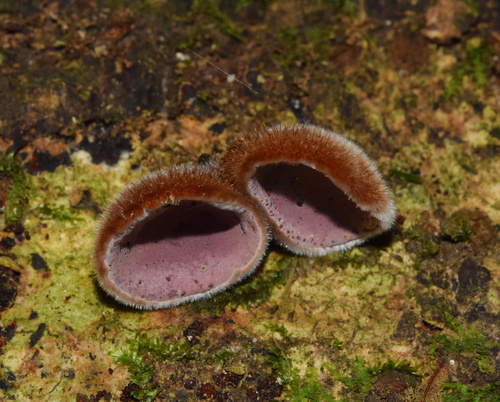
Auricularia cornea Ehrenb. produces fruit bodies that grow singly or in clusters. The fruit bodies are ear-shaped, attached laterally to wood, sometimes by a very short stalk, and have an elastic, gelatinous texture. Their colour ranges from pale brown to reddish brown, and rarely they may be white. Mature fruit bodies reach up to 9 centimetres (3+1⁄2 inches) wide and 2 mm thick. The upper surface of the fruit body is densely hairy, while the lower surface is smooth. Under microscopic observation, the hairs on the upper surface have thick walls, and measure 180–425 × 6–9 μm. Its basidia are cylindrical, hyaline, three-septate, and measure 60–75 × 4–6 μm. Its spores are hyaline, allantoid (sausage-shaped), and measure 14–16.5 × 4.5–6 μm. Auricularia cornea grows on dead fallen or standing wood of broadleaf trees. It is widely distributed across southern Asia, Africa, Australasia, the Pacific Islands, and South America. In traditional Chinese medicine, practitioners claim that eating dried, cooked Auricularia cornea can provide health benefits for people with high blood pressure or cancer, and may help prevent coronary heart disease and arteriosclerosis. These claimed benefits are not supported by evidence.