About Attalea maripa (Aubl.) Mart.
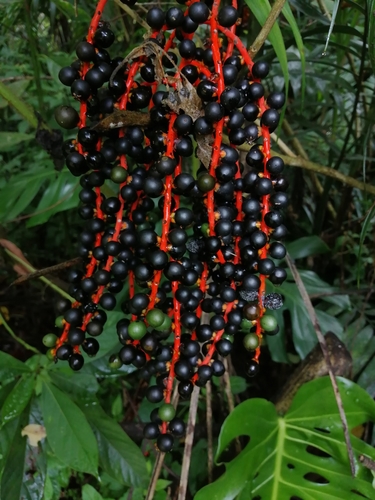
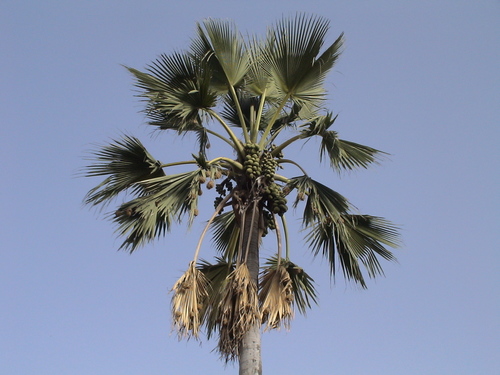
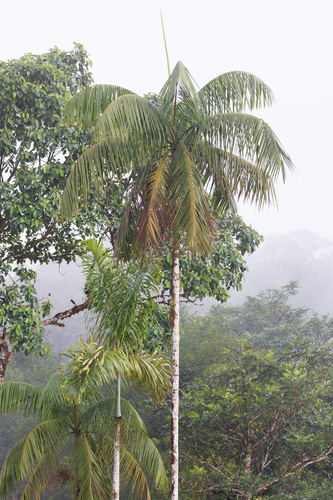
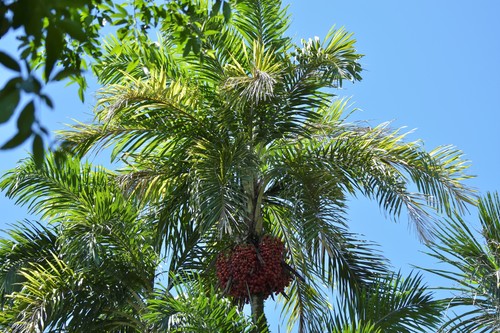
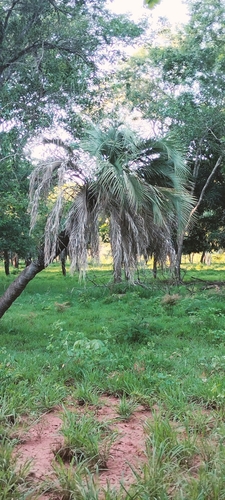
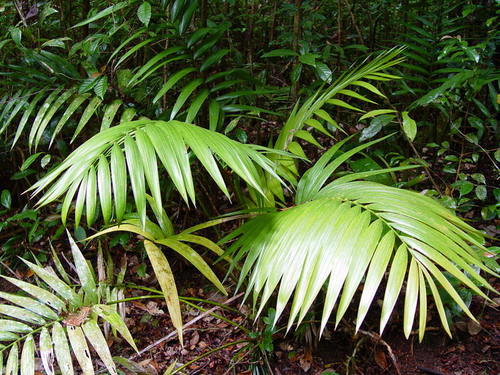
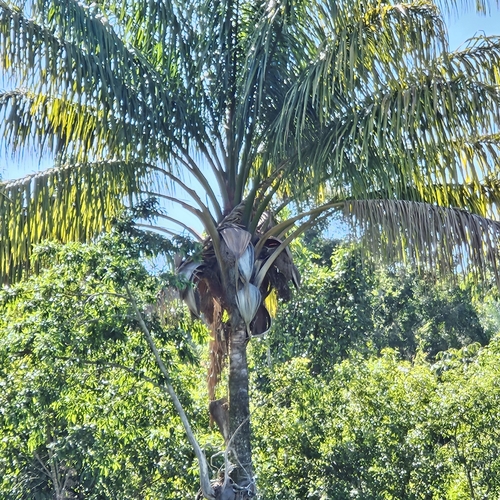
Attalea maripa is a large palm species that grows between 3.5 and 20 metres (11 to 66 feet) tall. Its stems measure 20 to 33 centimetres (8 to 13 inches) in diameter, and may occasionally reach up to 100 centimetres (39.5 inches) across. Mature trees produce between 10 and 22 leaves, each with a long petiole. The fruit of this palm are large, brown or yellow, and measure 5 to 6.5 centimetres (2.0 to 2.6 inches). Each fruit holds 2 or 3 seeds, which are 4 to 6 centimetres (1.5 to 2.5 inches) long and 2.5 to 3 centimetres (0.98 to 1.18 inches) in diameter. Fruit grow in infructescences that can hold anywhere from several hundred to over 2000 fruit. The distribution of Attalea maripa stretches from Trinidad and Tobago in the north, through Colombia, Venezuela, Guyana, Suriname, French Guiana, Ecuador, Peru and Brazil, all the way south to Bolivia. It grows in lowland forests and disturbed areas, on soils that are not usually flooded. The fruit of A. maripa is eaten by a wide range of mammal species. On Maracá Island, Roraima, in the Brazilian Amazon, recorded fruit consumers include tapirs, collared peccaries, deer and primates. Rodents such as agoutis also feed on the fruit; as fruit availability decreases, they will also feed on the seeds, and cache seeds for later consumption. Most consuming species eat the fruit pulp and spit out intact seeds a short distance from the parent tree. Tapirs swallow entire fruit and defecate intact seeds much further away from parent trees. Most seeds that remain near the parent tree are killed by larvae of the bruchid beetle Pachymerus cardo. These beetle larvae kill 77% of seeds that are not dispersed away from parent trees, but kill less than 1% of seeds that are dispersed to tapir latrines. In Trinidad, A. maripa is a characteristic species of the savannas that form when forests are repeatedly burned and converted to grassland. British forester J. S. Beard named these savannas "Cocorite Savannas", after the local common name for A. maripa. Carbonised A. maripa seeds have been recovered from archaeological sites in Colombia, dating back to 9000 BP. The Huaorani people of Amazonian Ecuador eat the mesocarps of this species. They use its petiole and leaf rachis to make blowgun darts and sleeping mats, its petioles for torches, its pinnae for kindling, and its stems for firewood. In addition to using it as a food source, the Kayapó people of Brazil harvest this species as a source of salt, and value it because it attracts wildlife. Its leaves are also used for thatching. Edible oil can be extracted from both the mesocarp and kernel of A. maripa. Oleic acid is the most common fatty acid in oil extracted from the mesocarp, while lauric acid is predominant in oil from the kernel. Roughly half of the fatty acids in mesocarp oil are saturated, and half are unsaturated. Compared to other edible oils, mesocarp oil has an average tocopherol content, while kernel oil is low in tocopherols.