About Atrina zelandica (Gray, 1835)
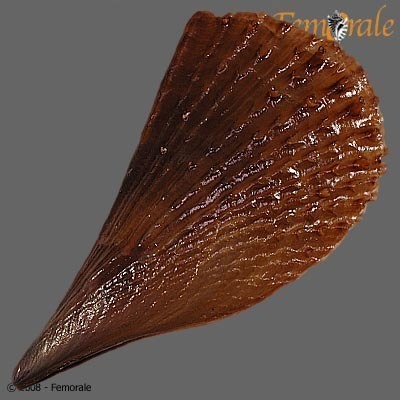
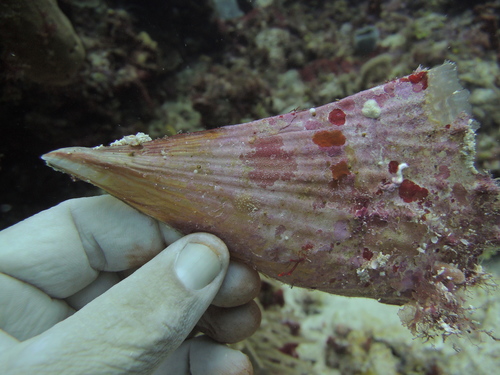
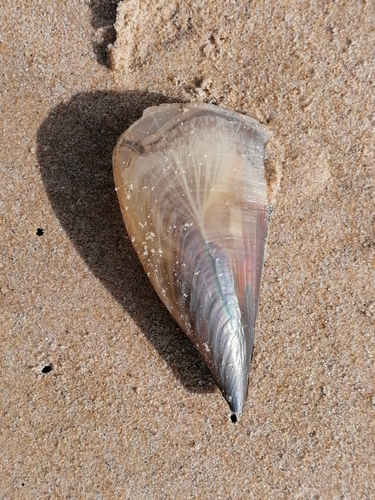
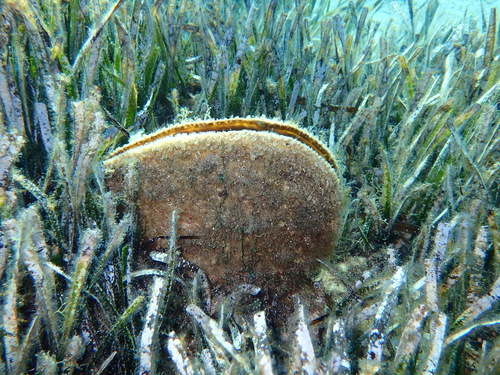
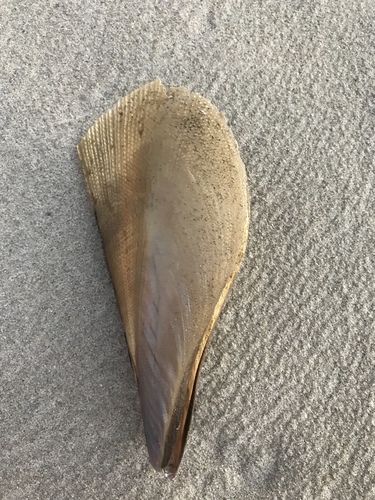
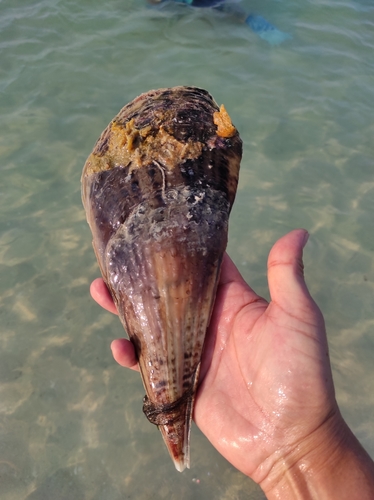
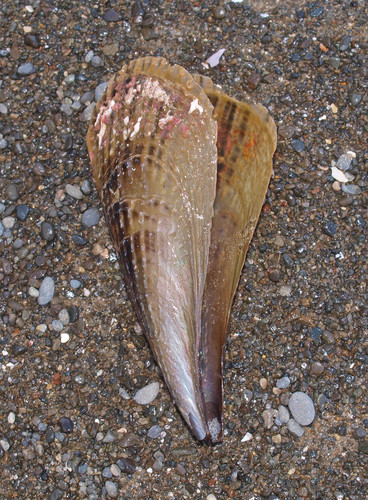
Atrina zelandica (Gray, 1835) has a triangular, elongate, blackish shell, with a pearly purple interior. Its valves are convex, marked with fairly close longitudinal ribs and semi-cylindrical hollow spines. On average, this species reaches 280 mm in body length. It is the largest bivalve species native to New Zealand, and some individuals can grow up to 400 mm long. Most individuals measure between 30 and 260 mm long, and 100 to 110 mm wide. The posterior edge of the shell is crenellated, and extends a few centimeters above the seabed substrate. This positioning keeps the species' water intake clear of surface deposits, but also creates a surface that various algae and invertebrates (including sponges and sea squirts) can attach to. Atrina zelandica is native to New Zealand, where it is widely distributed across the country. It lives at depths up to 50 meters, primarily in muddy sand in intertidal and subtidal zones of sheltered waters. Frequent die-offs of Atrina zelandica have occurred in the Rangitoto Channel; over a 2 to 3 year period, population densities dropped from 200-300 individuals per square meter to only 1-35 individuals per square meter. Proposed possible causes for this decline include storm damage, increased predation after shell damage, and over harvesting. Atrina zelandica is a dioecious broadcast spawner that spawns during the summer months. No published research currently exists on what age or size the species reaches when it begins breeding. This species grows quickly in its first few years of life, sometimes growing as much as 40 mm per year. Growth slows significantly once the shell grows longer than 166 mm. Individuals reach maturity between 5 and 15 years old.