About Atrina seminuda (Lamarck, 1819)
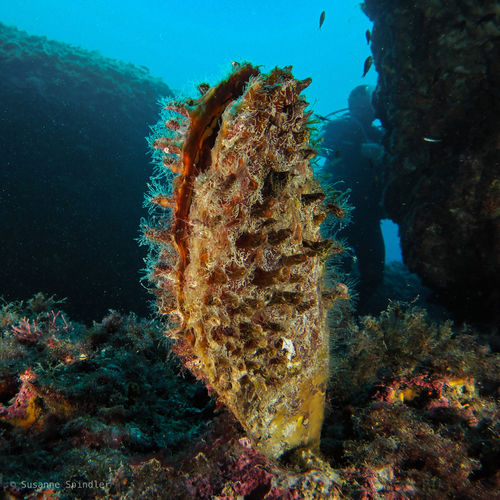
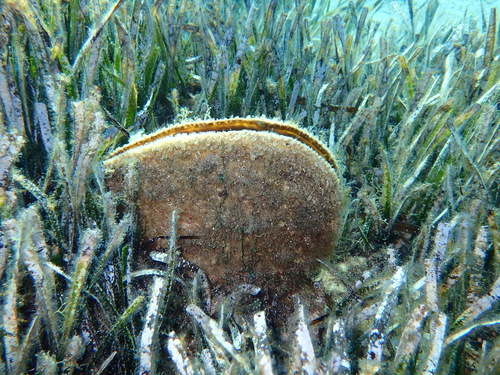
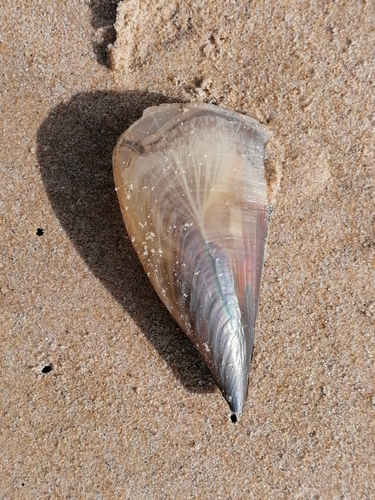
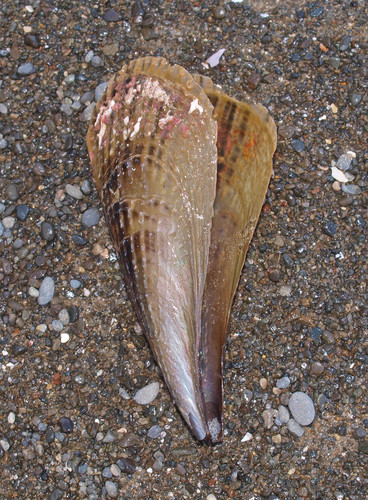
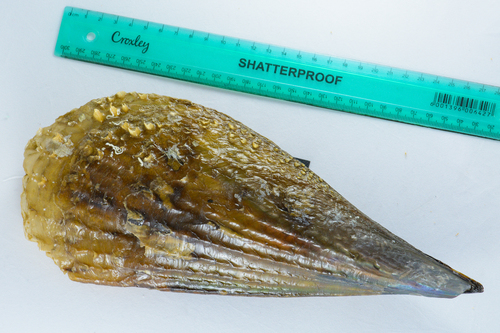
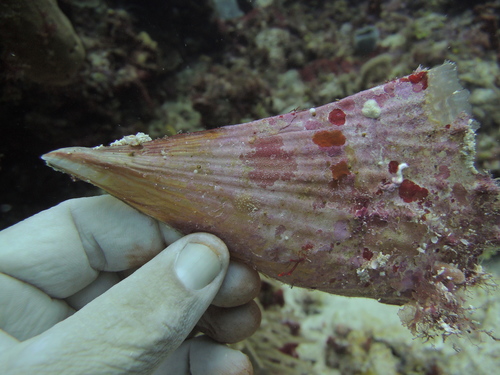
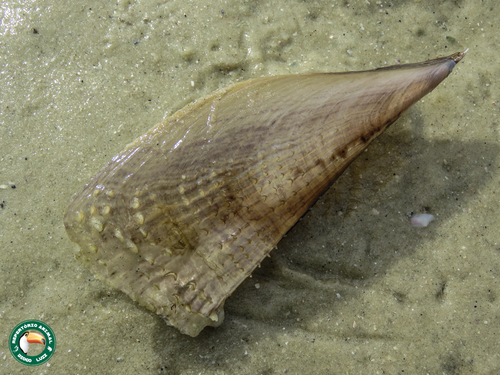
Atrina seminuda has a large shell that measures roughly 150 to 200 millimeters, with a triangular or wedge shape. Its shell valves have ornamentation arranged in rows of 10 to 20 tubular radial spiny projections, which are often slightly curved. Fine longitudinal markings are visible across the surface of the shell valves. The shell color is variable, ranging from dark brown to greenish brown. The soft body of this species features a well-developed large posterior adductor muscle; in individuals 150 to 200 mm in size, this muscle can reach approximately 40 mm in diameter. This species is found along the Atlantic coast of North America, from North Carolina to Texas, and ranges southward to Argentina. In the Venezuelan Caribbean, it has been recorded along the coasts of the states of Vargas, Miranda, Anzoátegui, Sucre, and Nueva Esparta. Atrina seminuda is an endobenthic species. It typically anchors itself to rocks and gravel substrates in high-energy coastal areas using a strong byssus that it secretes. A variety of fouling organisms commonly live attached to the outer surfaces of the species' shell valves, with gastropod mollusks, bivalves, and chitons being among the most common of these associates.