About Atrina rigida (Lightfoot), 1786
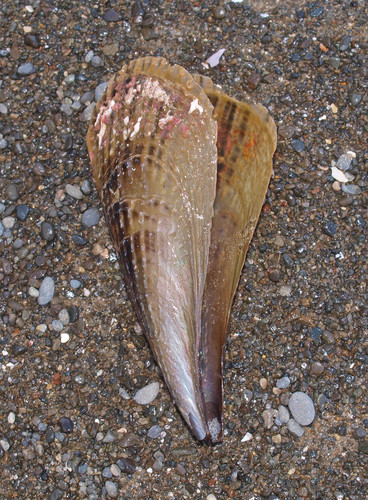
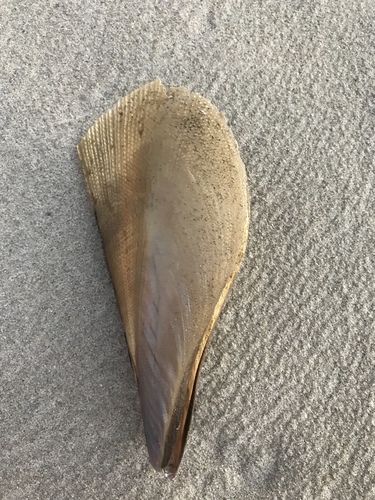
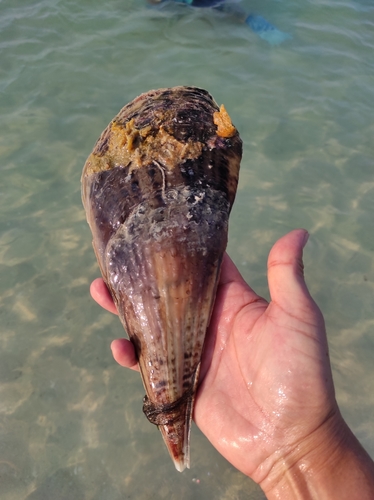
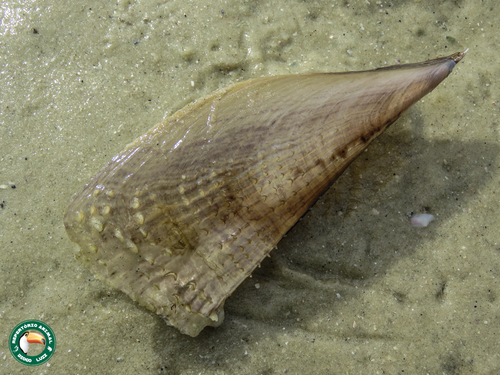
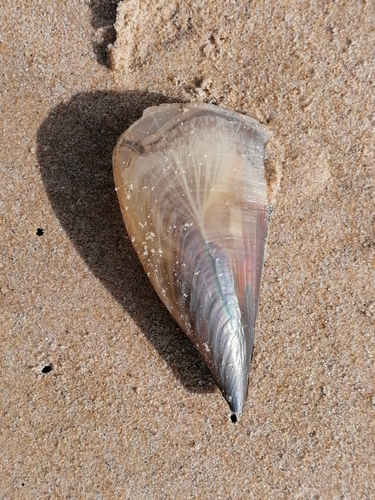
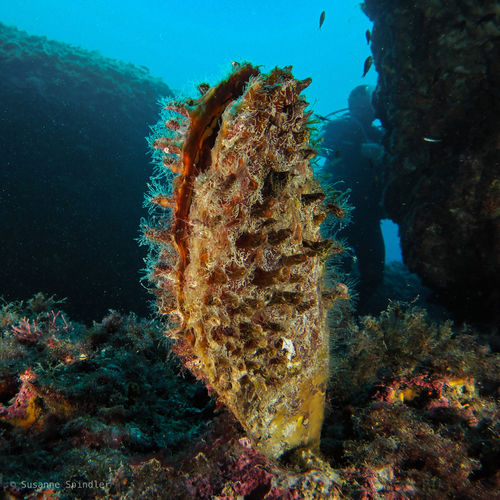
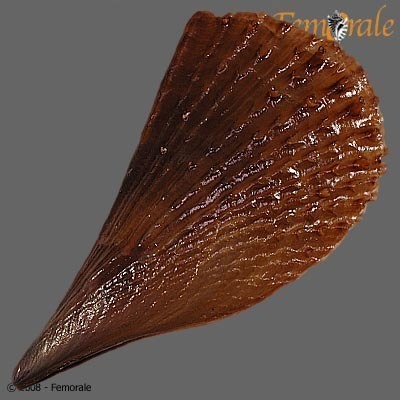
Atrina rigida (Lightfoot), 1786, commonly called the rigid pen shell, has a rigid shell made up of a pair of thick, spiny valves. These valves are held together by ligaments that run along the full length of the bivalve's dorsal side. The bivalve has a triangular shape, with 15 to 25 low ribs that radiate out from the pointed anterior end, also called the umbo, to the large posterior edge. The outer surface of the shell is usually a dull brownish color, and many small tube-like spines line the crests of the radiating ribs. The anterior end of the rigid pen shell is typically buried in fine substrate and anchored by byssal threads. Its wider, gaping posterior end extends just above the seabed to allow filter-feeding. Algae, such as Lobophora variegata, and invertebrates including sponges and encrusting corals often grow on the exposed section of the shell, and can camouflage the bivalve very effectively. The rigid pen shell occurs in coastal western Atlantic waters, with a range extending from southern Florida, across the Caribbean and the West Indies, to Brazil, and also to southern India. It is a benthic shallow water species, most often found in soft-bottom silty habitats. In this habitat, its narrow anterior umbo is burrowed down and anchored to the underground substrate by byssal threads, while its wider gaping posterior end extends just above the seabed for filter-feeding, matching the arrangement described for the species.