About Atlapetes tibialis (Lawrence, 1864)
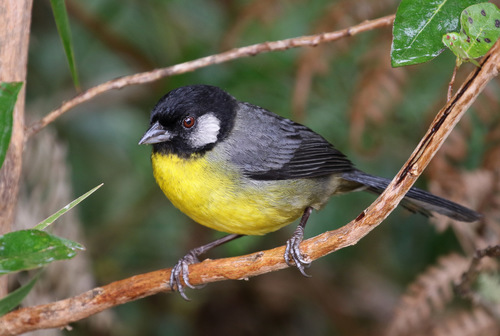
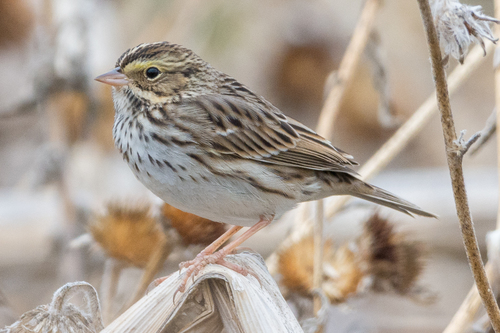
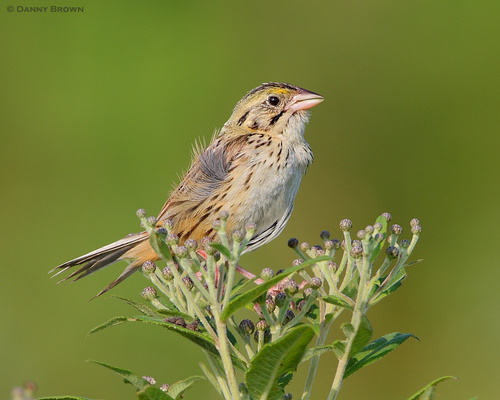
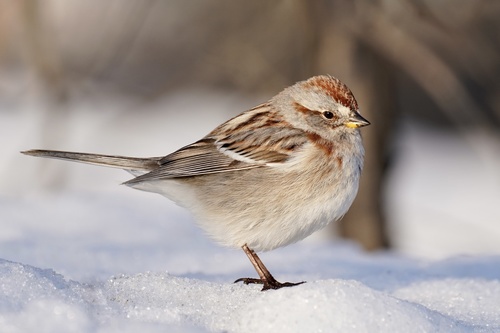
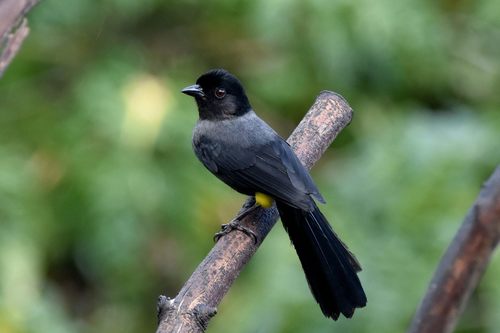
The yellow-thighed brushfinch, scientific name Atlapetes tibialis, is a passerine bird endemic to the highlands of Costa Rica and western Panama. Despite being called a brushfinch, it is not a true finch. It is instead a member of the family Passerellidae, a group that also includes American sparrows, juncos, and towhees. This species is common in wet mountain forests, second growth, bamboo clumps, scrubby pasture, and bushy clearings. It generally occurs at altitudes from 1,700 meters (5,600 feet) up to the timberline. Outside of the breeding season, it can descend as low as 1,200 meters (3,900 feet) on the Caribbean slopes. The female yellow-thighed brushfinch builds the species' nest, which is a bulky cup made from plant material. The nest is hidden in coarse grasses, bamboo, or a thickly-foliaged tree, placed 0.7 to 4.6 meters (2 to 15 feet) above the ground. The female lays two white or pale blue eggs marked with brown blotches, and incubates these eggs for 12 to 14 days. Yellow-thighed brushfinches are long-tailed birds, with an average length of 18.5 cm (7.3 in) and an average weight of 31 g (1.1 oz). Adult yellow-thighed brushfinches are mainly dark grey, with black coloration on the crown, throat, wings, and tail. The belly and breast carry an olive tinge. The species' distinctive bright yellow thighs contrast sharply with its otherwise drab plumage, and this feature gives the bird both its English common name and its scientific name. Young yellow-thighed brushfinches have duller, sootier plumage, with a brown tone on the underparts, and olive-brown thighs. This species has a heavy metallic tchuk call. Paired yellow-thighed brushfinches share a twittering tinkling greeting call. The male's song is made up of high dry notes, typically arranged as phrases similar to tee tididee dee wink wink. Yellow-thighed brushfinches feed at all levels of their habitat, from the ground up to the treetops. Their diet consists of insects, spiders, and a wide variety of berries. They also squeeze nectar from flowers. They are most often seen in pairs, family groups, or mixed-species feeding flocks alongside other small birds like warblers. They can be very approachable by humans.