About Athyrium filix-femina (L.) Roth
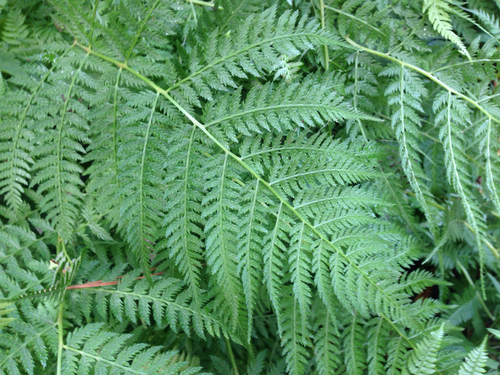
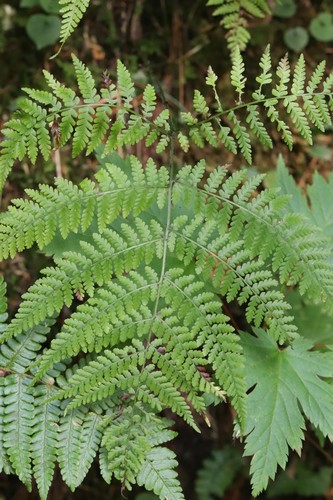
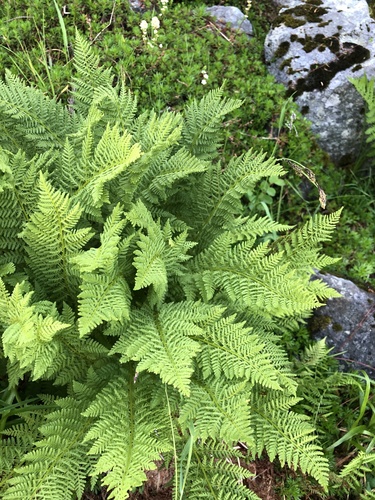
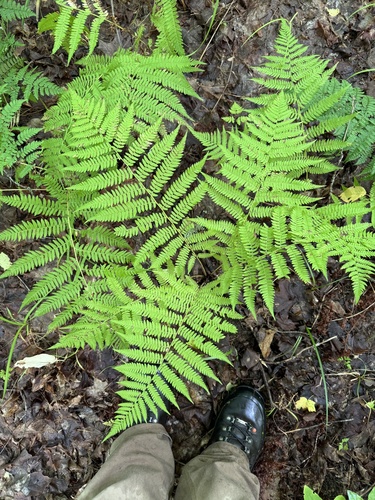
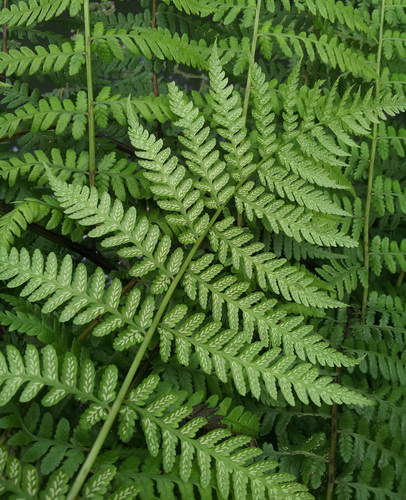
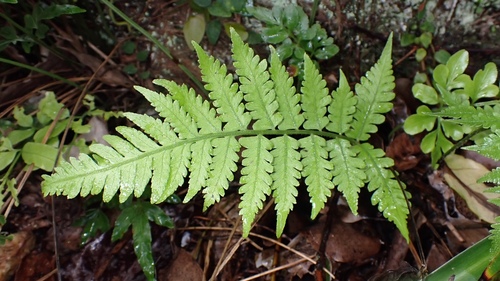
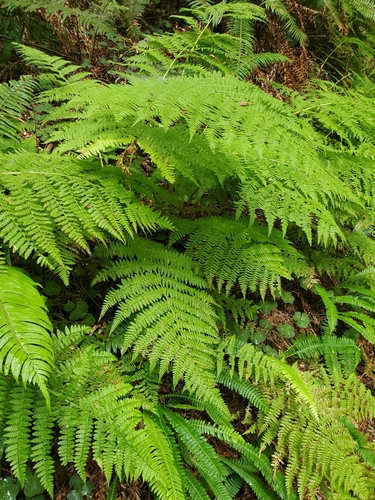
Athyrium filix-femina (common lady fern) is now commonly split into three distinct species: the typical A. filix-femina, A. angustum (narrow lady fern), and A. asplenioides (southern lady fern). A. filix-femina is cespitose, meaning its fronds grow in a clump arising from a central point, rather than spreading along a rhizome. Its deciduous fronds are light yellow-green, ranging from 20 to 90 centimetres (7.9 to 35.4 in) long and 5 to 25 cm (2.0 to 9.8 in) wide. Fronds are generally elliptical in overall shape, with pinnae at the bottom shorter than those in the middle section. On the underside of fronds, sori form as narrow oval dots, with 1 to 6 sori per pinnule. Each sorus is covered by a distinct kidney-shaped (reniform) indusium that ranges in color from whitish to brown. Fronds are heavily dissected, with a 3-pinnate structure. The stipe may have long, pale brown, papery scales at its base. Spores are yellow for A. angustum, and dark brown for A. asplenioides. Athyrium filix-femina is very hardy, and can tolerate temperatures well below −20 °C (−4 °F) across its range. As a native plant in Finland, it is most abundant in inland lake areas, and grows commonly across almost the entire country. It is rare only in Lapland, Finland. This fern especially favors mesotrophic eutrophic paludified hardwood-spruce forest, called lehtokorpi in Finnish. It is also abundant in coastal groves, creek banks, and spring sites. While the fern is easily damaged by frost and does not thrive in open areas, it is still frequently found growing in ditches near roads and agricultural fields. Many cultivars have been developed for garden use. Two of these cultivars, A. filix-femina 'Vernoniae' and A. filix-femina 'Frizelliae', have earned the Royal Horticultural Society's Award of Garden Merit. The young fronds of Athyrium filix-femina are edible after cooking. Native Americans cook both the plant's fiddleheads and its rhizomes for food.