About Athous haemorrhoidalis (Fabricius, 1801)
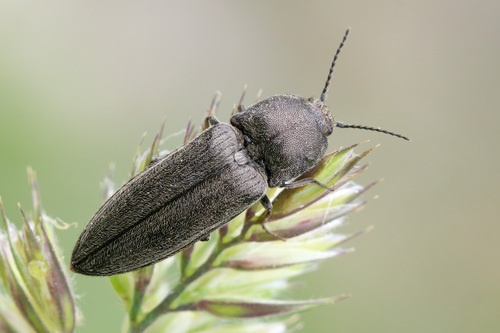
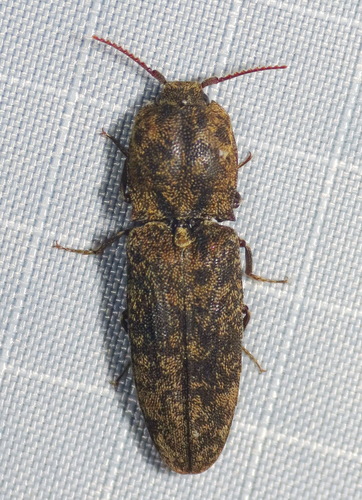
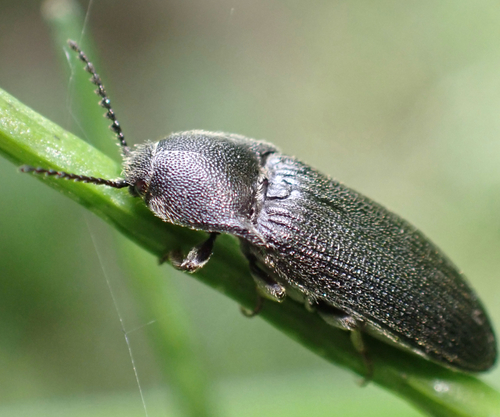
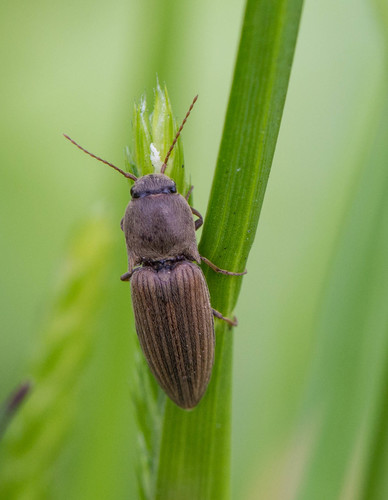
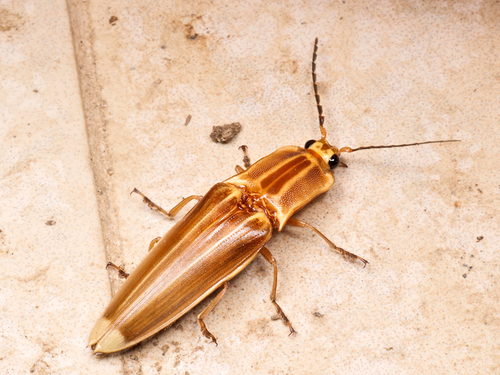
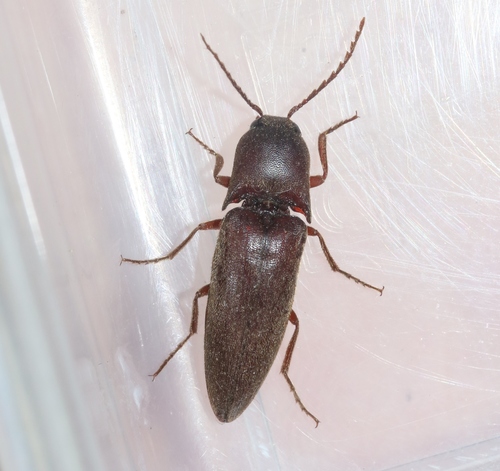
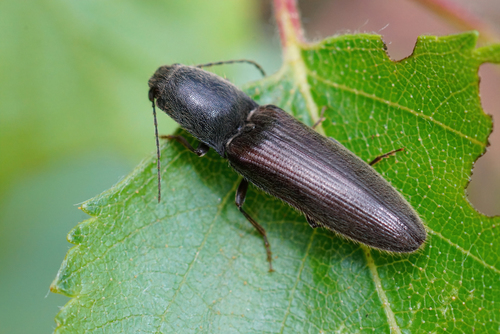
Adult Athous haemorrhoidalis are fairly slender beetles, measuring 10–15 mm in length. They have straight antennae that are long enough to reach the back of the pronotum, which is the segment that covers the thorax. The head and thorax are black, while the elytra are brown, strongly ribbed, and the pronotum is clearly dimpled across its entire surface. The whole body is covered in greyish-brown hairs, and the legs are a paler brown than the elytra. Like other click beetles, the joint between the thorax and abdomen forms a flexible hinge, with a central knob located at the back of the thorax. This species shows sexual dimorphism: males are smaller than females, and the edge of the male's pronotum is less wavy than that of the female.
This click beetle is found throughout the British Isles, and is widespread across Europe and Asia. It is predominantly a lowland species, and is entirely absent at elevations above 600 m. Populations become steadily scarcer as elevation increases from sea level up to 500 m.
When disturbed, adult click beetles can flick themselves up to 245 mm high into the air, with a takeoff speed of up to 2.27 m/s, and produce a loud clicking noise during this movement. This ability also lets them right themselves if they fall onto their back. Adults live on flowers and feed on pollen. In Europe, they are most active in July, similar to the related species Athous vittatus, which differs from many other click beetle species that are mainly active in spring. The species occurs mainly in forests, including both broad-leaved forests (oak and beech) and coniferous forests (Scots pine). They are also found in wetland habitats such as fens and peatlands. Fossils of this species dating to the Holocene period immediately after the last ice age have been found in Britain, preserved in acid bog peat—a much wetter habitat than the beetle's typical current habitats. Adult Athous haemorrhoidalis act as pollinators for the frog orchid Coeloglossum viride. The beetles are primarily eaten by tits, and are an important prey species for the collared flycatcher Ficedula albicollis.
The larvae of Athous haemorrhoidalis are damaging agricultural pests. In agricultural areas, the species is found in cereal crops, orchards, and potato crops. The larvae have a mixed diet: they prey on the winter moth Operophtera brumata, and also feed on plant roots, mostly grasses from the family Poaceae.