About Atherinopsis californiensis Girard, 1854
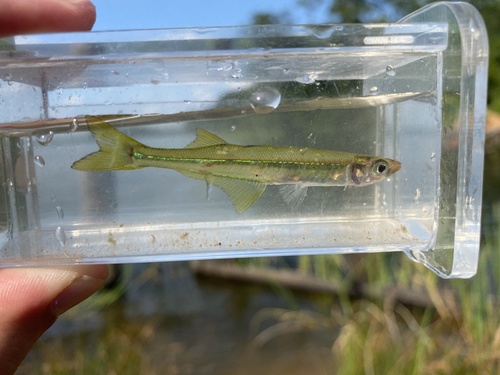
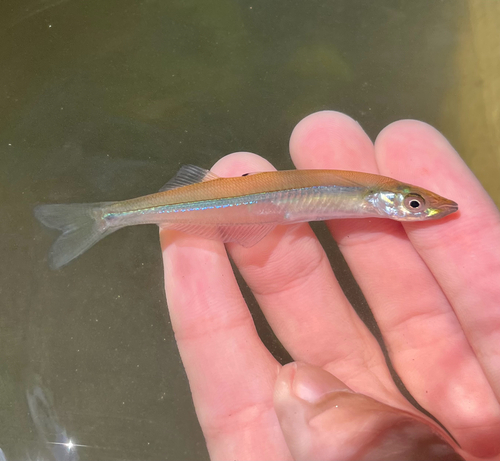
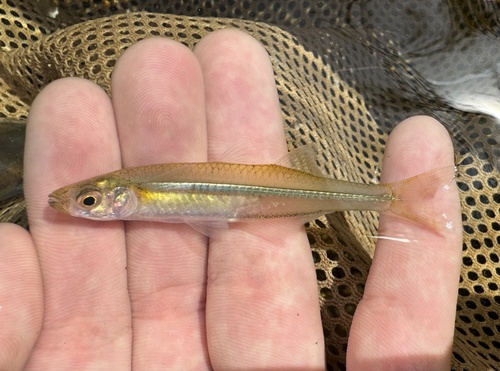
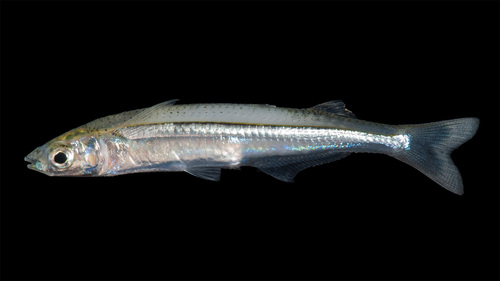
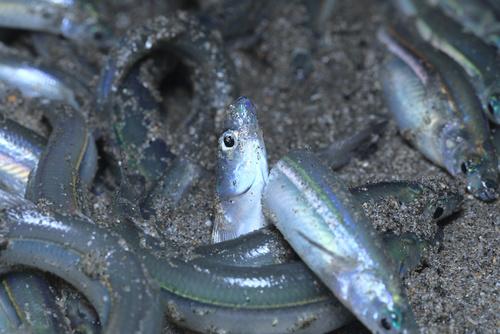
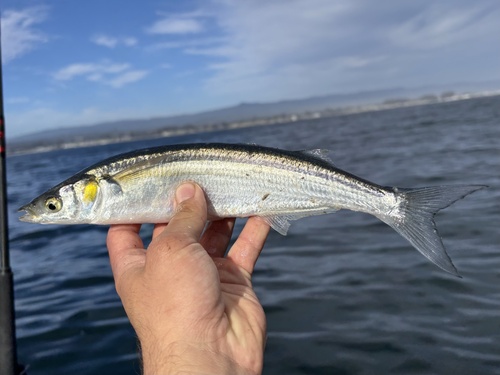
Atherinopsis californiensis, commonly called the jack silverside or jacksmelt, is a species of neotropical silverside. It is the only known member of its genus, and is often confused with the closely related topsmelt silverside (Atherinops affinis). This species is native to the Pacific coast of North America, ranging from Yaquina Bay, Oregon in the United States south to Bahía Magdalena, Baja California Sur, Mexico. It typically reaches a total length of 49 cm (19 in), though individuals measuring 55 cm (22 in) have been recorded. Its entire body is silver, with a grey pattern on the dorsal side, a light silver coloration on the ventral-lateral area, and a yellow spot on the operculum behind the eye. It has commercial importance as a source of human food, and is a key component of Pacific coast marine ecosystems. Its ability to adapt to changing environmental conditions across different habitats across its range supports its broad ecological flexibility. Studying the diet and reproductive strategies of jacksmelt is important for understanding its ecological role in these coastal ecosystems. As an economically valuable species, sustainable management practices are needed to maintain healthy population levels. Proactive conservation efforts are critical to preserve intact jacksmelt populations, as they face ongoing threats from overfishing and habitat degradation. Adults of this species live in inshore areas such as bays, form large schools that are easily visible during the daytime, and are typically found no deeper than 29 metres (100 ft). They are most commonly encountered in shallow waters near sandy beaches and kelp forests, and are regularly found in both marine and estuarine environments, even entering bays and estuaries that hold sufficient food resources. This species is a demersal spawner in inshore habitats, and it is oviparous. Its eggs are stuck to one another and to the underwater substrate via adhesive filaments on the chorion. The larvae are planktonic, live at the water's surface, and feed on phytoplankton. Juvenile jacksmelt have a critical ability to tolerate a wide range of salinity and environmental conditions; they move between fresh and saltwater habitats over different life stages, allowing the species to exploit a broad ecological niche and thrive across varied environments. The regular presence of jacksmelt in many estuaries demonstrates both their ecological flexibility and the importance of these habitats to their full life cycle. As they grow and mature, jacksmelt shift their ranges and adapt to new environments across their overall distribution. Jacksmelt thrive in many different habitat types that provide food and protection from predators. These include estuaries where freshwater and saltwater mix, food-rich bay areas, and especially kelp forests. Kelp forests provide jacksmelt with shelter from larger predators and access to their prey, which includes zooplankton and small fishes. Juvenile jacksmelt occupy sandy beaches before moving into deeper waters as they reach maturity. This habitat transition through development is critical to the species, as it gives them access to different food resources across each life stage. Habitat diversity is important for healthy, stable jacksmelt populations, and using both marine and estuarine habitats improves the species' chances of survival and successful reproduction. Jacksmelt generally spawn when water temperatures rise in late spring and early summer. Males and females gather in specific spawning areas, where they release gametes for external fertilization in the plankton. After hatching, larvae drift with ocean currents until they settle into suitable habitats. This reproductive strategy allows for high offspring dispersal across many different environments. Jacksmelt spawn multiple times over a single reproductive season; this strategy supports genetic diversity within populations and increases the species' resilience to environmental stress. Spawning timing is aligned to provide optimal environmental conditions for larval survival, and maximum spawning activity has been recorded between January and March when conditions for larval development are best. Reproductive success for jacksmelt depends on healthy habitats. Healthy estuaries act as critical nursery grounds for young jacksmelt, providing enough food and protection from predation during the early life stage. For this reason, conserving these estuarine habitats is critical both for the survival of Atherinopsis californiensis and for maintaining overall biodiversity in coastal ecosystems.