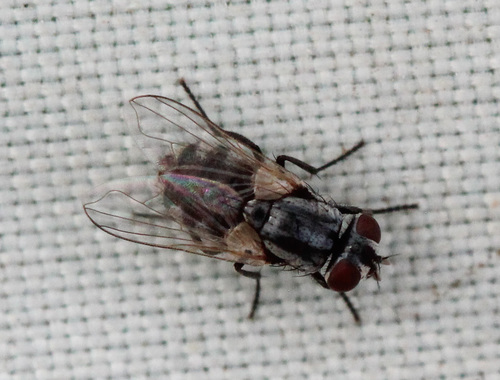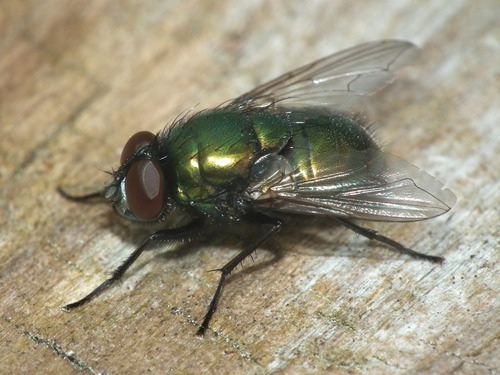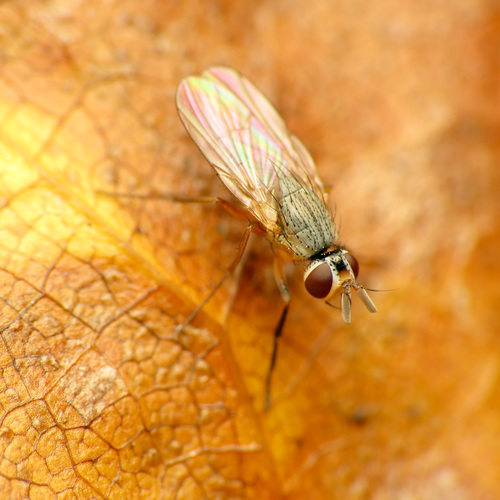
About Atherigona reversura Villeneuve, 1936
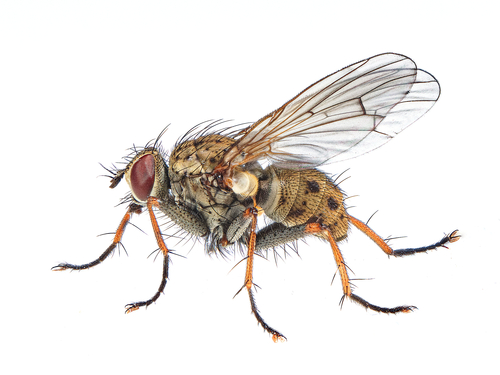
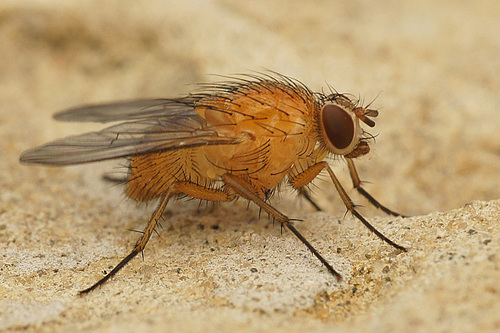
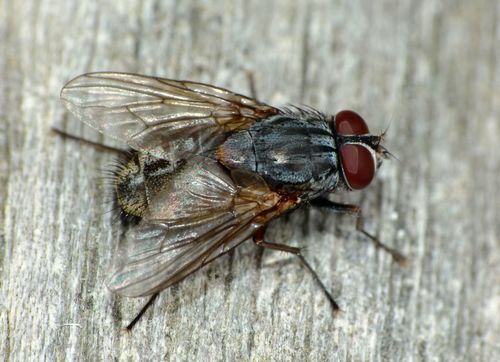
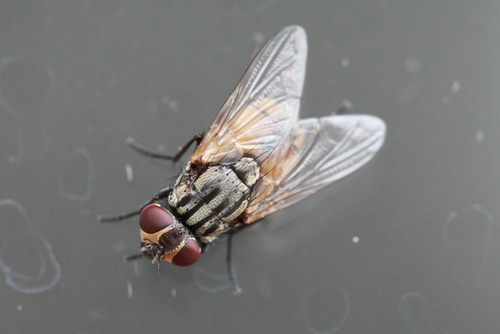
This small fly has an angular head and transparent wings. Adult bodies range in color from gray to yellow. Males have a rounded abdomen and are smaller than females; females have a larger, pointed abdomen. Larvae are cylindrical and white, with mouthhooks that they use to chew the tender tissue of new shoots. Little is known about the full life cycle of Atherigona reversura, but it has been confirmed that females lay eggs on the underside of bermudagrass leaves. Larvae hatch after 2.5 days, then move to the node where the stem emerges. Feeding on the node kills the leaf; feeding damage becomes visible 1 to 3 days after hatching. After this feeding stage, larvae leave the stem, move into the ground to pupate, and adult flies emerge 7 to 10 days later. Adult flies live approximately 21 to 28 days and produce many offspring during this period.
Populations of the bermudagrass stem maggot expand gradually from the southern to the northern United States; populations build up by mid-June in Central Florida, and by late July in North Georgia. All bermudagrass cultivars are susceptible to damage from this pest, but the fly prefers cultivars that produce many shoots, have small shoot diameter, and have narrow leaves. Current recommendations to suppress infestations include harvesting the grass to break the fly’s life cycle, then applying pyrethroid insecticides after grass regrows, approximately 7 to 10 days after cutting. Current research is focused on improving understanding of the behavior, biology, and ecology of this insect pest.