About Atheloca subrufella Hulst, 1887
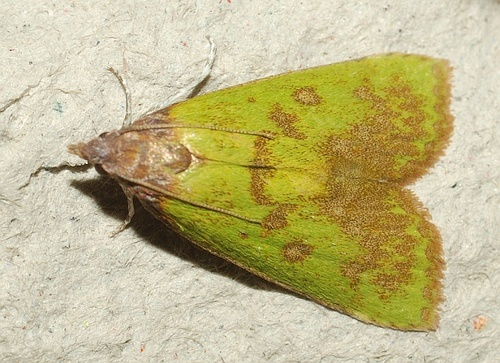
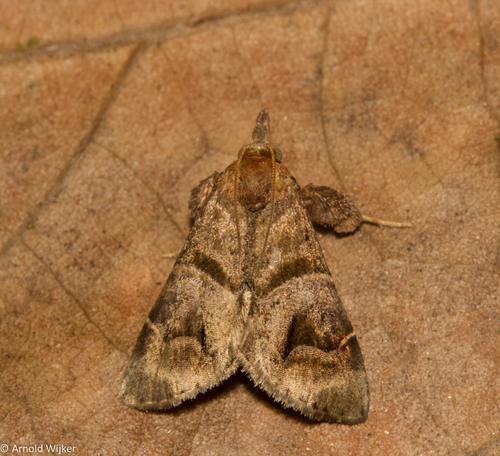
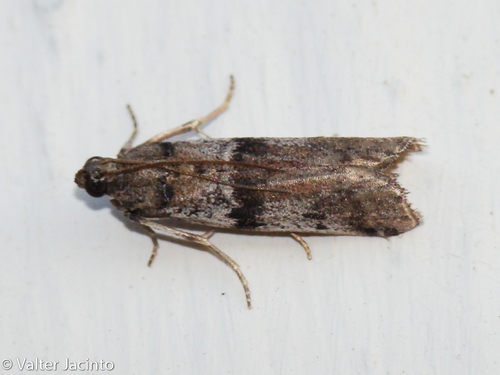
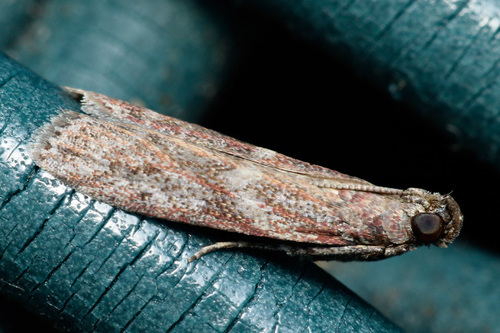
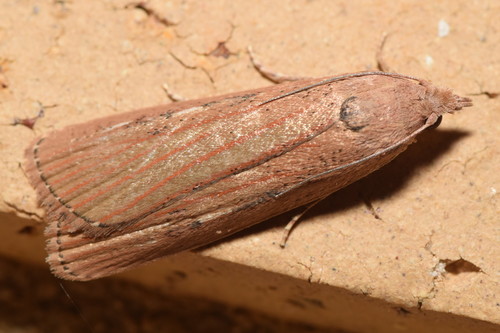
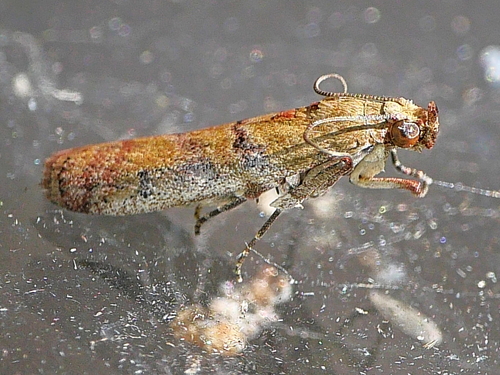
Atheloca subrufella, commonly known as the palm bud moth or coconut moth, is a species of snout moth that was described by George Duryea Hulst in 1887. This species can be found in the U.S. states of Georgia and Florida, as well as in northern Mexico, Cuba, the Virgin Islands, and Brazil. The wingspan of adult Atheloca subrufella measures 14–18 mm, and adult moths are brownish in color. The larvae of this moth feed on multiple species from the plant family Arecaceae, including species in the genera Cocos, Attalea, Syagrus, Sabal, and Serenoa. The larvae are counted among the most important coconut pests. Young larvae feed on the carpels of still-tender flowers; if the flower has already been fertilized, the larvae penetrate the developing coconut through the lower part of the bracts. In young coconuts, the larvae feed on the mesocarp, create a series of galleries, and cause premature shedding of fruits. Female Atheloca subrufella release sex pheromones to signal mating and attract males. Both sexes choose partners based on morphological and physiological traits, with males tending to prefer younger females that have higher reproductive potential. In response to this preference, older females release their sex pheromones earlier to improve their chance of attracting males and successfully mating.