About Athalia rosae (Linnaeus, 1758)
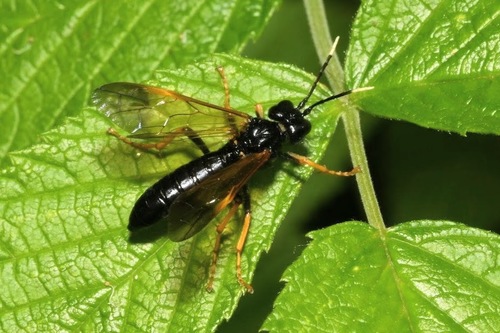
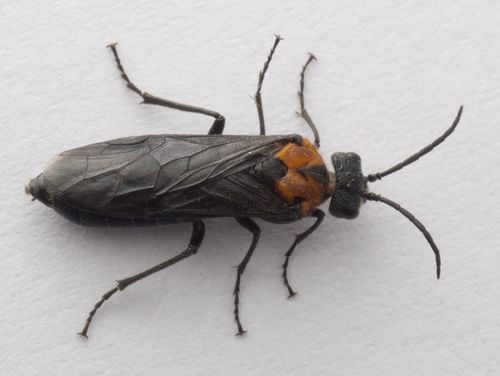
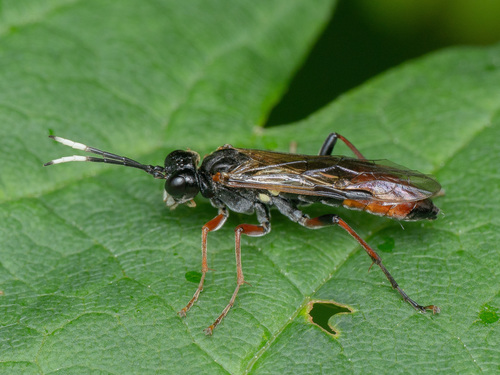
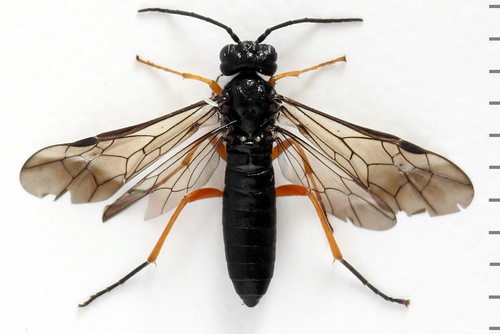
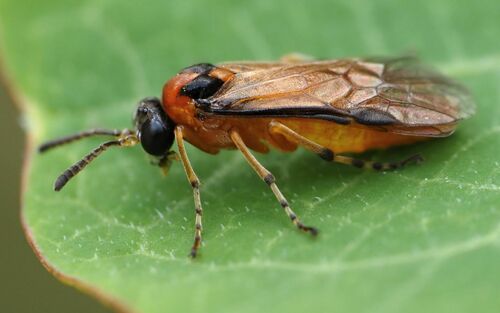
Athalia rosae, commonly called the turnip sawfly, cabbage leaf sawfly, or beet sawfly, is a typical sawfly species. Its larvae are dark green or blackish, measure 18–25 mm in length, feed on plants in the brassica family, and can sometimes act as a pest. The species overwinters below ground, and adults emerge in early summer. Adult turnip sawflies are 7–8 mm long, with a mostly orange body and a black head, and they feed on nectar.
Studies of turnip sawflies found that sister-brother matings produce diploid males and females. This outcome differs from the normal haplodiploid genetics typical of Hymenoptera, and further crosses that produced triploid males provided evidence that sex determination in this species is controlled by a single locus. Like many insects that feed on brassicas, larval turnip sawflies sequester glucosinolates. Research shows that removing these glucosinolates reduces adult turnip sawflies' sensitivity to host plants later in their lives. This observed effect has been used to argue that glucosinolates play an important role in shaping larval development to determine future host plant preferences.
Because no primitive Hymenoptera species currently have available genome sequence data, the turnip sawfly is the subject of ongoing genome sequencing work. This project is part of the i5K initiative, which plans to sequence 5,000 insect genomes over the course of 5 years.