About Atergatis floridus (Linnaeus, 1767)
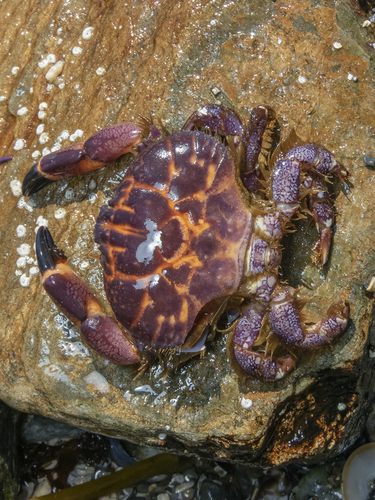
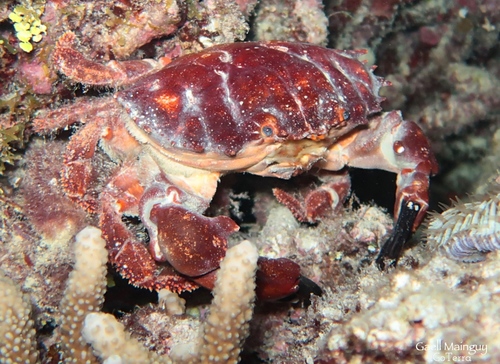
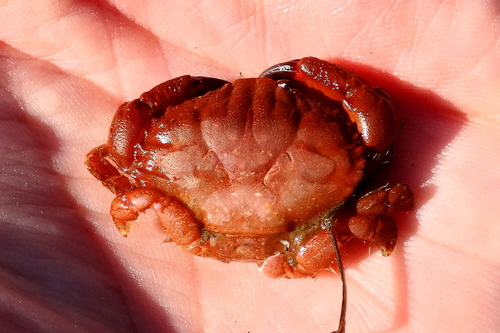
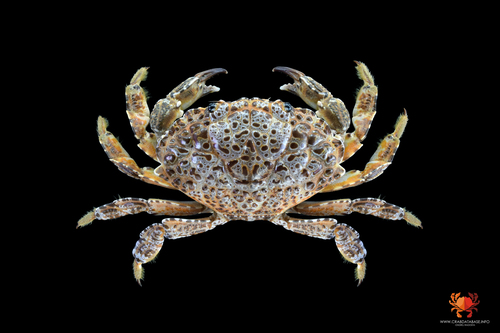
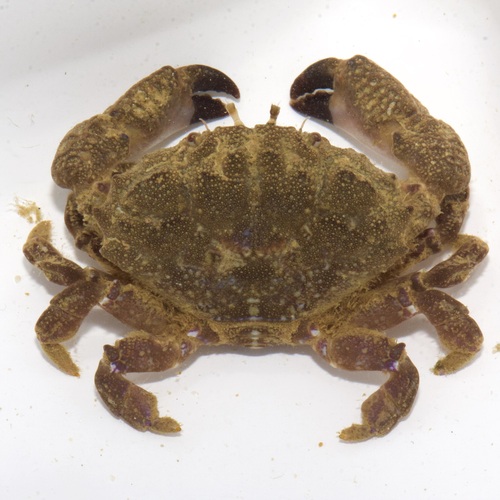
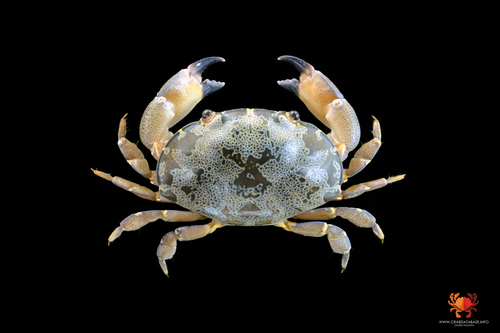
Atergatis floridus (Linnaeus, 1767) has an oval, relatively narrow carapace with a smooth surface and smooth margins. The carapace is greenish or greenish-blue-brown, marked with a lace-like pattern. This pattern is a fine network of fine white or yellow lines, which resembles a shawl. This species has large, equal-sized, smooth claws with black spoon-shaped tips; male claws are typically larger than female claws. Its pereiopods are squarish, quite thick, have lilac edges, and lack hair. The carapace is 8–10 cm (3.1–3.9 in) wide, and is roughly 1.4 times broader than it is long. This species is found in the eastern Indian Ocean, ranging from southeast Asia south to Australia. In Australia, it occurs as far south as Rottnest Island in Western Australia, and possibly reaches Sydney on the eastern Australian coast. Its range extends east across the western Pacific Ocean as far as Hawaii. Like many related crabs in the family Xanthidae, the meat of Atergatis floridus is toxic. The toxins are produced by symbiotic Vibrio bacteria living with the crab. The toxins present include tetrodotoxin, a toxin also found in puffer fish, and saxitoxin, the primary toxin that causes paralytic shellfish poisoning.