About Atelerix algirus (Lereboullet, 1842)
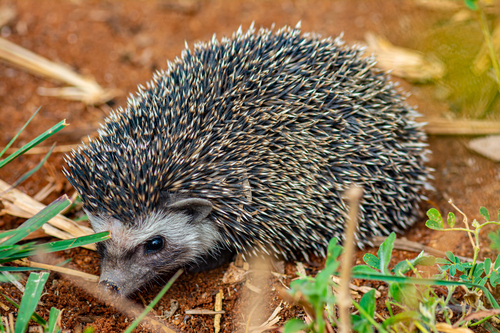
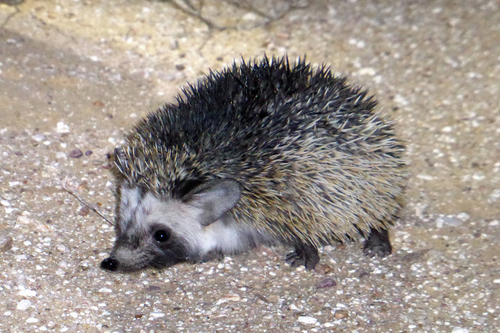
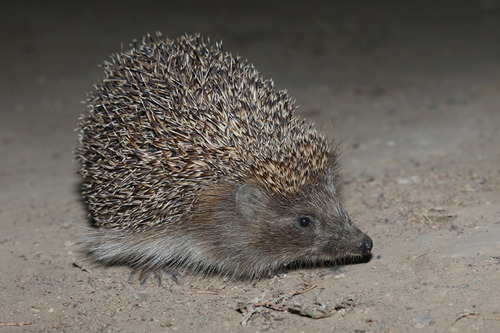
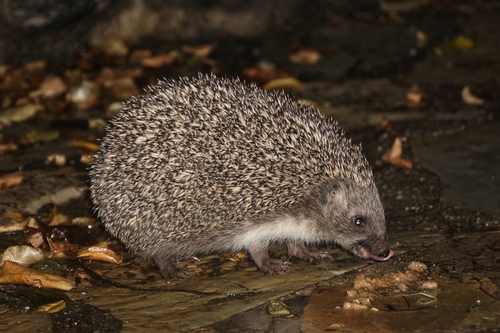
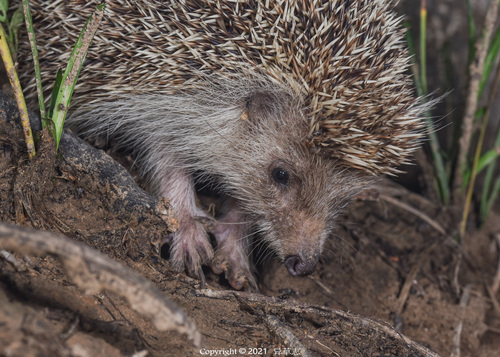
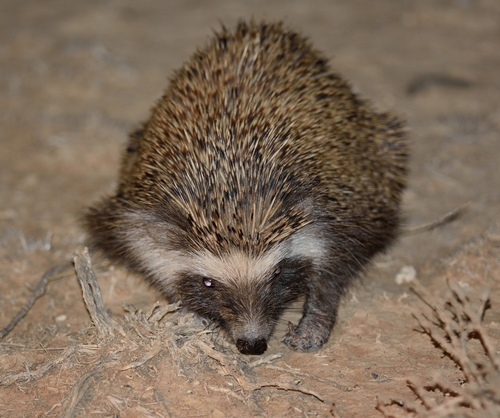
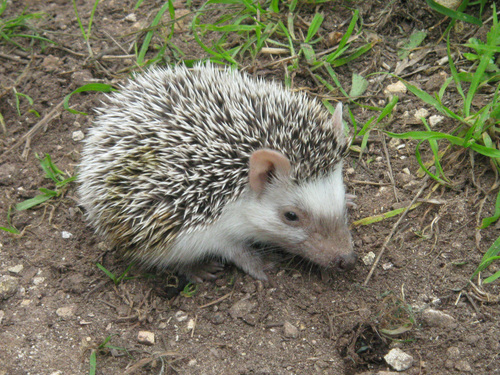
The North African hedgehog, scientifically named Atelerix algirus, closely resembles the European hedgehog but has several clear differences. It is generally smaller than the European hedgehog, growing 20 to 25 cm (7.9 to 9.8 in) long and reaching a maximum weight of 650 grams. It is larger than other African hedgehog species, with a longer snout and longer legs that allow it to run faster. Its face is pale, typically white, while its head and legs are brown. The color of its underbelly varies, and is most often either brown or white. It has large, highly visible ears on its head. Its body is covered in soft spines, which are mostly white with darker bands. Its most distinct feature separating it from similar close relatives is the complete lack of spines on the crown of the head, meaning it does not have the characteristic spine "widow's peak" seen in related species. This species is commonly infested by the hedgehog flea subspecies Archaeopsylla erinacei maura. Very little is confirmed about the preferred habitat of the North African hedgehog. It has been recorded in Mediterranean conifer and mixed forest climates, which occur in southern mountainous regions of Spain and northern Africa. In northern Africa, its range extends from Morocco to Libya, but it cannot survive in the dry desert regions surrounding this range. It also lives in other warm regions, including the Canary Islands and the Balearic Islands, where it is often found in gardens and parks. It is no longer found in the wild in France (it is extirpated there). For the North African hedgehog, the gestation period lasts 30 to 40 days, and each litter contains between three and 10 hoglets. Females often produce two litters per breeding season, which runs from October to March. Hoglets are born with hairless, pinkish skin and small soft spines. These initial soft spines are shed around four weeks of age, when the hedgehog grows its final set of harder, stiffer quills. Newborn hoglets generally weigh between 12 and 20 grams. This species reaches sexual maturity at 8 to 10 weeks of age, and does not mate for life — it does not form long-term pair bonds.