About Astyanax bacalarensis Schmitter-Soto, 2017
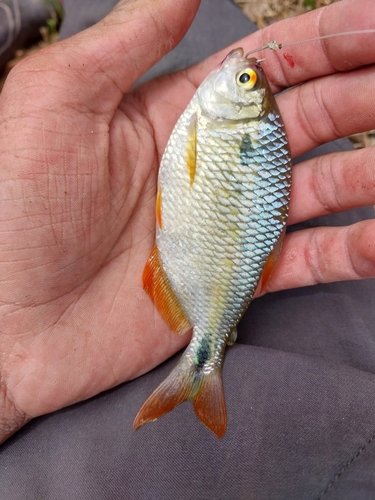
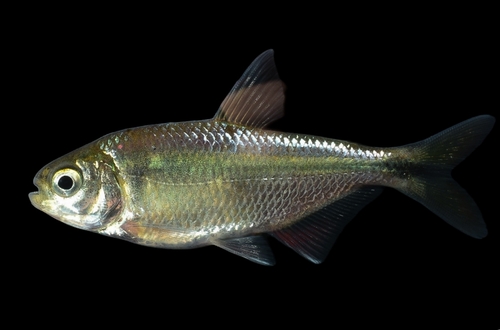
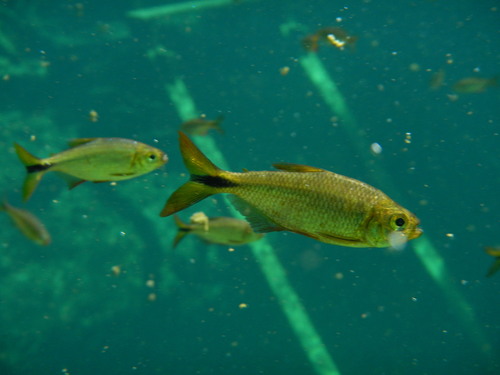
Astyanax bacalarensis reaches a standard length (SL) of 9.5 cm (3.7 in), and its head accounts for approximately 28% or less of its total standard length. The dorsal fin originates at the center of its body, and carries 9–11 fin rays. The anal fin has 21–27 rays, most commonly 25, while the pectoral fins have 10–11 rays. Sexual dimorphism in this species has not been recorded. The body of Astyanax bacalarensis is mostly silver, with a single dark rectangular or ovoid humeral spot. The anal fin has a pale margin, is otherwise solid yellow, and has a patch of bright red on its first few rays. A black spot is present on the caudal peduncle, and this marking extends onto the middle rays of the caudal fin. The dorsal fin is lemon-yellow, the caudal fin is orange, and the pectoral and pelvic fins are mostly clear or yellowish with red margins. Astyanax bacalarensis was first described from Lake Bacalar, located in the Mexican state of Quintana Roo. It has also been recorded from the Sittee River in Toledo District, Belize, and from the Mopán River in Guatemala. While it is primarily a freshwater fish, it has been found in delta areas of Chetumal Bay, which opens to the Caribbean Sea, at a moderate regional salinity of 9 practical salinity units (psu), compared to the average global ocean salinity of 34.7 psu. It also inhabits cenotes on the Yucatán Peninsula, caves, and seasonal wetlands. Juvenile A. bacalarensis are planktivorous, while adults shift to an omnivorous diet. This species is preyed on by wading birds and multiple fish species, including Belonesox belizanus, Petenia splendida, and Rhamdia guatemalensis, with predator composition varying by location. Astyanax bacalarensis is an adaptable species. For example, a 2019 study captured individuals in areas where the species had not been observed in prior years, indicating its range may be expanding. It has also been introduced to Laguna Chichancanab, a Mexican lake outside its native range, where it can outcompete multiple native Cyprinodon species.