About Astropyga radiata (Leske, 1778)
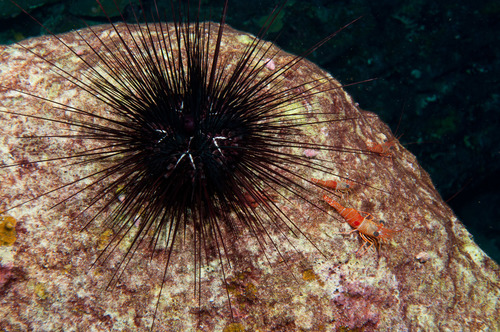
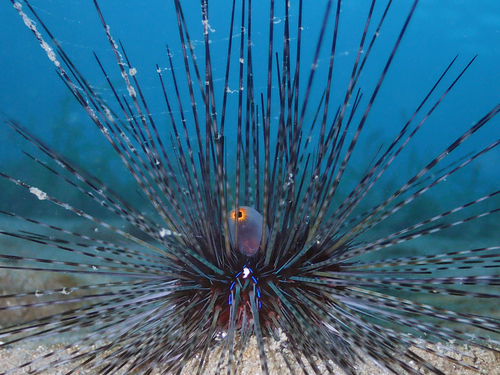
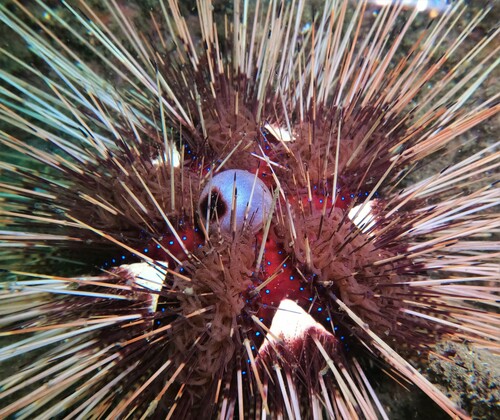
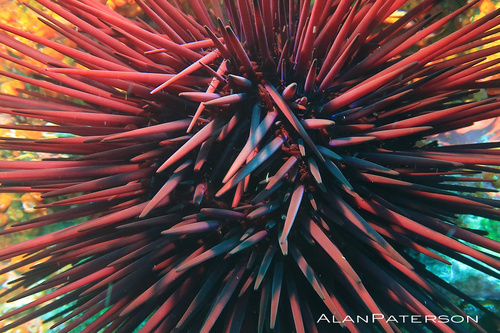
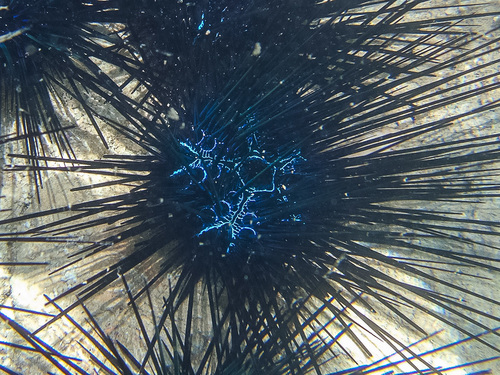
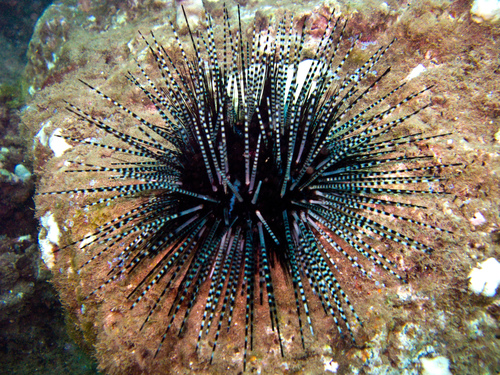
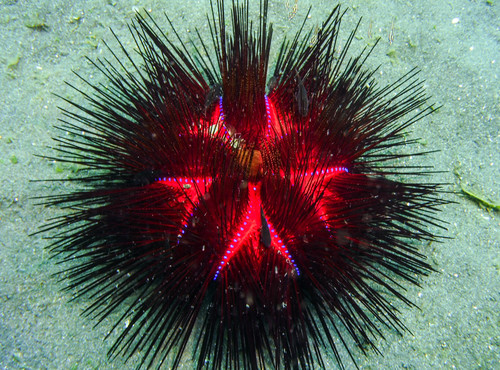
Astropyga radiata is a large sea urchin, with a test that can reach up to 20 cm (8 in) in diameter. Its aboral (upper) side is flattened or slightly concave. Its spines grow up to 4 cm (1.6 in) long, and are arranged into five vertical clusters. Between these clusters lie V-shaped spine-free areas that correspond to the interambulacral plates. These bare areas are red, and marked with lines of iridescent blue dots. The remainder of the test and spines ranges in color from reddish brown to purple, dark brown, or nearly black. The spines are long and hollow, and occur in two types; the shorter spines are venomous. This species has a prominent brown anal sac with a dark tip. Juveniles have transversely banded spines, and this banding pattern sometimes remains in adult individuals. Astropyga radiata occurs in the Indo-Pacific Ocean. It can be found at depths down to approximately 70 metres (230 ft), but most commonly lives between 10 and 30 metres (33 to 98 ft) deep. Its range stretches from the African coast to Hawaii and Australian waters. It is often found in lagoons and bays with substrates of sand, shingle, or coral rubble. Multiple individuals often gather together to form dense aggregations in a single location. A variety of crustaceans and fish live in association with Astropyga radiata. Commensal shrimp species associated with it include Periclimenes hirsutus and Stegopontonia commensalis, as well as the crab Zebrida adamsii. Another crab, Dorippe frascone, is a symbiont that carries this urchin on its back. Several types of juvenile fish also shelter among the urchin's spines, including young emperor red snappers (Lutjanus sebae), cardinal fish (Apogonidae), and zebra lionfish.